










 Architects
 Construction firms
 Dealers


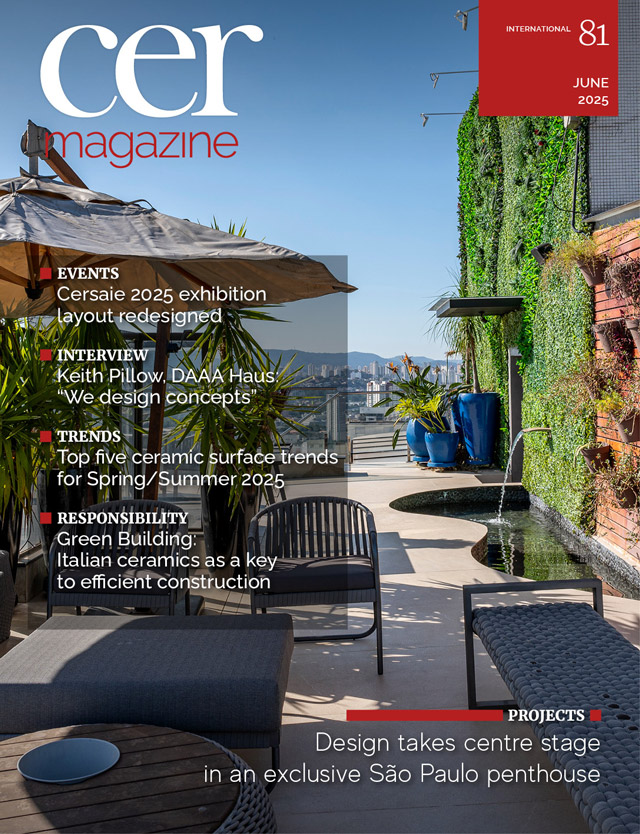
(June 2025) | The green building concept has gained traction in recent years, driven by growing awareness of the climate crisis and the need for more responsible use of natural resources. This design approach seeks to minimise the environmental impact of buildings over their entire life cycle, from the production of materials through to construction, use and decommissioning, with the potential for reuse of components and products. Italian ceramics play a key role in this process, offering versatile, durable and energy-efficient solutions.
Ceramic ventilated facades and roofs: energy savings and comfort
Ventilated façades and roofs are one of the most effective applications of ceramics in green building. In Europe, the construction sector accounts for 40% of energy consumption and 30% of greenhouse gas emissions. Ventilated façades and roofs are able to reduce the overall energy requirements of buildings by creating an air gap that improves temperature regulation throughout the building envelope. This reduces energy consumption for heating and cooling by up to 25% while protecting the building envelope from the elements, an increasingly important factor given the growing frequency of extreme weather events.
Passive cooling and reflectance: the role of ceramic surfaces
High solar-reflectance ceramic surfaces are another valuable tool contributing to the passive cooling of buildings, especially in urban areas subject to the heat island effect (roofs typically account for 20-40% and pavements 29-44% of the total surface area exposed to solar radiation). By reflecting sunlight rather than absorbing it, ceramic surfaces are able to effectively control the microclimate, lowering the external temperature of the building envelope and significantly reducing the impact on the surrounding air temperature, thus mitigating urban overheating.
LEED and BREEAM certifications: Italian ceramics are sustainable and certified
Energy and environmental certifications for buildings are essential benchmarks for professionals working in sustainable construction. Two of the most widely adopted international protocols are LEED (Leadership in Energy and Environmental Design), now used in more than 140 countries, and BREEAM (Building Research Establishment Environmental Assessment Method), first introduced in 1990 and currently adopted in over 70 countries.
Thanks to their performance characteristics – as documented through industry-wide and product-specific Environmental Product Declarations (EPDs) verified by third-party organisations – Italian ceramic products can make a significant contribution to earning LEED and BREEAM credits. EPDs offer clear and transparent information on environmental performance across the entire life cycle of a product.
Green building and healthy living: ceramics as a partner for well-being
Alongside energy efficiency, sustainable building also prioritises physical and mental well-being. Ceramic surfaces make a significant contribution to healthier indoor environments as they are easy to clean, do not support the growth of mould or bacteria and do not trap dust or release volatile organic compounds (VOCs). These qualities make them an ideal choice for sensitive environments such as schools, hospitals and care homes.
Italian clay building materials: high performance and durability
Closely related to ceramics, clay building materials such as bricks and roof tiles offer significant benefits for the ecological transition in construction. Continuous innovation in the sector has led to the development of materials with high thermal and acoustic performance that combine solidity with insulating properties. This makes them ideal for the construction of Class A energy-efficient buildings that perform well even during the hottest summer months. Clay building materials also stand out for their breathability, safety, durability, low maintenance and high potential for recycling and reuse, qualities that make them an excellent long-term choice for sustainable construction.
Confindustria Ceramica and environmental responsibility: a tangible commitment
The Italian ceramic industry’s contribution to green building is the result of a focused and responsible industrial strategy pursued for over 60 years. The new Responsibility campaign launched by Confindustria Ceramica marks a significant milestone, an invitation to designers, companies and consumers to reflect on the importance of choosing materials that respect the environment and enhance quality of life.
Through videos, articles and in-depth features, the “Responsibility” section of ceramica.info illustrates the Italian ceramic industry’s concrete commitment to environmental sustainability, innovation and transparency. It demonstrates how ceramics and clay building materials make responsible construction not only achievable but beneficial for all.