


Projekte


A Karst boutique residence
The renovation of an elegant Karst villa in Kobdilj, Slovenia, was first and foremost a technical challenge for architect Vesna Hrvatin. She transformed the property from a traditional farm building – used for over 300 years to house families, crops and livestock – into a boutique residence, addressing the needs of safety (seismic and fire protection), natural lighting, ventilation and sustainable climate control. The project was a resounding success, winning the OHS Award 2025 for best residential project at the Open House Slovenia festival. “I was inspired by the ingenious construction principles of the Karst tradition and the charm of their inherent simplicity. I specialise in stone renovations in Istria and the Karst, and I learn something new with every project,” Hrvatin explains. Through this building, she explored the balance between ancient and modern, respecting the site’s original spirit while transforming the aesthetics and functionality of the space. “At the point of intersection between the old and the new, we designed the details to allow the original structure to ‘breathe’. At the same time, we introduced modern solutions to enhance the dignity of the existing building without compromising its structure, such as the glass screens for the double-leaf entrance on the street side of the barn. We dismantled the old wooden staircase and reinforced it with a new steel structure. We preserved the original wooden attic, strengthening it with three steel frames. And we restored the open fireplace and the traditional ‘black kitchen’, installing a new chimney to make it one of the few kitchens of its kind still functioning in the Karst region. Guests can experience the open fireplace just as they would have 300 years ago, although we installed a modern kitchen alongside it because we weren’t aiming to create a museum,” the architect notes.
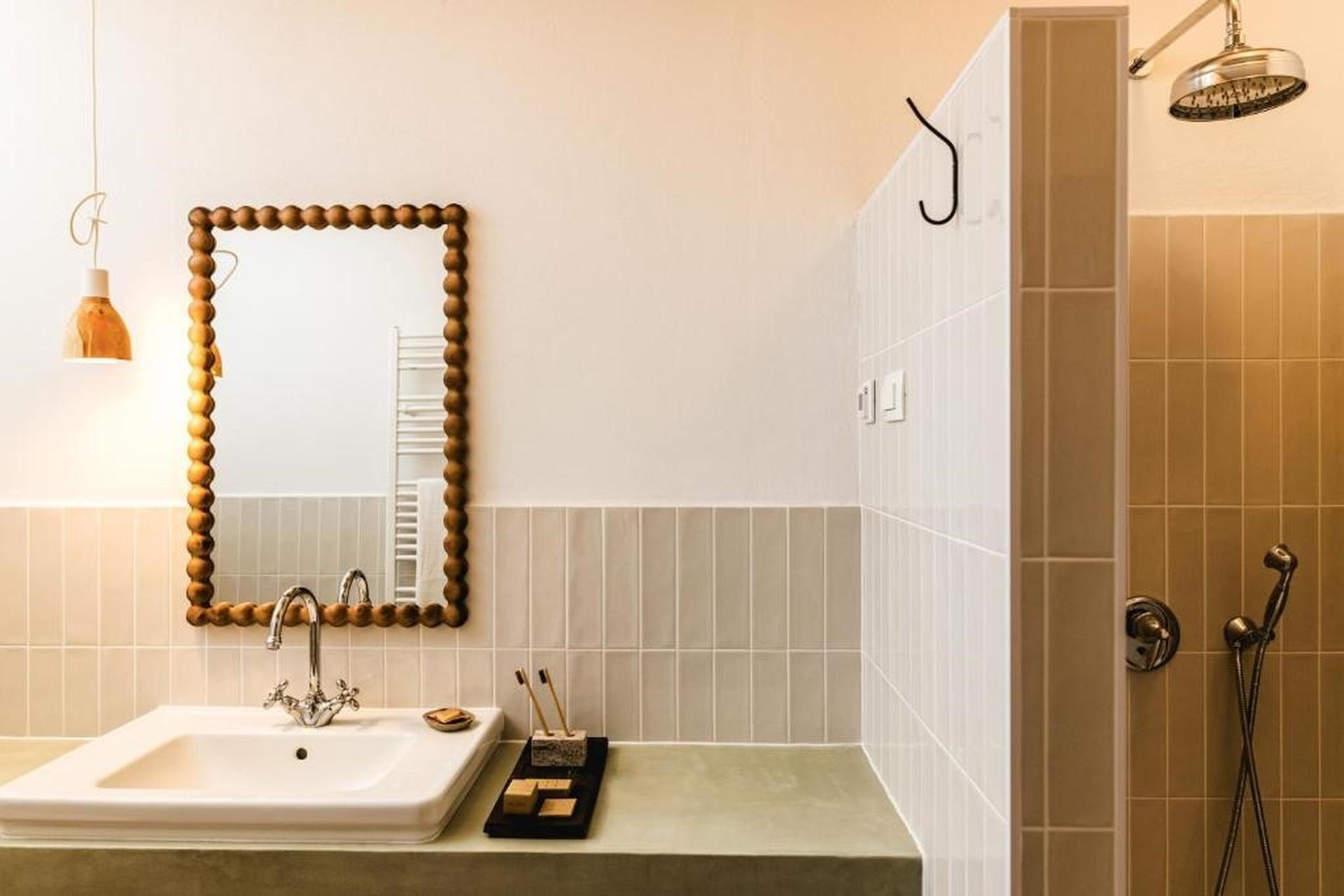
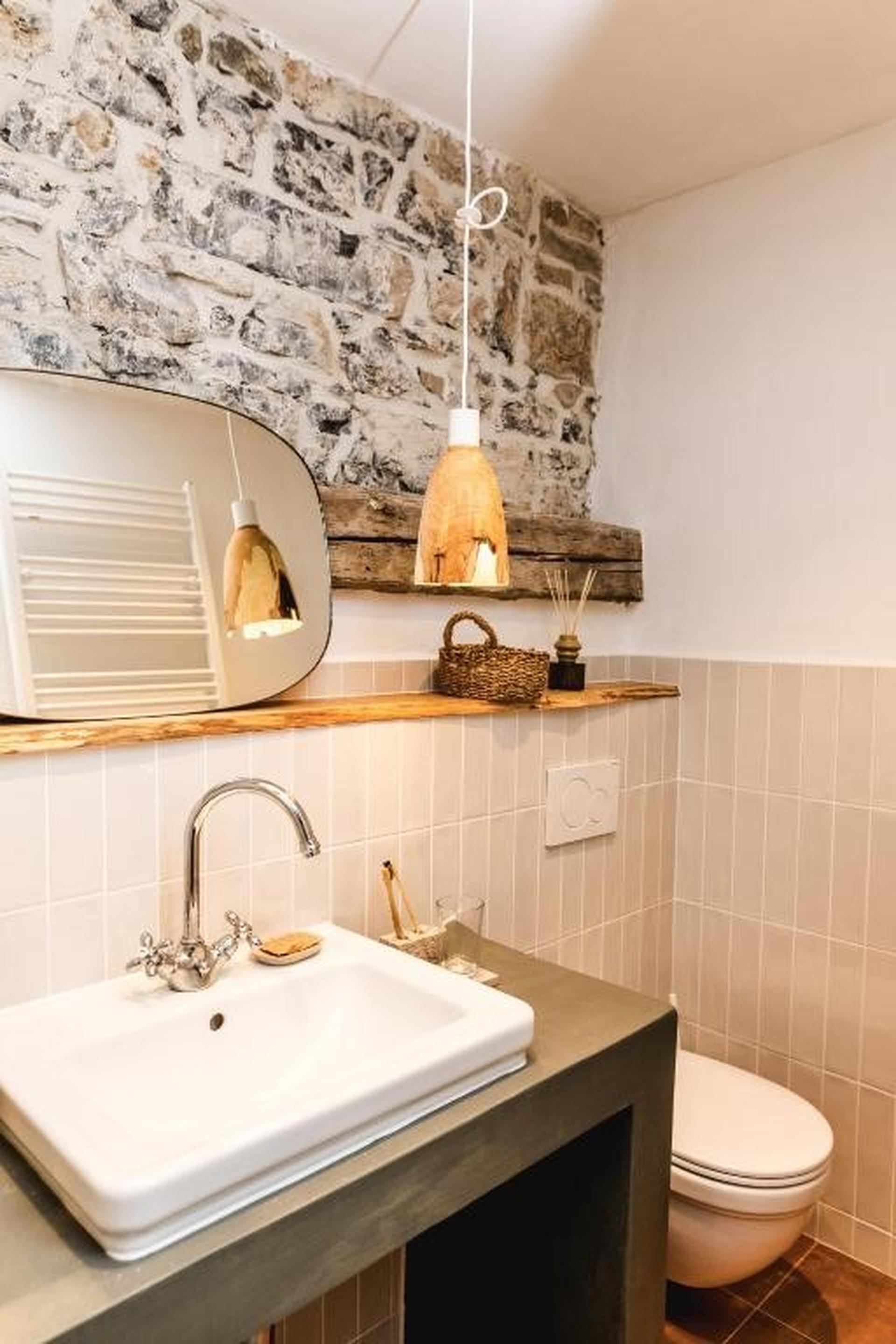
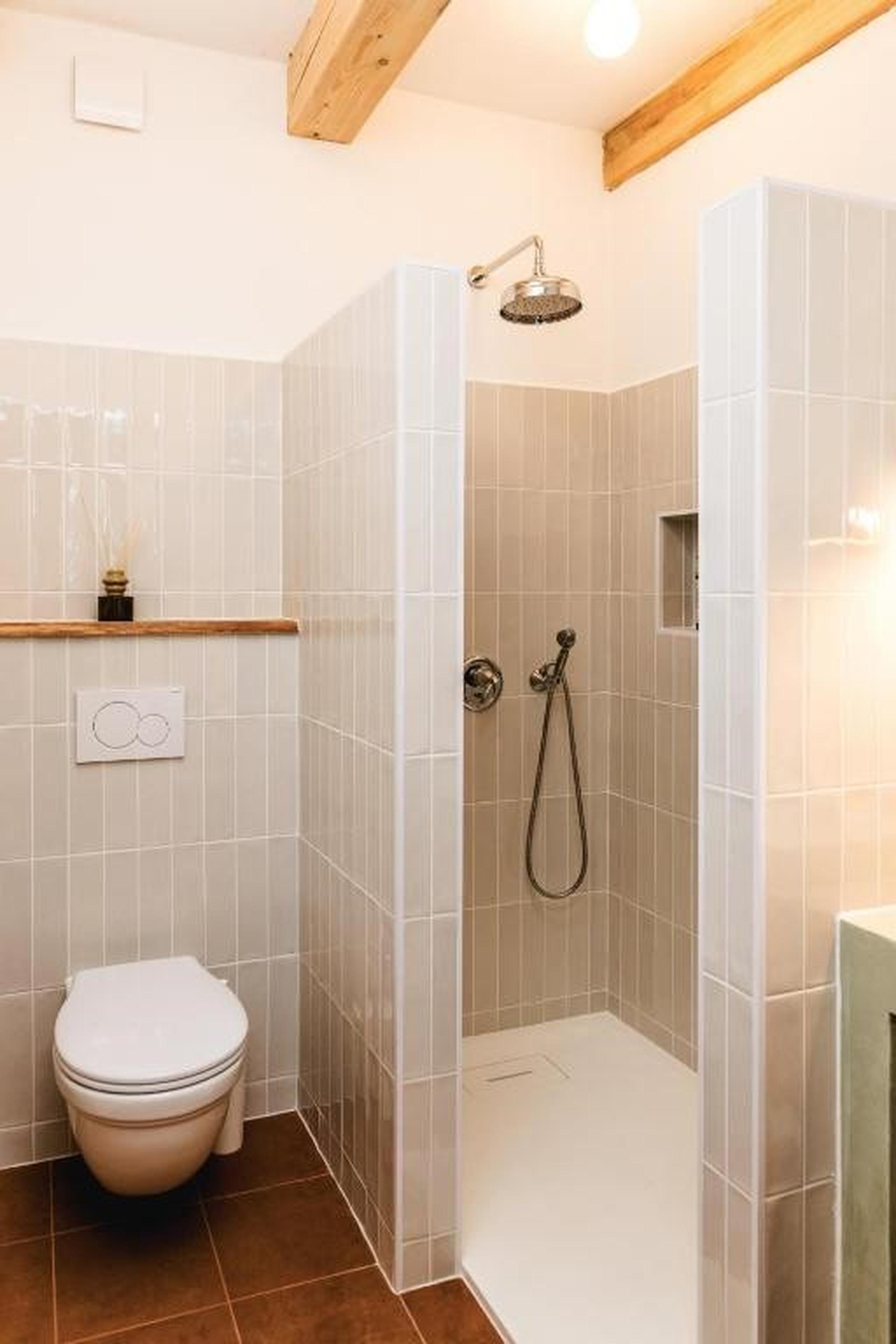
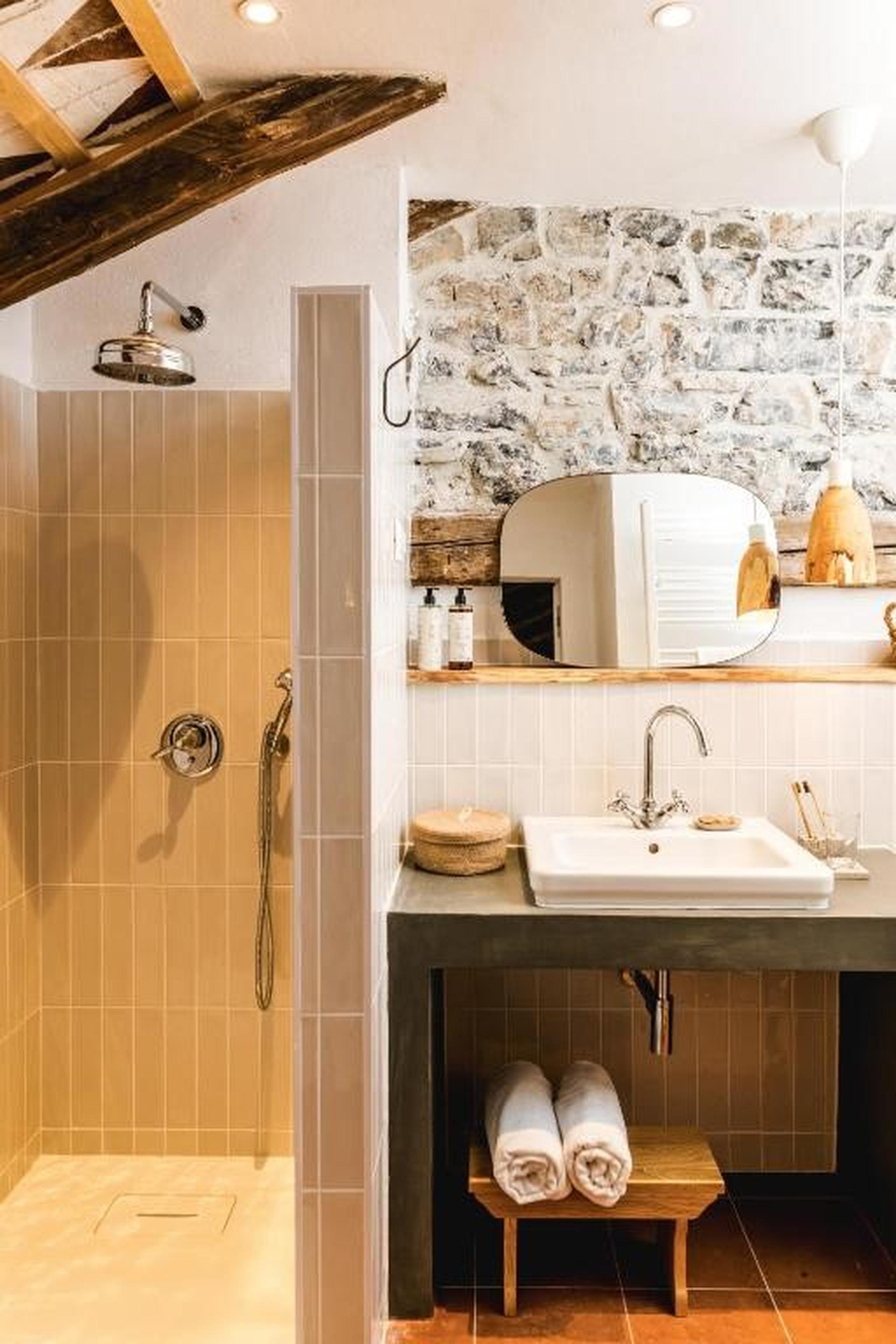
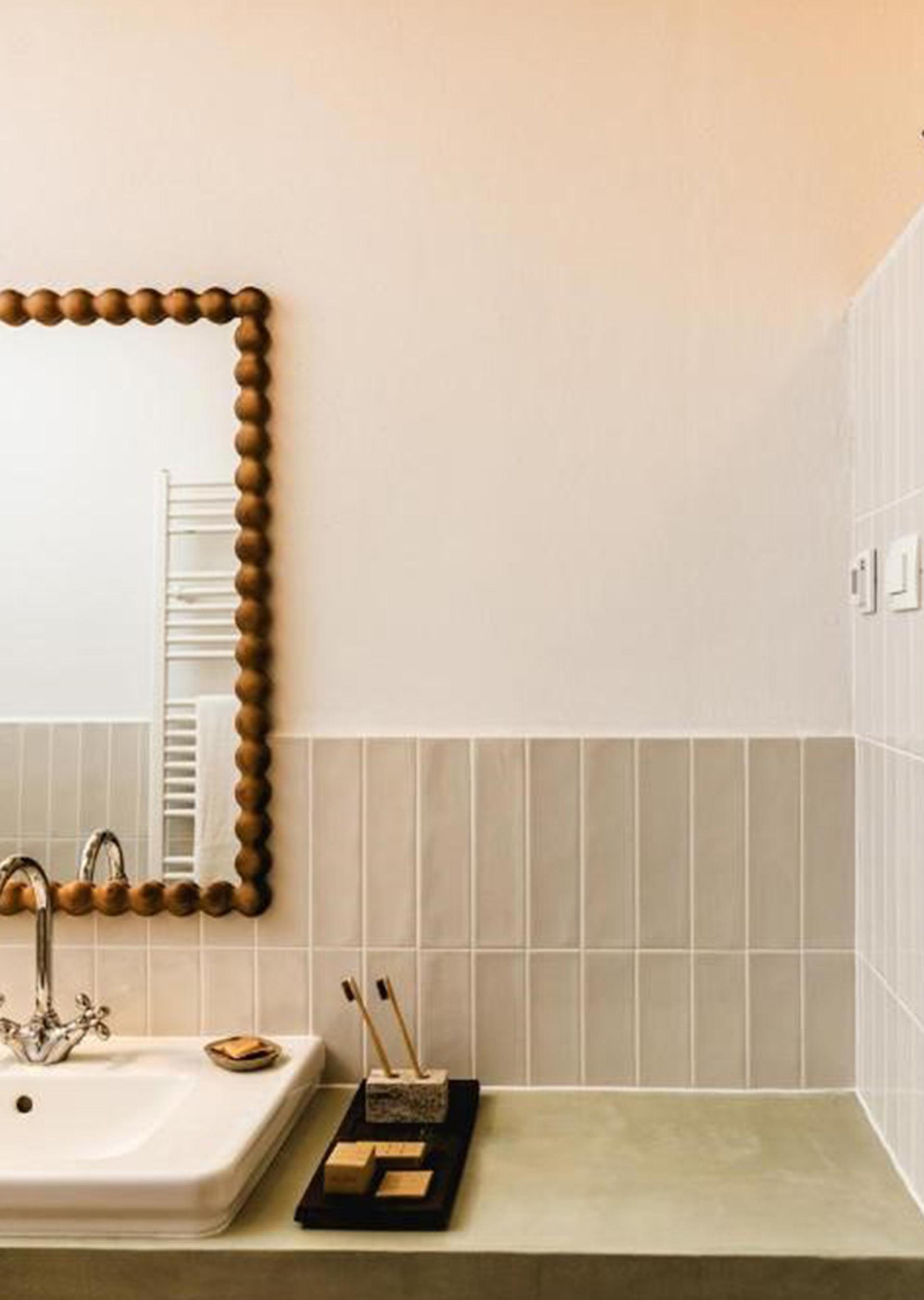
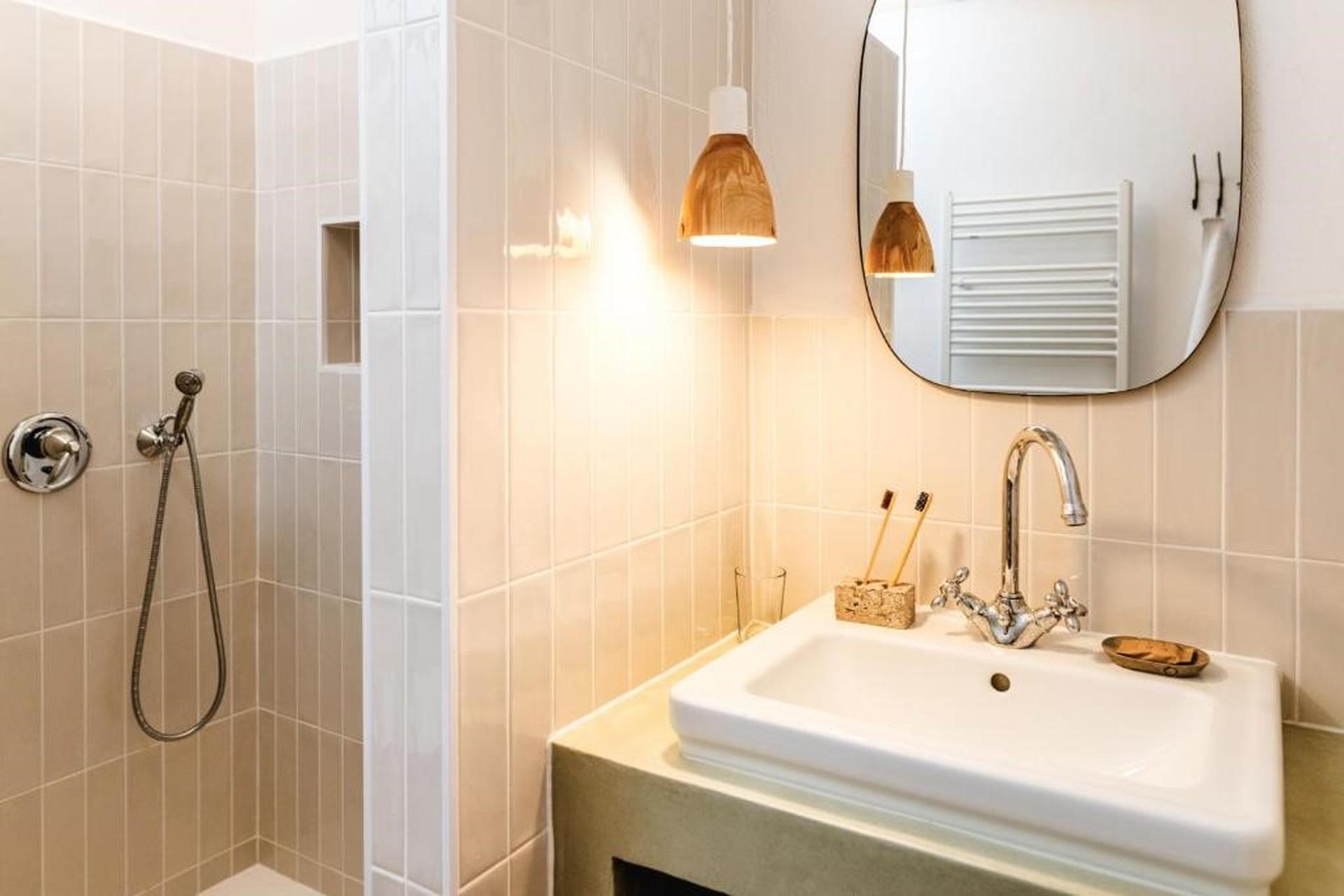
One of the most innovative features is the choice of the Fragments majolica tile collection designed by artist Pierre Charpin for Ceramiche Piemme, selected in the Milk shade (with 7.5×30 cm strips) for the bathroom walls. This solution reflects the minimalist spirit of nature, bringing brightness and a sense of purity to the room. It is perceived as an authentic part of the architecture, aided by a “handcrafted” look derived from the subtle irregularities of the surface. “We used two broad types of materials: stone, lime plaster, wood, ceramics and solid bricks for the original elements; and metal (in a black stone finish), glass, polished concrete and microcement for the new interventions,” continues Hrvatin. Finally, the bioclimatic principles integrated into the residence were refined to ensure minimal energy consumption. “We sought to exploit the property’s bioclimatic design to the full: the rear of the house protects against the Bora and cold north-westerly winds, while the south-facing façades open to the sun. The barn provides shade on the southern side, and the 60 cm to 80 cm thick stone walls act as natural thermal mass for heat storage.”
Fragments
Maiolica Milk
7,5x30 cm - 8,5 mm
Zertifizierungen
ISO 9001, ISO 14001, ISO 50001, ISO 45001, LEED
Weitere Informationen zum Produkt > Gehen Sie zum Katalog