


Projekte


The silent narrative of surfaces
Marta Lavinia Carboni
Jojko+Nawrocki Architekci
Paulina Babral-Sołtysik, Pi Concept
CERCOM
2023
This elegant private home in Wilanów on the outskirts of Warsaw stands out within Poland’s contemporary residential landscape for its considered balance of architectural rigour, material sensitivity and quality of living. Meticulously designed in every detail, the domestic space is born of a coherent vision, built on conscious choices and a strong focus on the continuity between architecture and interiors.
The interior design is the work of Paulina Babral-Sołtysik, interior architect and founder of the Warsaw-based studio Pi Concept, which specialises in residential projects. “I primarily work on residential interiors and oversee their implementation as well,” explains the designer. “In this project, my involvement was particularly extensive because I also acted as the investor and construction manager, working in collaboration with Jojko+Nawrocki Architekci.” The latter designed the building’s architecture, which earned the Architecture of the Year award from SARP Katowice, the Association of Polish Architects.
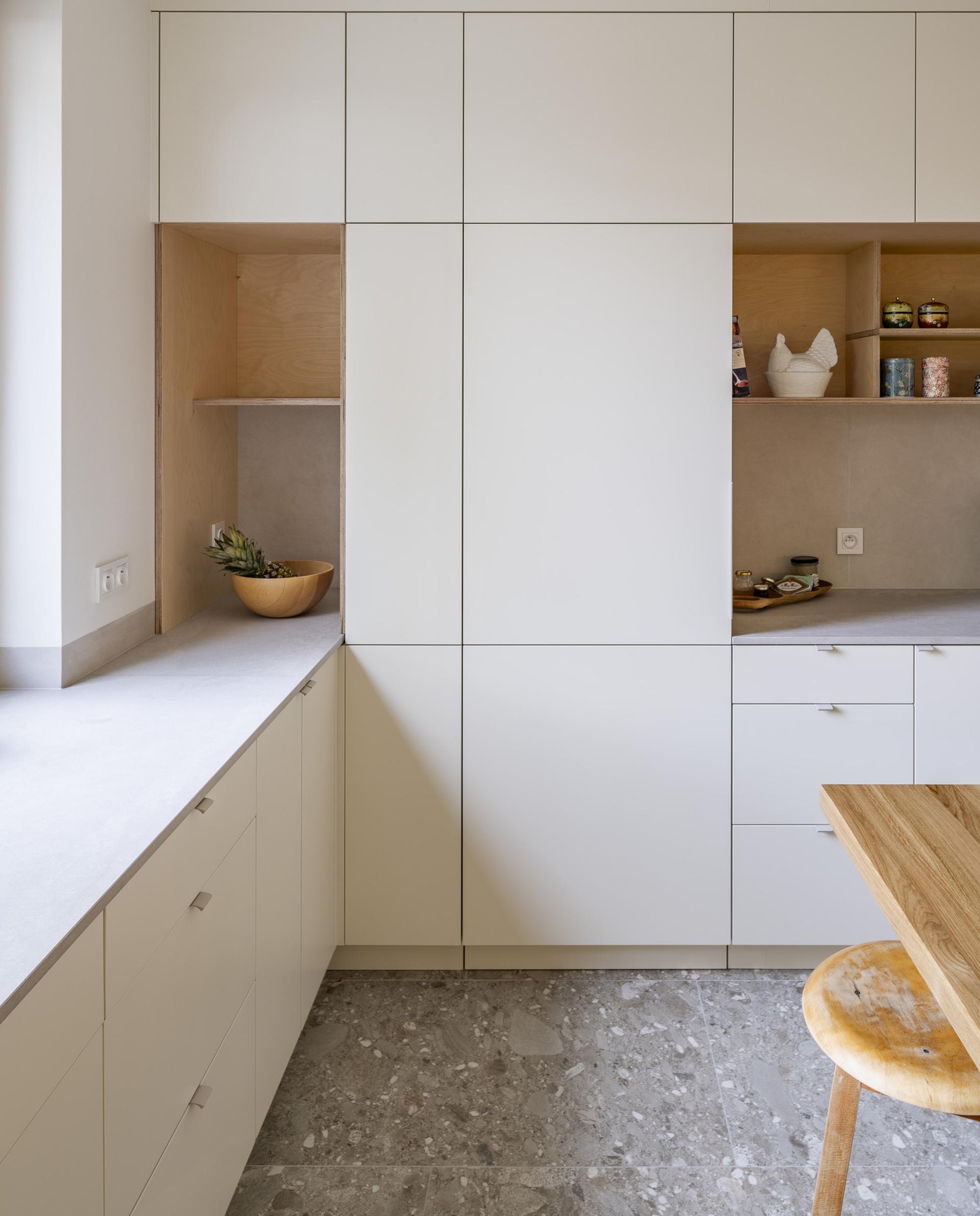
Here, the choice of materials is one of the primary tools used to define the identity of the interiors. Babral-Sołtysik relies on an essential colour palette and a careful exploration of different surfaces. “The material concept is based on a limited range of colours paired with surfaces that differ in texture and pattern,” she explains. “I wanted to create bright, reassuring interiors that complement daily life without straining the eye.”
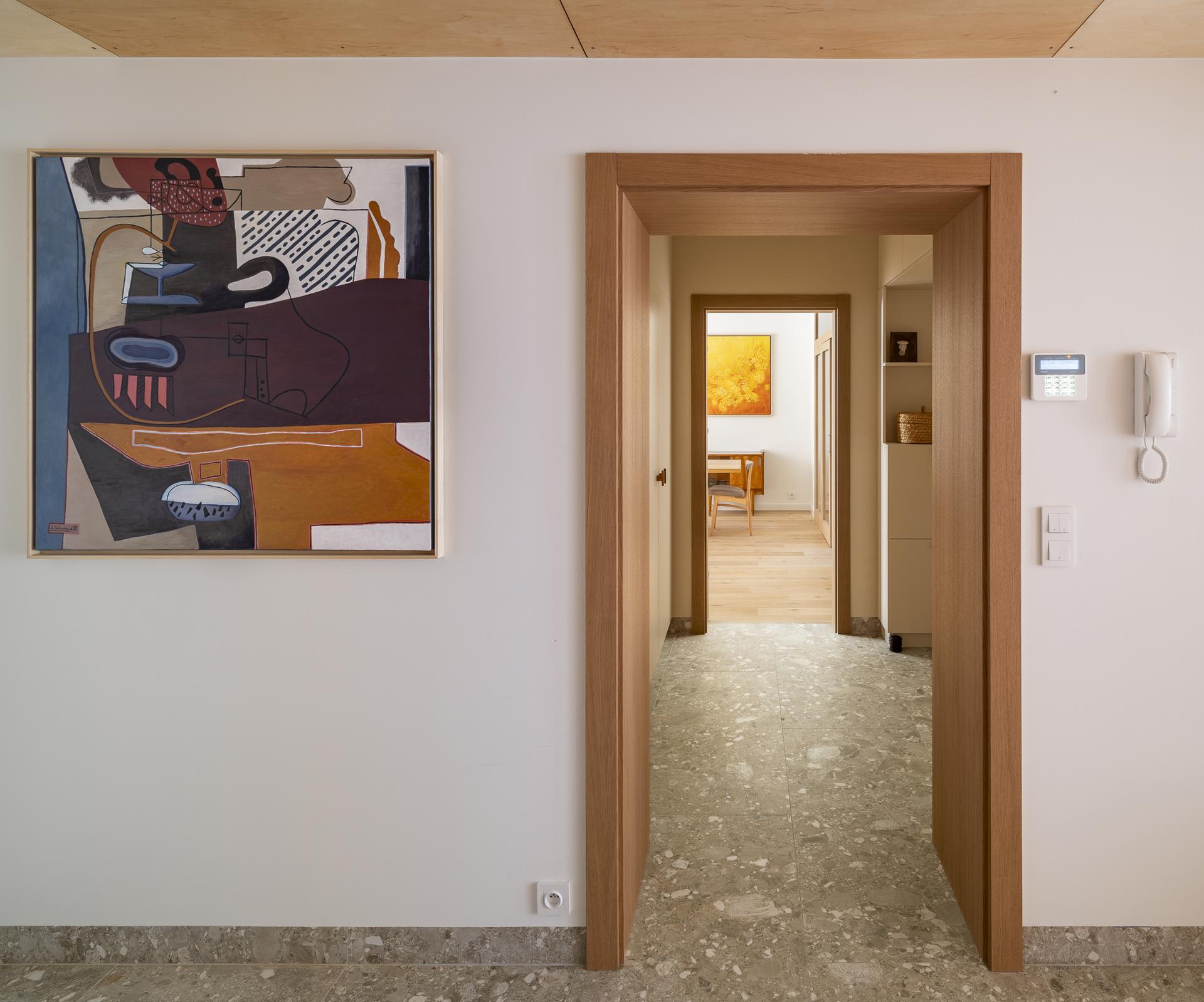
The relationship between the exterior and interior is equally fundamental, conceived as a fluid and natural transition. “The goal was to find a common denominator between the materials used outside and those chosen for the rooms, so that upon entering the house, one perceives a seamless transition, free from contrasts or any sense of discontinuity.”
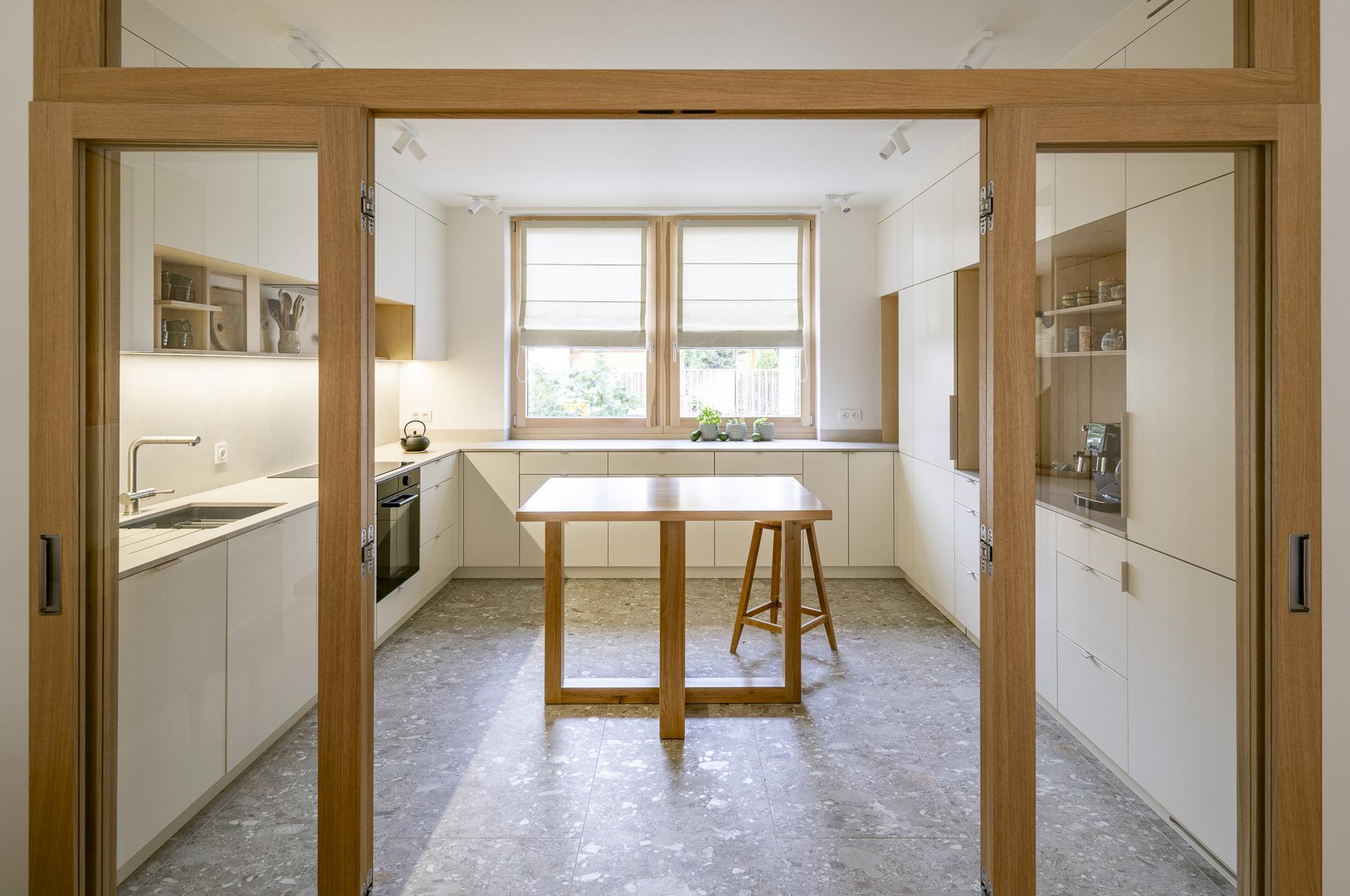
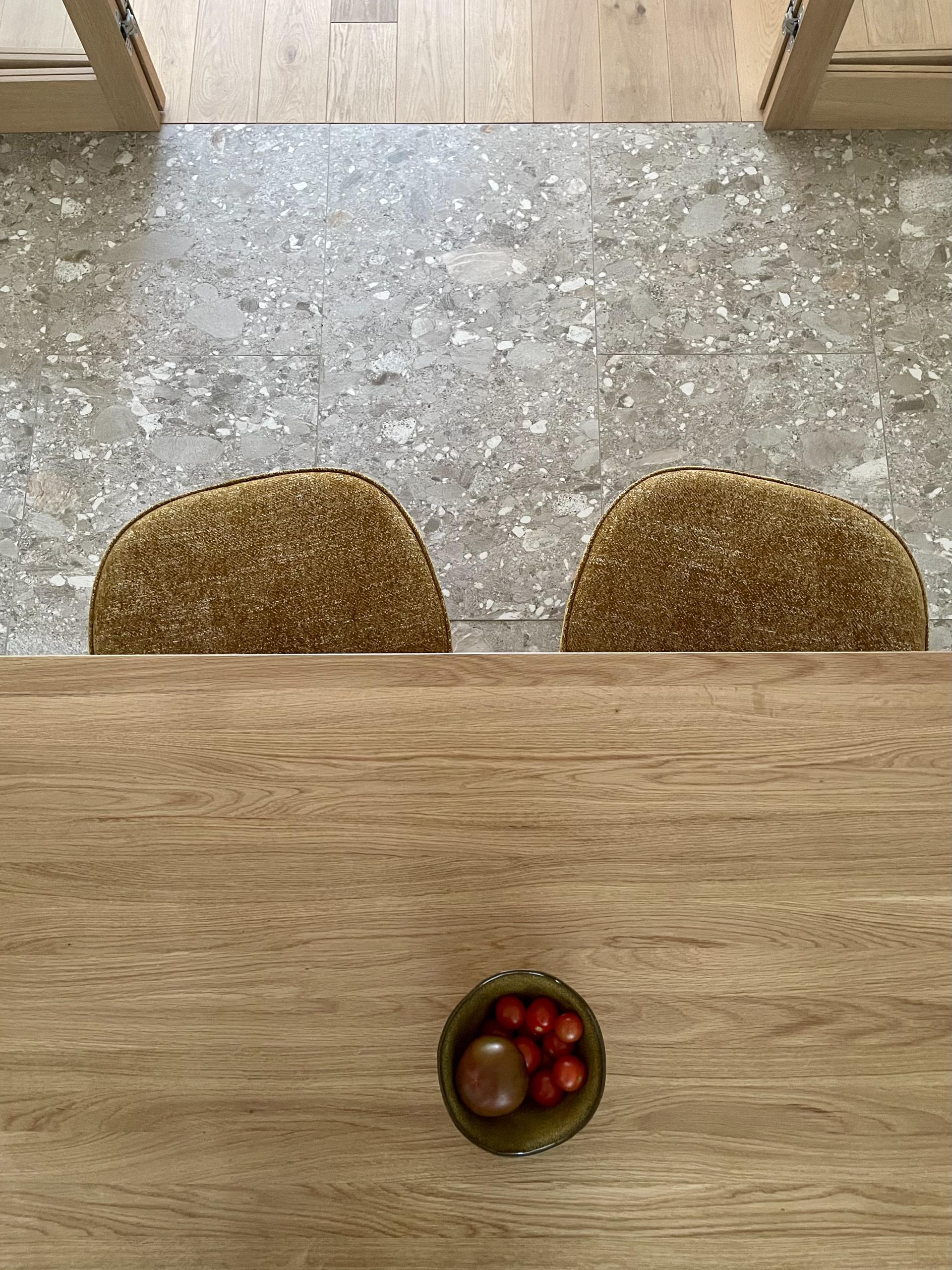
Within this poised equilibrium, ceramic surfaces play a central role. The floors in the kitchen, corridor, bathrooms and study feature Ceppo di Grès Sabbia by Cercom, a contemporary reinterpretation of the famous Lombard stone. The material preserves the mineral, sophisticated character of the original Ceppo, reimagining it through polychrome inclusions, tonal variations and tactile effects that lend depth and visual vibrancy to the space. “For me, ceramics provided a versatile and durable backdrop, capable of dialoguing with the furnishings and offering an interesting texture without becoming the absolute protagonist,” the designer notes.
Rendered in warm tones, the ceramic surfaces help create bright, relaxed environments, designed as a neutral base for a curated selection of vintage furnishings that serve as personal narrative elements. The project demonstrates how ceramics, when used with restraint and awareness, can become “quiet architecture”, a solid yet discreet presence that complements space and light, reflecting an idea of the home that is intimate, balanced and deeply contemporary.
The project is rounded off by a strong focus on environmental performance. The building is nearly passive, featuring high-quality insulation, heat recovery systems and south-facing solar panels, with a green roof planned for the flat section of the structure. Parallel to this, within the interiors, the durability of materials and their ability to withstand the passage of time without losing quality are integral to the design vision.
Ceppo di Grès
Sabbia
60x120 cm - 9,5 mm
Zertifizierungen
ISO 9001
Weitere Informationen zum Produkt > Gehen Sie zum Katalog