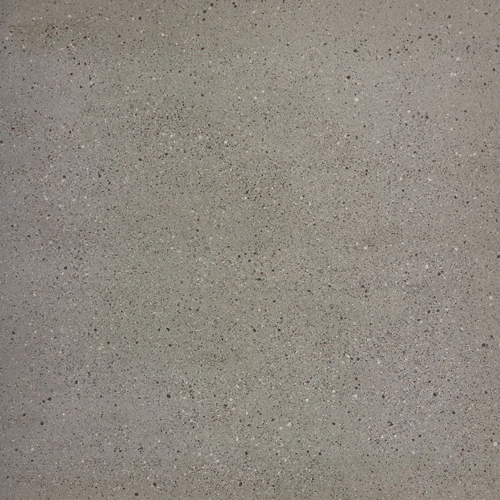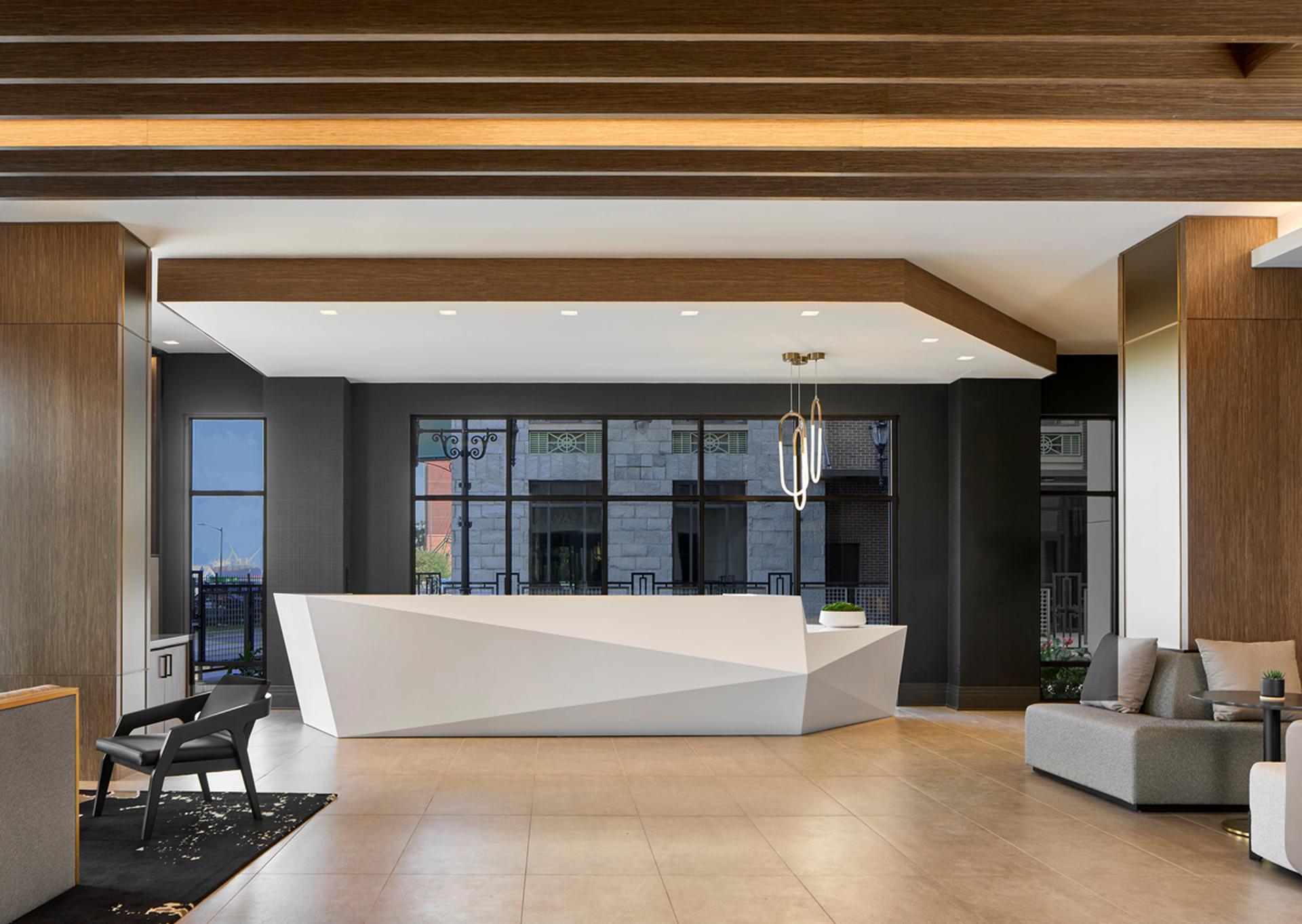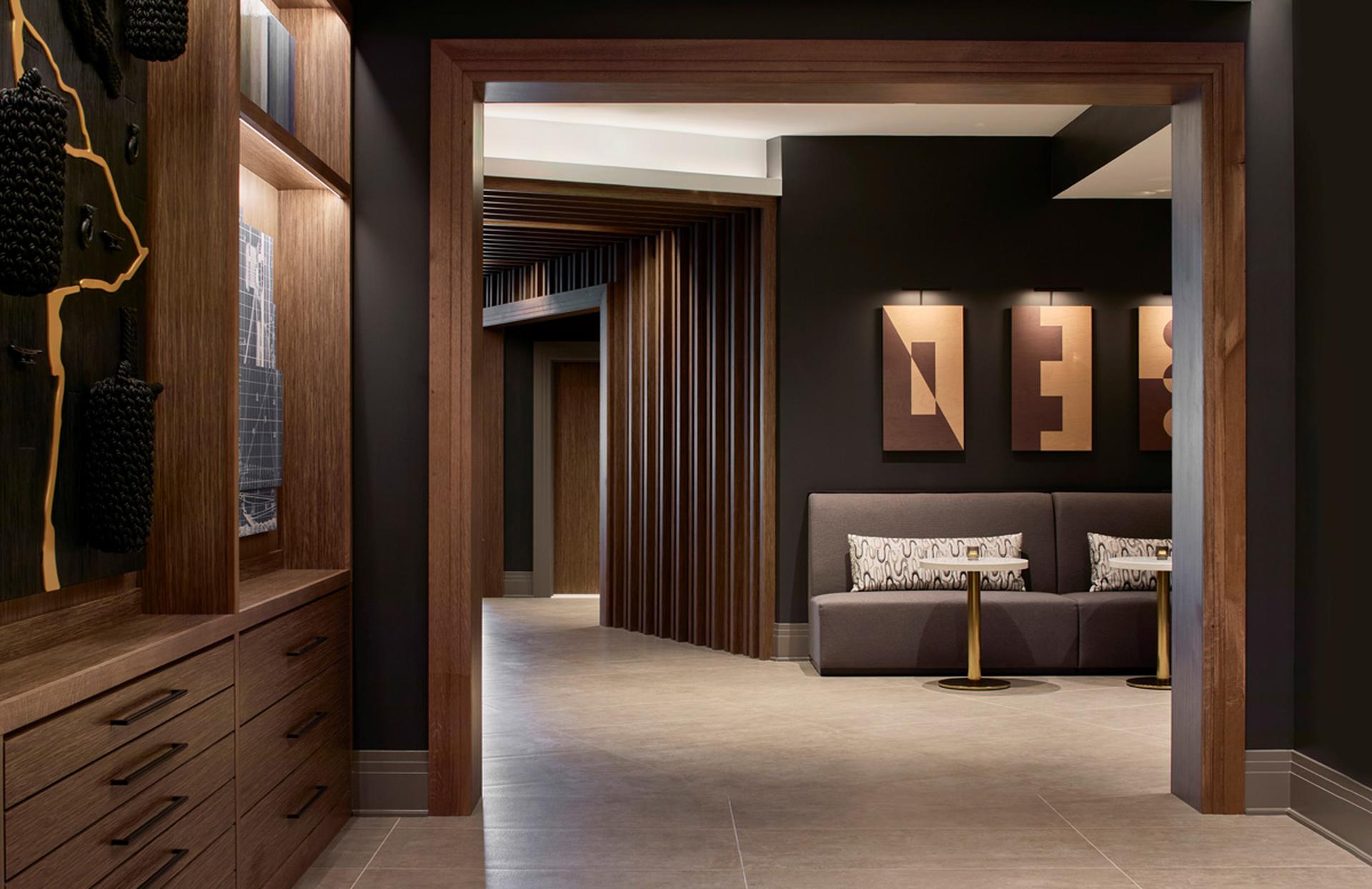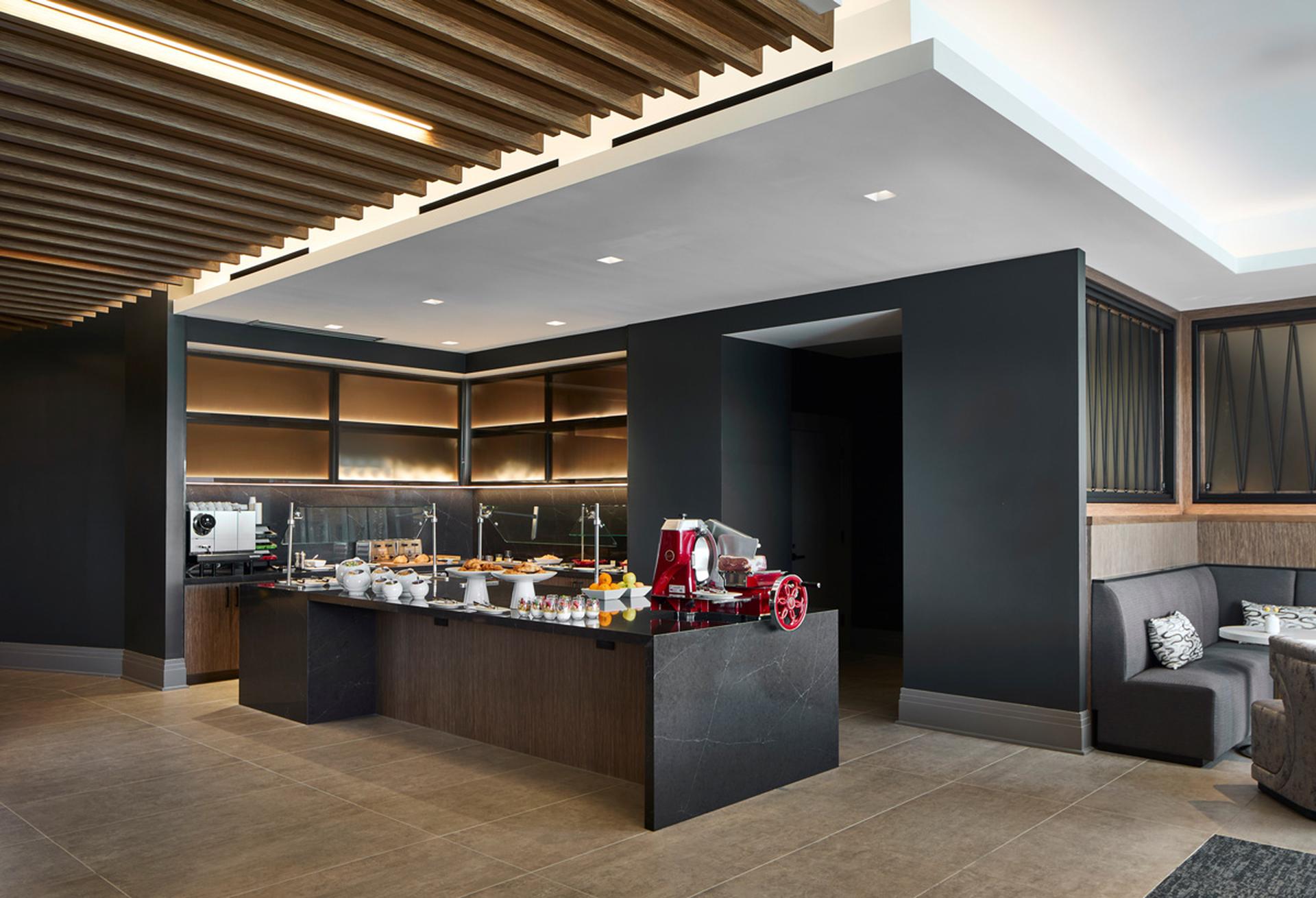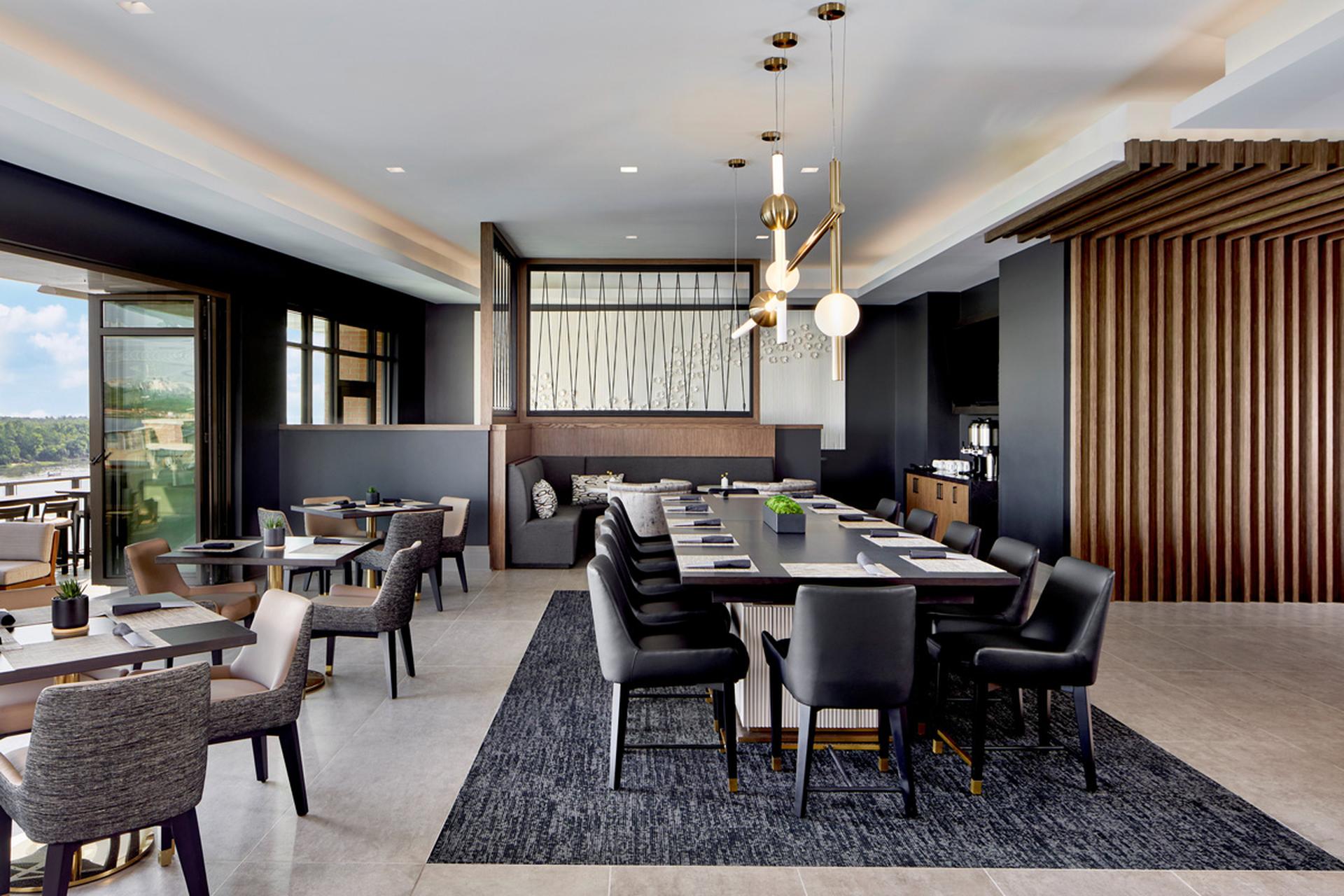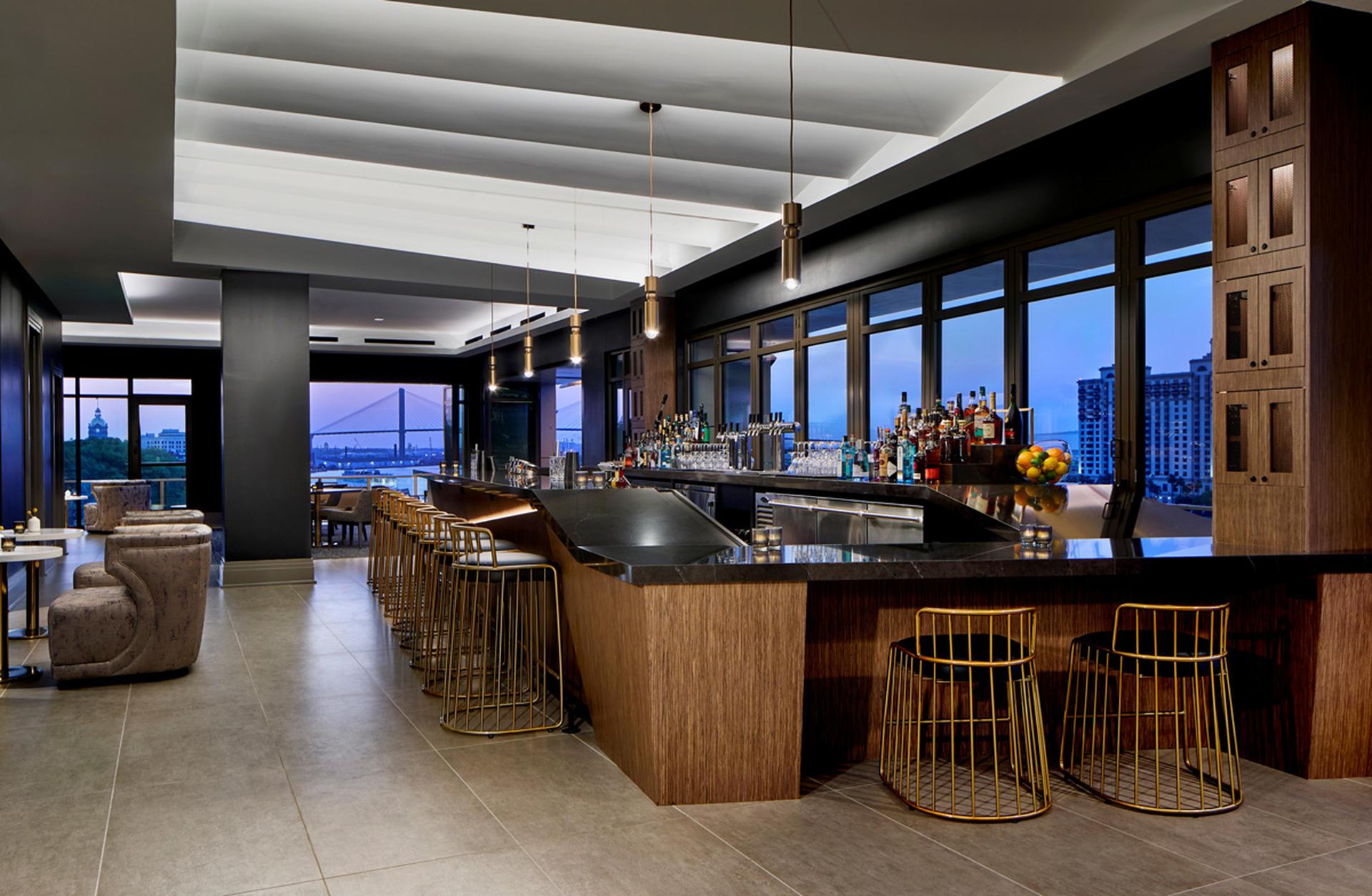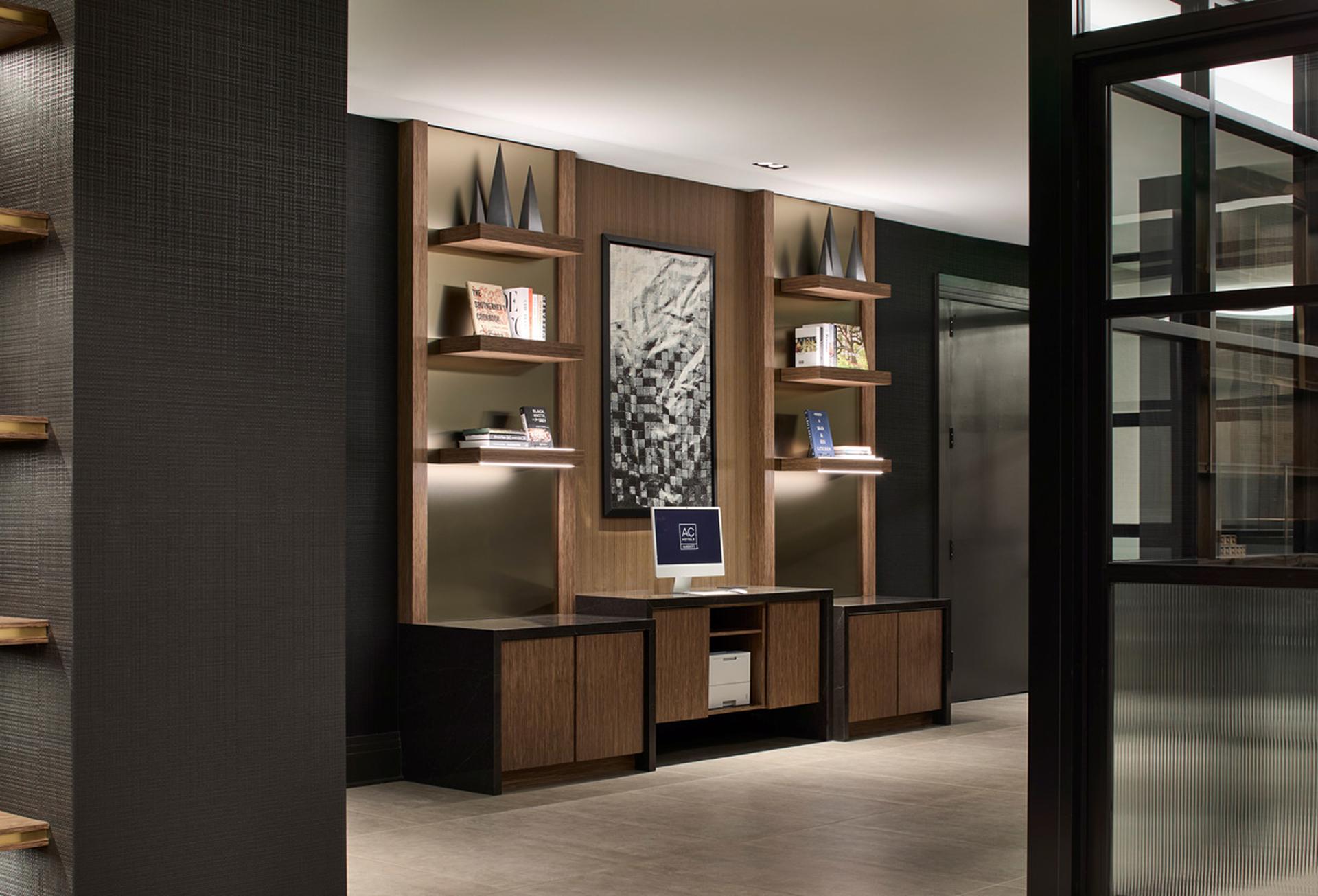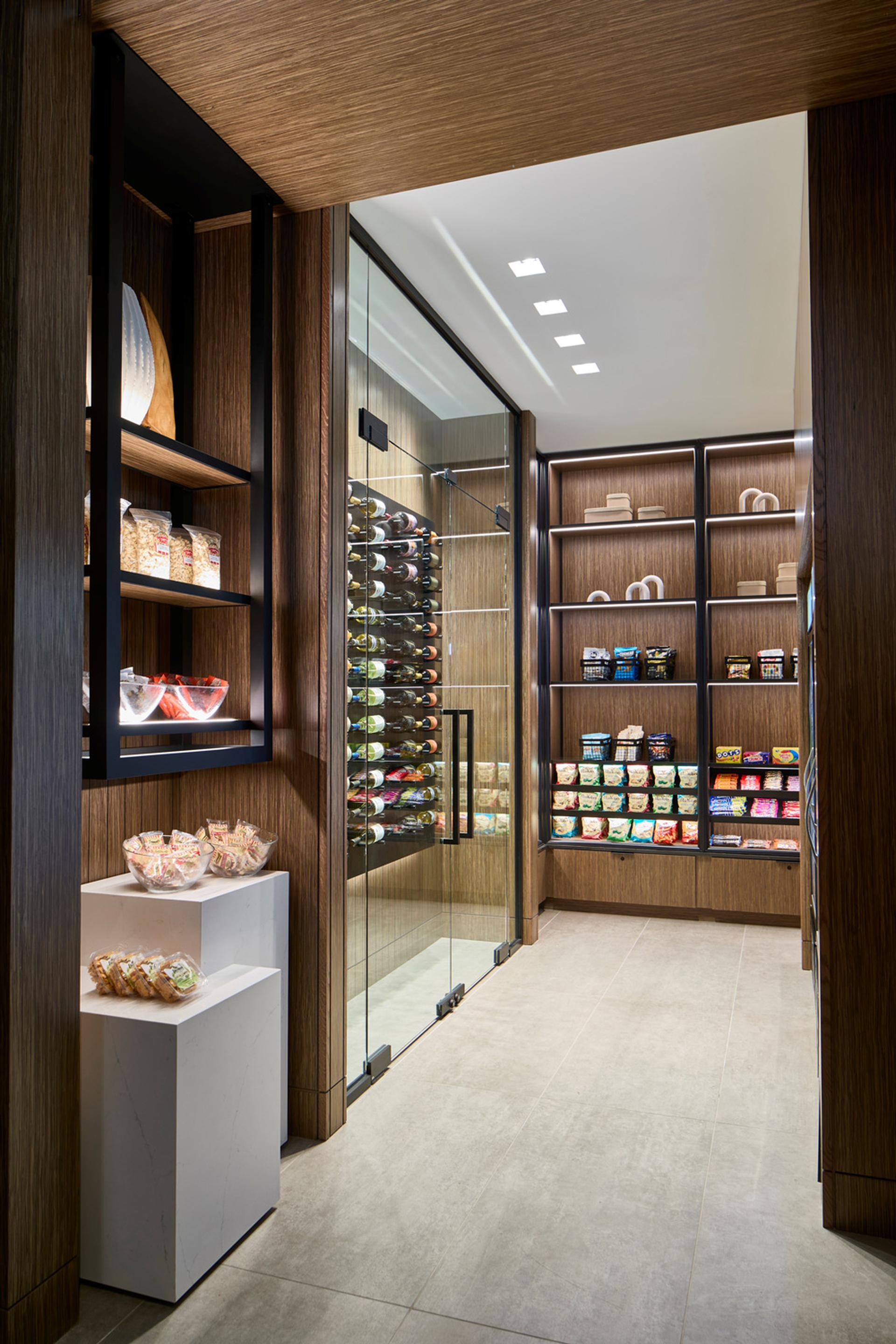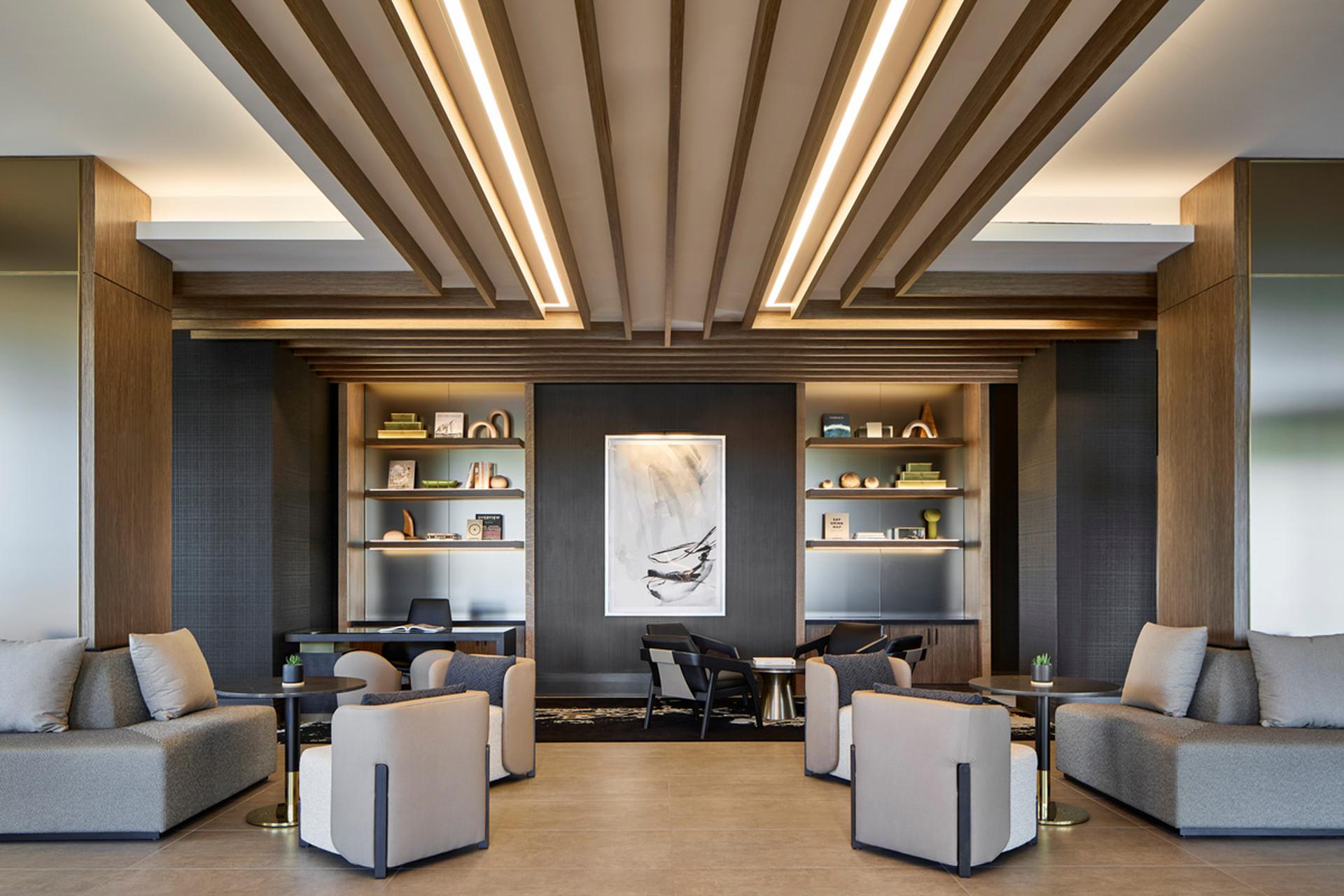






The AC Hotel Savannah Historic District stands on the banks of the Savannah River, just a short distance from the oldest neighbourhoods of the eponymous eighteenth-century city located on the east coast of the United States. The project received an Honourable Mention in the Commercial category of the 2026 Tile Competition. Lead interior designer Austin M. Brown of Design Continuum Inc. worked with GMShay Architects to give the hotel a bold and contemporary visual identity that closely reflects the energy of the commercial port. Completed in April 2025 by Balfour Beatty, the hotel takes its design cues from its waterfront location and the area’s maritime heritage. The interior design reinterprets the aesthetic of early wooden shipping containers, setting it against the satin-finished surfaces of the modern cargo vessels that pass through the channel each day. This narrative is expressed through a clean, minimalist design language, with linear detailing, leather furnishings, warm wood tones and contrasting metal accents. Carefully selected surface materials create a sense of continuity throughout the hotel. In the large communal spaces, including the lobby, market area, circulation areas and eighth-floor rooftop bar, Emilceramica’s On Square collection in the Sienna Concrete finish creates a continuous concrete-effect surface that balances contrasting textures and gives the interiors a greater sense of space. The palette is softer in the suites and private spaces, where lighter, more subtle textured finishes bring a sense of domestic warmth.
The bathroom floors in the presidential suite feature Cerim Antique Marble by Florim. On the guestroom floors, the areas housing water refill stations for guests are clad in Overcome porcelain stoneware by Leonardo Ceramica. Finally, Marble Experience slabs by Italgraniti Group were used for the flooring in the public restrooms.
Environmental considerations informed the entire construction and design process, enabling the development to achieve the prestigious LEED Platinum certification. A carefully curated art programme complements the architecture and natural light to evoke the movement of the river. Architectural photographs by Lauren Rubinstein show how history, landscape and interior design come together to create a sophisticated hospitality environment with a strong sense of place.