











Interviews


A complete solution, not simply a product
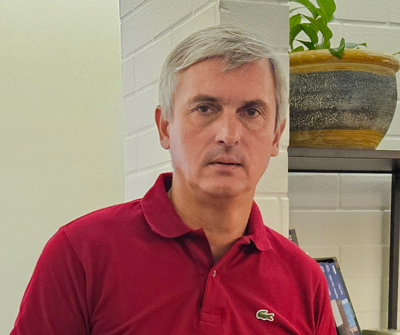 (October 2026) – Based in Poreč, Istria, Špina d.o.o. has been a well-established presence on the Croatian market for many years and is today one of the country’s leading suppliers of wall and floor coverings, with a clear focus on high-quality materials for interior and exterior design. Its business is built around the careful selection of products, partnerships with renowned manufacturers and, equally importantly, a thorough understanding of the needs of architects, designers, investors and end customers.
The company places particular emphasis on Italian ceramics, recognising the ability of Italian manufacturers to combine aesthetics, technology and functionality. Rather than simply offering a wide range of products, Špina aims to help its clients identify the solutions best suited to each individual space, project and lifestyle.
This commitment to Italian ceramic products was also recognised at Cersaie 2026, where Špina received the Confindustria Ceramica Distributor Award for Croatia. Robert Jurišević, owner and director of Špina, discusses the company’s approach, the evolving needs of the Croatian market and the qualities that make Italian ceramics a key part of its offering.
What types of ceramic tiles does your company distribute, and how are they most commonly used in projects?
The range of ceramic tiles available today is extremely broad, and they can no longer be viewed simply as conventional floor or wall coverings. Modern ceramics enable the creation of comprehensive spatial solutions – from floors and walls to kitchen worktops, bathroom surfaces, tables and various bespoke furniture elements.
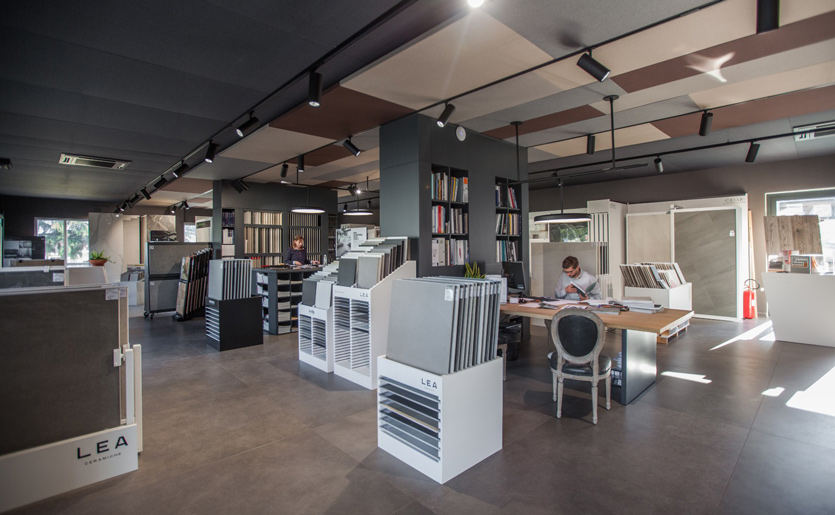
We particularly value large-format tiles because of their ability to create visually continuous surfaces with a minimal number of joints. In addition to their aesthetic value, these products offer excellent technical characteristics, making them suitable for private interiors, hotels, restaurants and commercial spaces, as well as more demanding architectural projects.
Who are your main clients, and how are their needs and expectations changing?
Our clients come from a variety of segments – from private investors and end customers to architects, interior designers, construction companies and professional investors.
We have noticed that customers today are increasingly well informed. They are not looking only for a beautiful product; they also want to know how it will perform over the years, how practical it is to maintain, what applications it offers and how it can fit into the overall concept of a space.
For professionals, the focus is naturally also on technical characteristics, lead times, availability and the possibility of executing specific details. That is precisely why we believe that high-quality service and professional advice are becoming just as important as the product itself.
How do changes in market demand influence design choices and product development?
The market today responds to trends much more quickly. However, we believe that it is not enough to simply follow what is currently popular. When selecting products, we try to identify trends that have the potential to endure and offer long-term value.
We are seeing strong interest in natural materials and their interpretations in ceramics – stone, marble, wood, concrete and earthy tones. At the same time, there is growing demand for sophisticated neutral palettes, large formats and surfaces that enable the creation of calm, monolithic interiors.
Design is therefore evolving towards greater flexibility. Today, a single product often needs to allow for multiple applications and be versatile enough to respond to a variety of architectural concepts.
What specific characteristics do you look for when selecting new Italian products – design, sustainability, brand identity or other factors?
There is no single criterion. A product must combine several elements: quality, distinctive design, technical characteristics, manufacturer reliability and the potential for long-term application.
Design is certainly very important, but the quality of execution and product consistency are equally important to us. When it comes to premium projects, clients expect what they see in a catalogue and showroom to be of the same high quality in the final realization.
Sustainability is also becoming an increasingly important criterion. Due to its durability, resistance and ease of maintenance, ceramics have strong potential for sustainable applications. We are also paying increasing attention to production processes themselves, as well as manufacturers’ approach to environmental issues and resource efficiency.
What is the current state of the Croatian market, and which product categories are performing best?
The Croatian market has become significantly more sophisticated in recent years. Customers are increasingly thinking about a space as a whole and are willing to invest in higher-quality materials when they recognize their long-term value.
Large formats, premium collections and products inspired by natural materials are particularly interesting. Collections that offer the possibility of combining different formats, colours and surfaces also play an important role, as they give architects and designers greater freedom when creating spaces.
The Croatian market also has one particular characteristic – its strong connection to tourism. Hotels, villas, apartments and hospitality establishments require materials that must simultaneously be attractive, durable and easy to maintain. This further drives demand for high-quality ceramics.
In your opinion, what distinguishes Italian manufacturers from their competitors?
Italian manufacturers stand out particularly for their ability to combine design and technology. Italy has a strong tradition in design while continuously investing in the technological development of ceramics. The result is products that can convincingly replicate natural materials while offering properties that often exceed those of the original material.
It is also important that Italian manufacturers have a strong understanding of architecture and the contemporary needs of the design and construction process. Their collections are often not simply a response to a trend, but part of a broader concept that gives architects the freedom to combine formats, surfaces and colours.
On the Croatian market, Italian ceramics have a very strong position precisely because customers increasingly recognize the value of design, quality and durability. Our role is to bring these products closer to the Croatian market and, through a professional approach, help clients choose solutions that will perform well not only today, but for many years to come.
Looking to the future, what do you see as the greatest potential for the development of Špina and the ceramics market?
We believe that the boundaries between ceramics, architecture and furniture will become increasingly blurred. Ceramic surfaces are becoming larger, more technically advanced and more versatile, meaning that their application is no longer limited to traditional floor and wall coverings.
At the same time, personalization and high-quality professional advice will become increasingly important. It is no longer enough to simply offer a product to the customer – they need to be offered a complete solution.
For Špina, this is precisely the direction in which we want to continue developing our business: a high-quality product selection, cooperation with the best manufacturers, keeping up with contemporary architectural trends and, above all, understanding the people who will ultimately use these products.
 Some Italian brands distributed by Spina
Bluestyle
Caesar
Casalgrande Padana
Ceramica Sant’Agostino
Ce.si
Cotto d’Este
Florim
Gruppo Bardelli
Imola Ceramica
Lea
