













Palazzo Strozzi is a magnificent Renaissance residence and an architectural masterpiece in the historic heart of Florence, where “art, taste and design converge in a single space”. Today, it is a cultural and exhibition centre, serving as a laboratory for art and a new vision of contemporaneity.
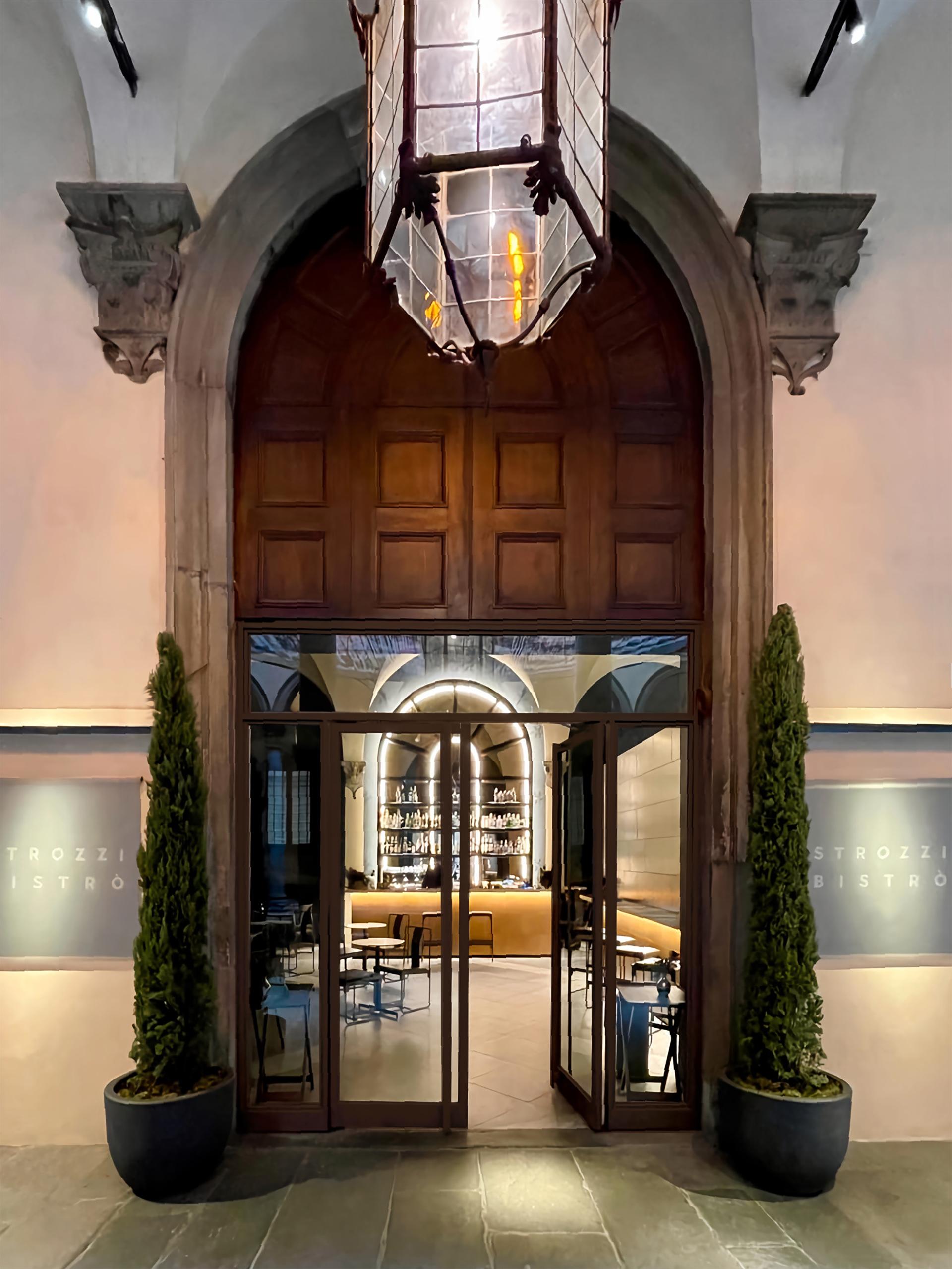
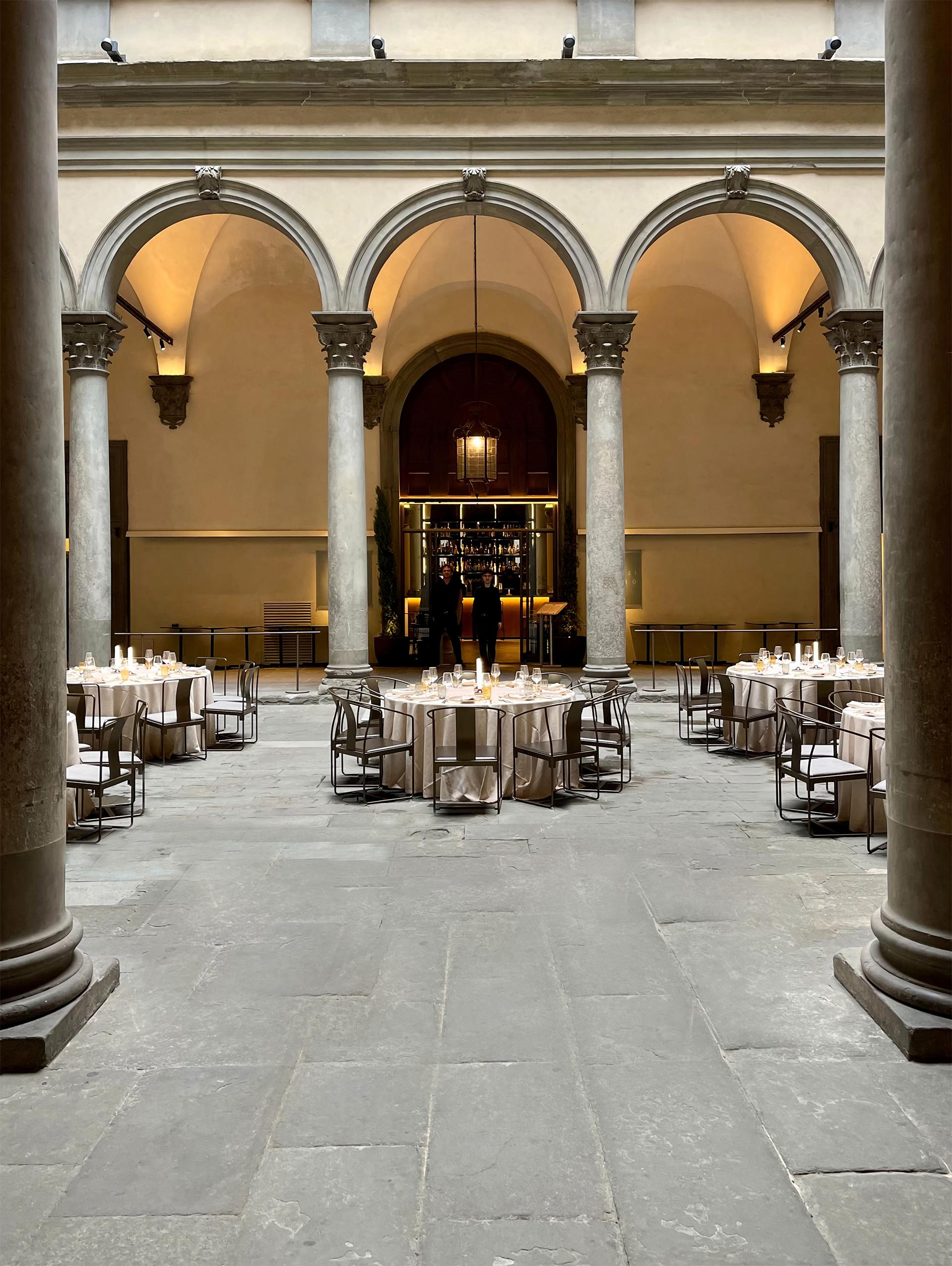
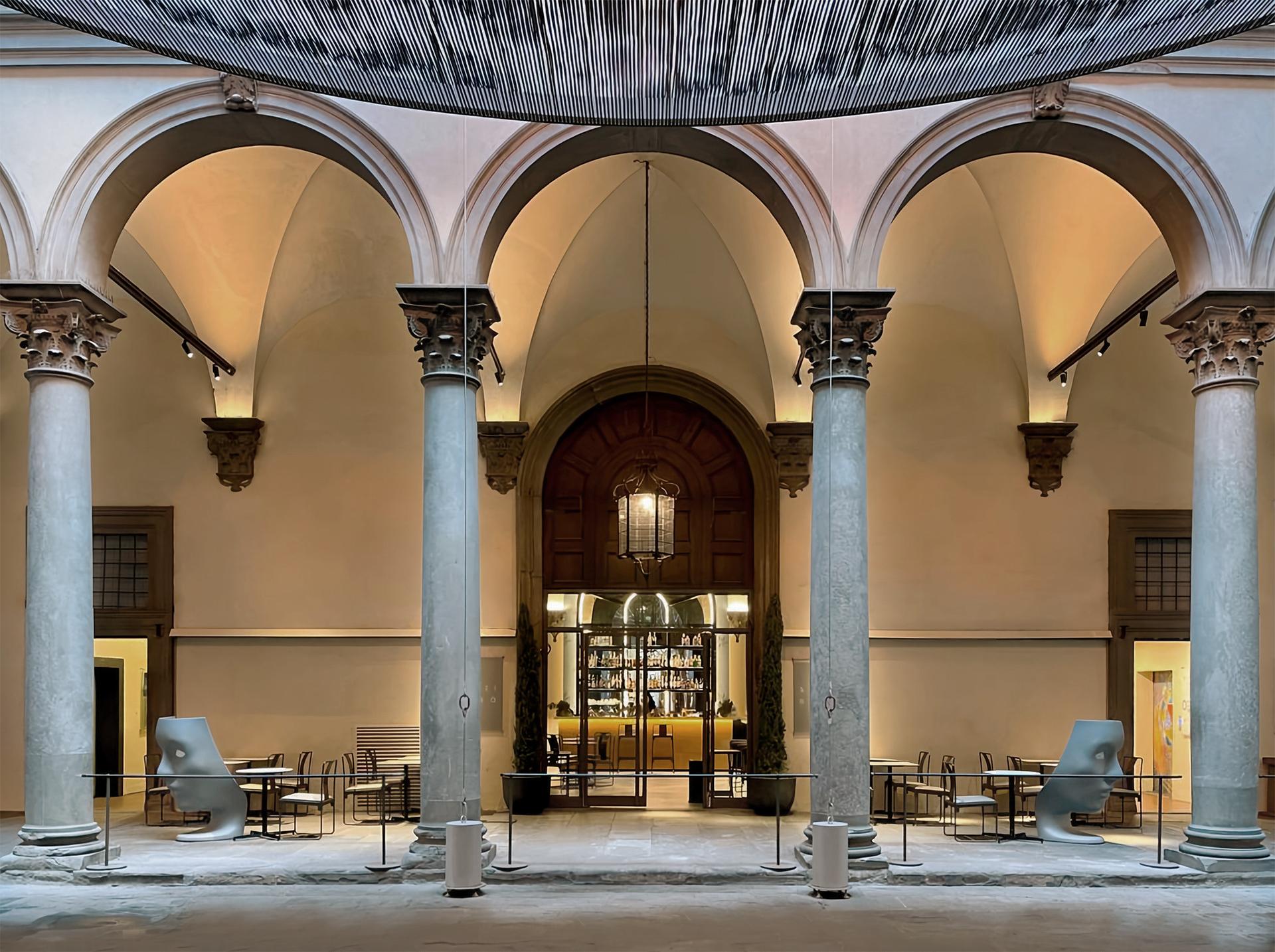
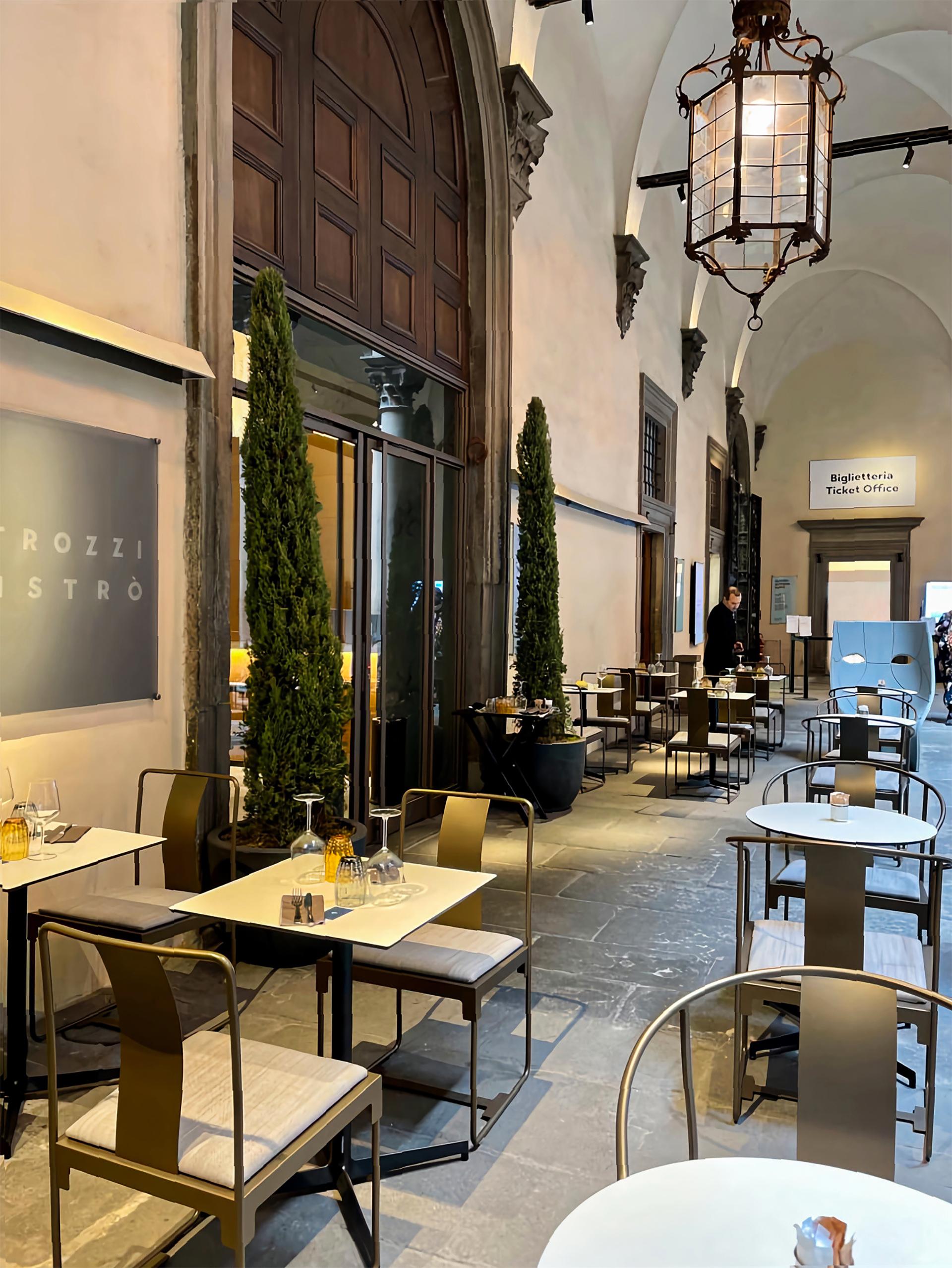
Overlooking the building’s central hub – the historic 16th-century courtyard which serves as an open piazza hosting concerts, performances and contemporary art installations – is the new Strozzi Bistrò, the Fondazione Palazzo Strozzi restaurant designed by architect Fabio Novembre’s practice Novembre Studio.
“The bistro was conceived as a contemporary, welcoming space that reflects the cultural values of the palazzo, a venue for exhibitions and artistic experimentation. Our goal was to translate Renaissance heritage and iconic Italian qualities into a coherent, recognisable gastronomic and spatial experience open to an international audience,” the designers explain.
The concept centres around the preservation of the memory and historic soul of the palazzo. “The interior design project is grafted onto the historic identity of Palazzo Strozzi through a respectful, measured dialogue that enhances the original layout without overpowering it,” the studio continues.
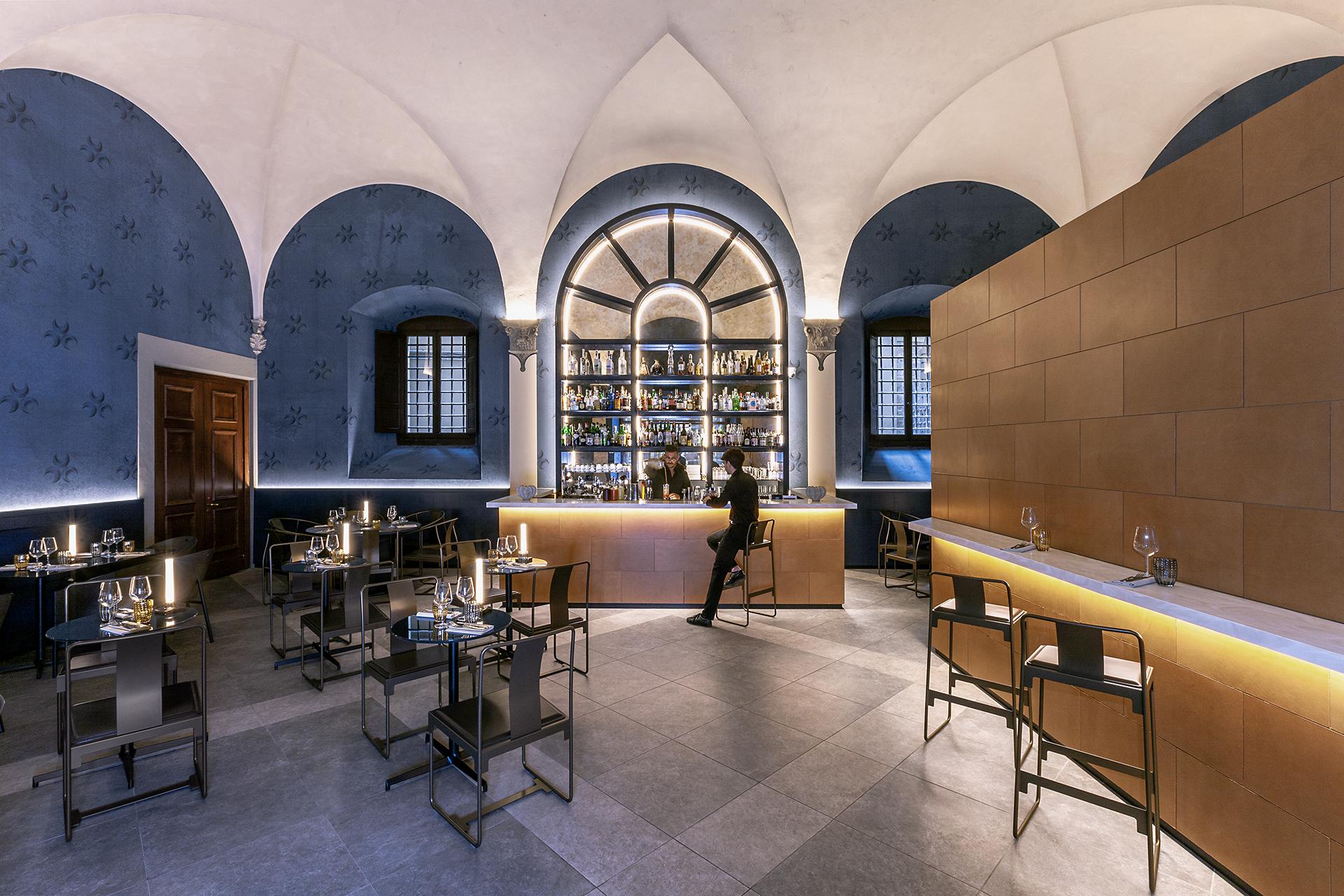
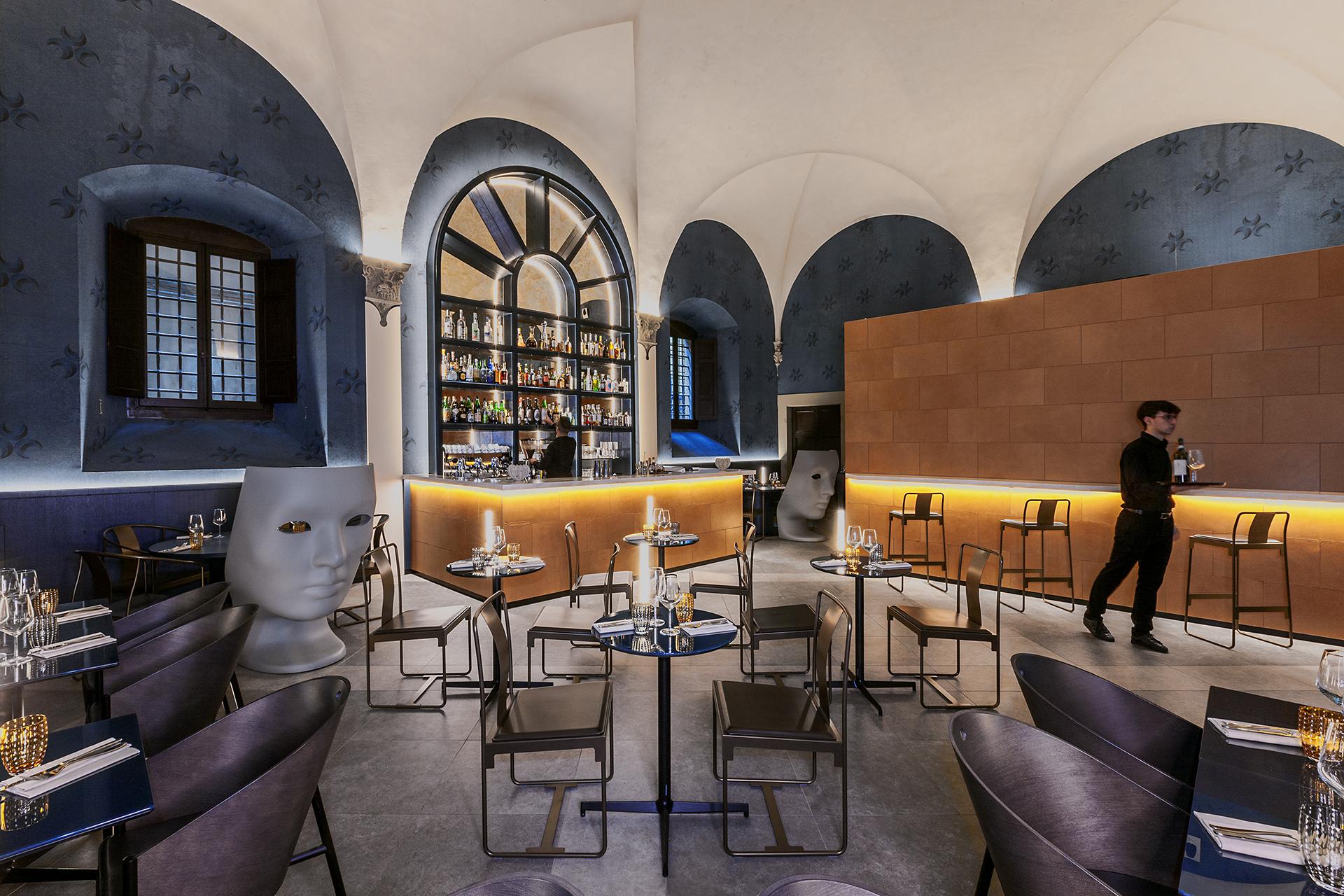
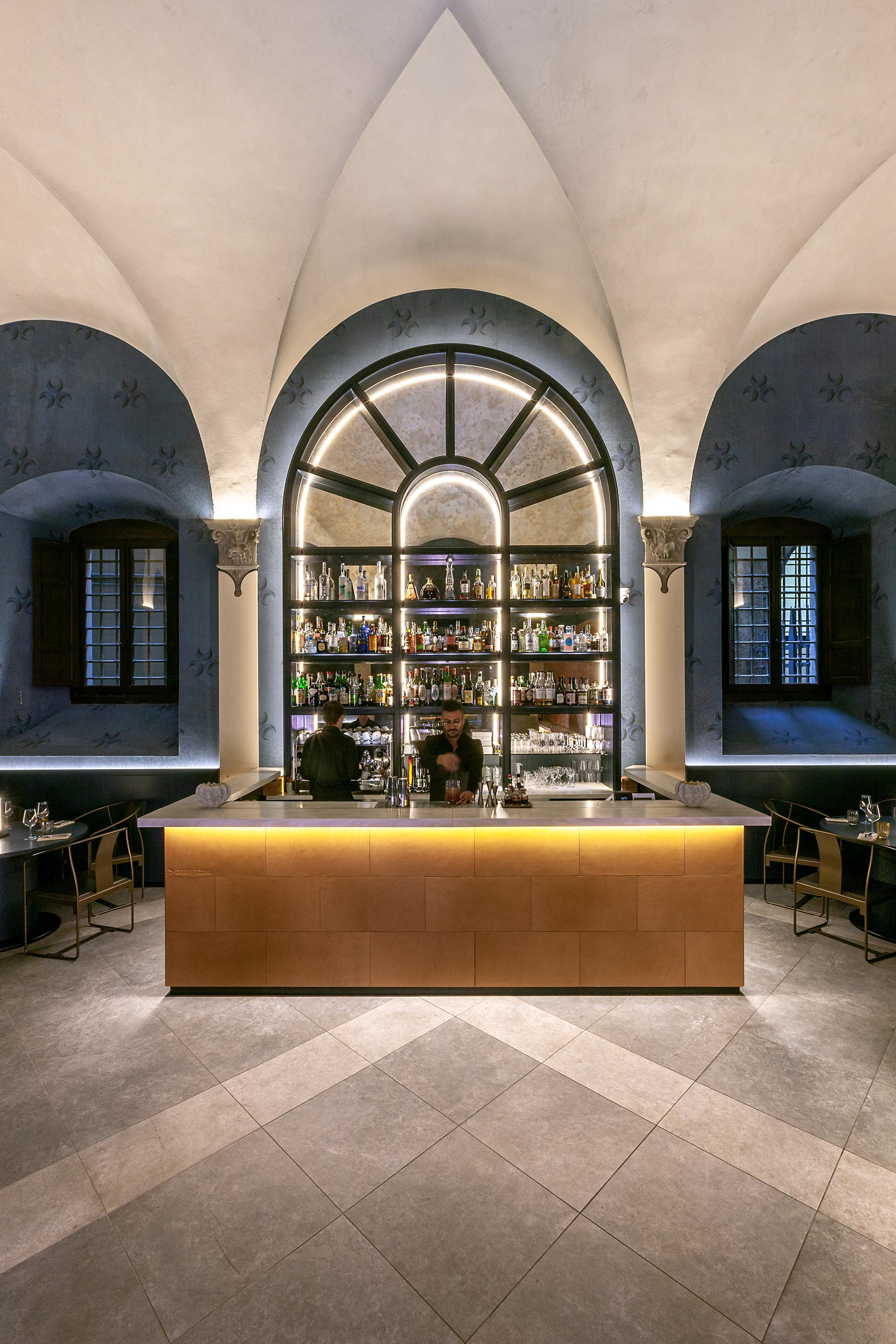
This approach inspired the choice of the geometric flooring pattern, designed to accentuate the symmetry of the cross vaults. Specifically, the designers selected the Via Maestra collection from Panaria Ceramica – a fusion of various stones and innovative technologies – in the contrasting shades of Cammini (a lighter tone) and Paesaggi (a darker, more intense tone).
Similarly, the existing wall capitals were enhanced by integrating bespoke lighting designed to reach the floor via newly designed pilasters. The interior is perceived as a large “telescope” trained on the mirrored bottle display, whose form echoes that of the original entrance portal.
Referencing the Renaissance rusticated stonework of the external façade, ochre leather cladding was used for the bar counter and the open kitchen, arranged in an original brick-like pattern. The furnishings and fittings seek a coherent dialogue with the historic context through a contemporary reinterpretation, while materials and finishes define the relationship between interior and exterior, enhancing the existing architecture.
In keeping with Fabio Novembre’s signature approach, several elements were custom-designed, including the bar area and a bespoke wallpaper in shades of blue, decorated with three crescent moons – the heraldic symbols of the Strozzi family. “Both were conceived as integral parts of the space, in close relationship with the historical context and the venue’s concept,” the studio notes.
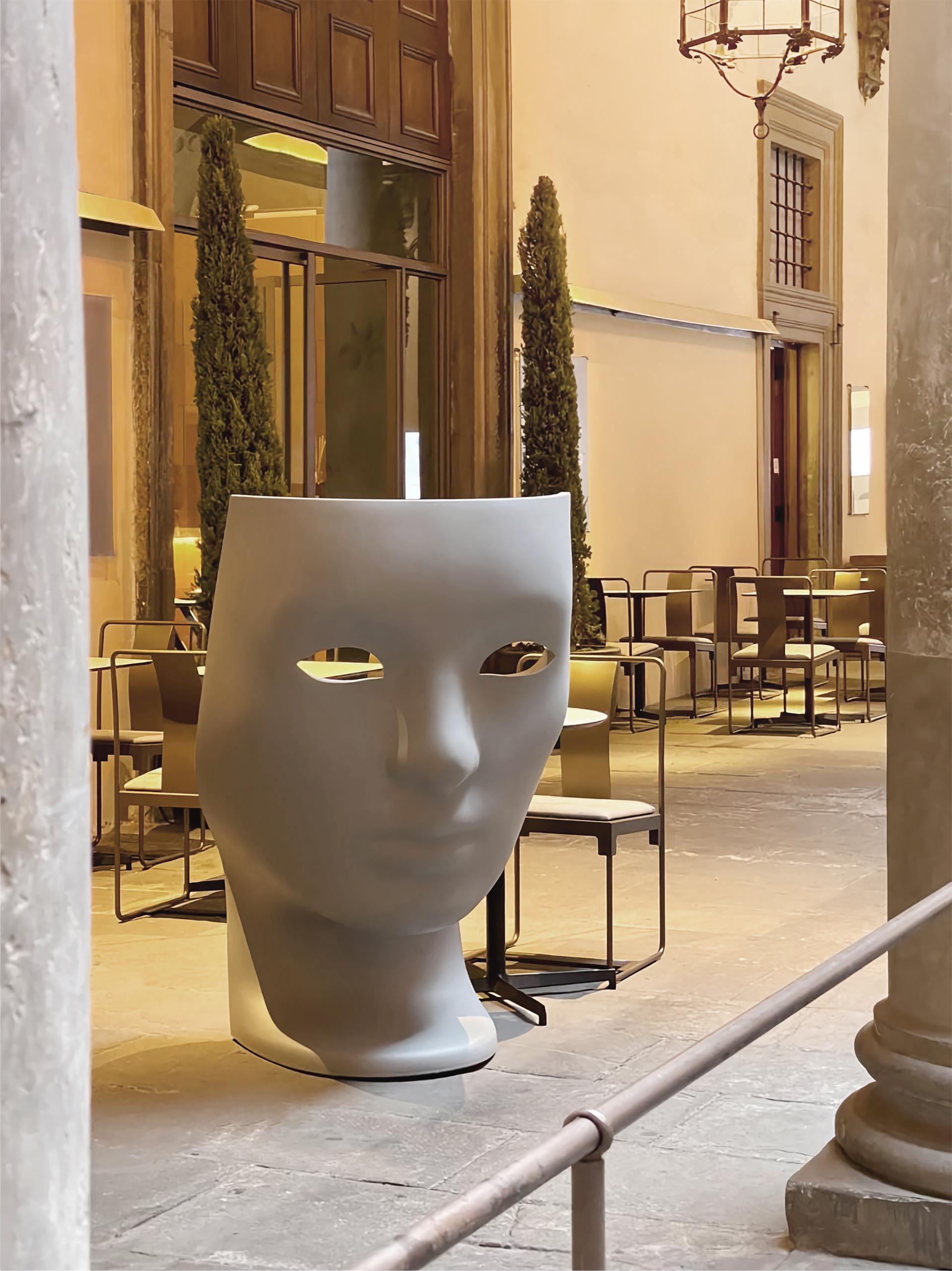
Completing the venue is an outdoor area that extends into the palazzo’s courtyard, framed by a four-sided portico that serves as a stage for artistic interventions.
“This is the first time we have worked within a space that is so universally recognised and protected for its historical and cultural value. This made the experience particularly significant and complex, all the more so as it required a constant dialogue between past and present, historical memory and contemporary vision, conservation and innovation. Transforming a place with such a powerful identity to take on a modern function and language allowed us to experiment with innovative solutions while fully respecting the existing structure,” Novembre Studio concludes.