








Interviews

Discovering what’s unique in every context | by Roberta Chionne


(December 2025) | Founded in Warsaw in 1988, JEMS Architects established itself as an independent practice during the democratic transition that transformed the Polish capital over the following decades. Winners of numerous prizes and competitions, the founding team has worked together continuously since the early 1980s. Today the core group consists of eight owners and partners, including Marcin Sadowski who answered our questions for this interview.
JEMS’ design philosophy is based on an exchange of ideas and on the conviction that “understanding the culture, history, tradition, context of a place and human needs is a prerequisite and basis for the creation of architecture”. The firm describes its projects as holistic visions that are discussed and narrated before being designed and built, with the aim of discovering what’s unique in each theme and context.
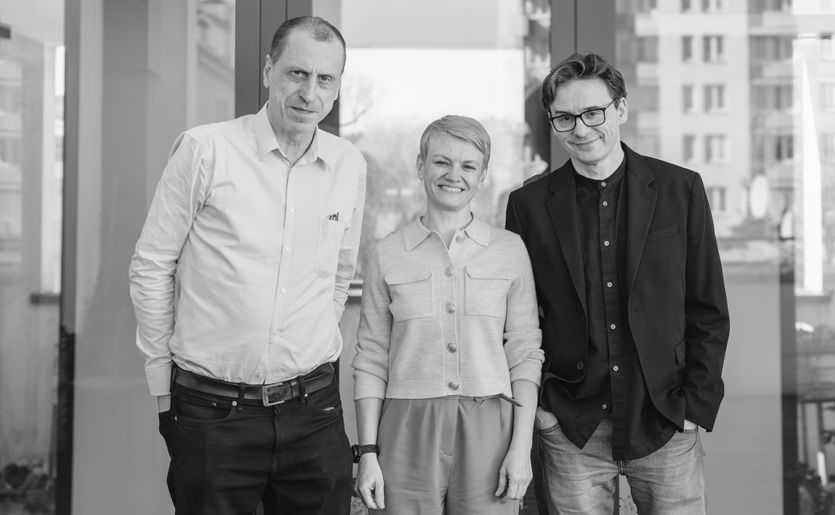
Marcin Sadowski, Iza Leple Migdalska and Tomasz Napieralski from JEMS Architects (ph: Maria Kot)
Mr Sadowski, could you give us a brief overview of JEMS Architects?
JEMS has been operating for more than 30 years. Our first commission was for a large building in the early 1990s, a time when the market was extremely dynamic and everything was moving at a rapid pace. We learned how to prepare tenders and other documentation and how to work with new materials. We began with commercial buildings but gradually moved into the field of public architecture. While we all have our own architectural visions and sources of inspiration, we are united by a shared desire to create architecture that is deeply rooted in the urban context and the natural landscape. Our buildings rarely display expressive forms: they are sober and in many cases constitute background architecture.
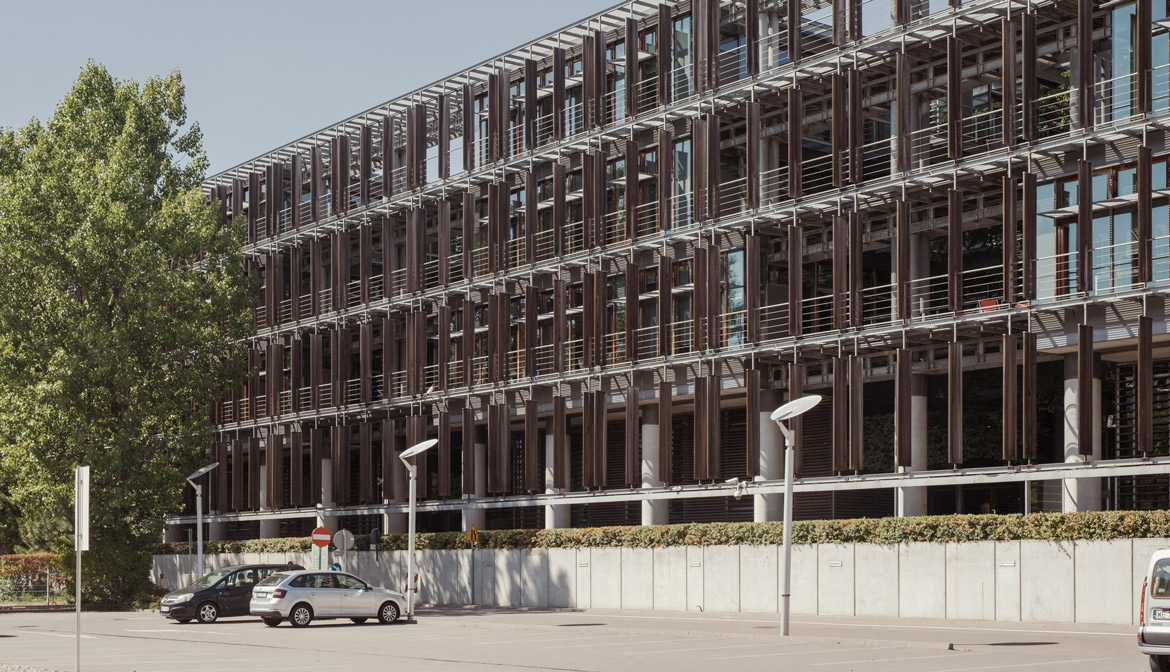
Agora Group Headquarters, Warsaw, 2002
Which projects represented key milestones for your practice?
One of our most important projects was the headquarters of the Agora Group, publisher of Gazeta Wyborcza, which in the late 1990s was the largest newspaper in Central and Eastern Europe. We won the design competition in 1998 and completed the building in 2000. It was probably the first office building that was not a commercial project. It was highly sophisticated in terms of both its architecture and technical aspects, and it remains one of our biggest achievements to date. In 2015 we completed the International Congress Centre alongside the Spodek sports arena in Katowice, one of the most iconic buildings in the history of contemporary Polish architecture. This is one of the largest projects we have ever completed. Another key project for us was the Polish Embassy building in Berlin, which opened in January 2025. The building’s location on Unter den Linden boulevard, one of the city’s main thoroughfares, makes it extremely important for our country’s image.
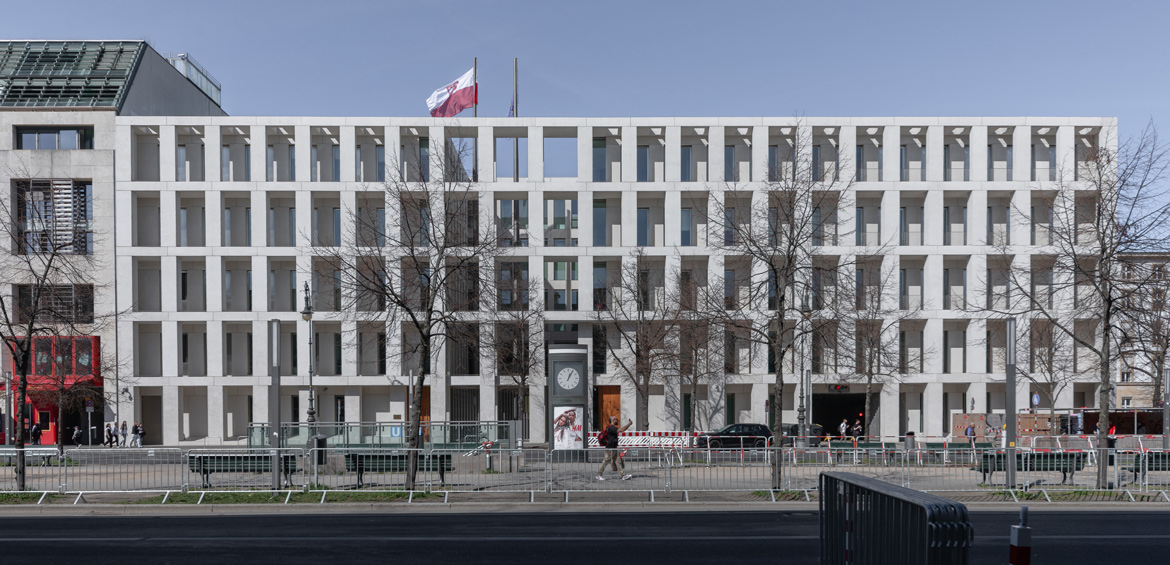
Polish Embassy, Berlin, 2012 (ph: Maria Kot)
What are the main projects you are currently working on?
The two largest projects we’re working on at the moment are a series of residential buildings on Towarowa Street in the centre of Warsaw and a major mixed-use residential and commercial complex in Katowice called Nowy Wełnowiec.
What is the current state of the construction market in Poland?
It’s very difficult to find contractors for apartment renovations, but the new home construction market remains strong. Seeing how many single-family houses are being built in rural areas and the number of new projects we are currently working on, we feel optimistic. Nonetheless, the international situation is very difficult and naturally creates unease among investors.
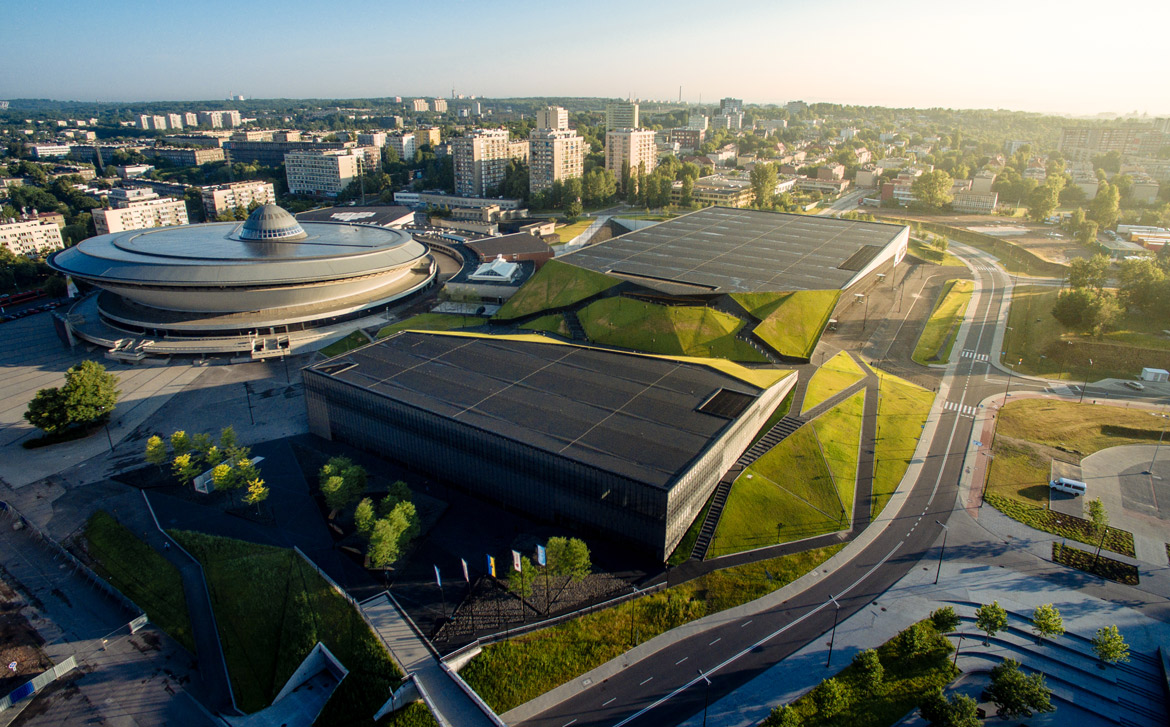
International Conference Centre, Katowice, 2015 (Ph: Juliusz Sokołowsk)
What challenges are you facing in contemporary Warsaw?
In cities across the country, we have to deal with extremely complex procedures, especially regarding environmental regulations. Design processes can take years. We look for inspiration in this multi-layered reality and in the limitations and conflicts of our times. We often venture into areas where there is no clear or immediate solution to a design problem. We try to view this complexity through the lens of culture, history and context, treating reality both as the fabric of the creative process and as the framework for our activities.
What are your favourite materials and why?
That’s a very difficult question. We’d like to make greater use of wood, but current fire safety regulations restrict its use to smaller buildings. We often work with concrete and with natural materials such as stone and brick. We’re fascinated by timeless things such as order, massing, the natural properties of materials, light, the passing of time, proportions and the structural rules that govern form.
Do these materials include ceramics?
Yes. The residential buildings we designed for the Nowy Wełnowiec project in Katowice will be clad with ceramic tiles. We also chose ceramic façades for the 19th District, the largest open neighbourhood in Warsaw which revitalised a neglected post-industrial area. The heart of this project lies in its urban design, in the infrastructure connecting the buildings and the ground floor areas designed to accommodate shops, cafés and other commercial venues. In the latest phase of the project, the buildings have contrasting colours and textures but share a common element in their ceramic façades. The lower structure, building J, is clad with matte ceramic tiles in a subtle sandy tone, while the taller building H uses graphite-coloured glazed ceramic tiles. A combination of six different grey tones gives the façade a sense of movement and depth. We expect to see ceramic surfaces used more and more frequently on building façades due to their constantly improving technical characteristics and wide variety of designs. With their varied textures and colours, ceramic tiles have become an architectural material in their own right, giving façades a distinctive, individual character.
