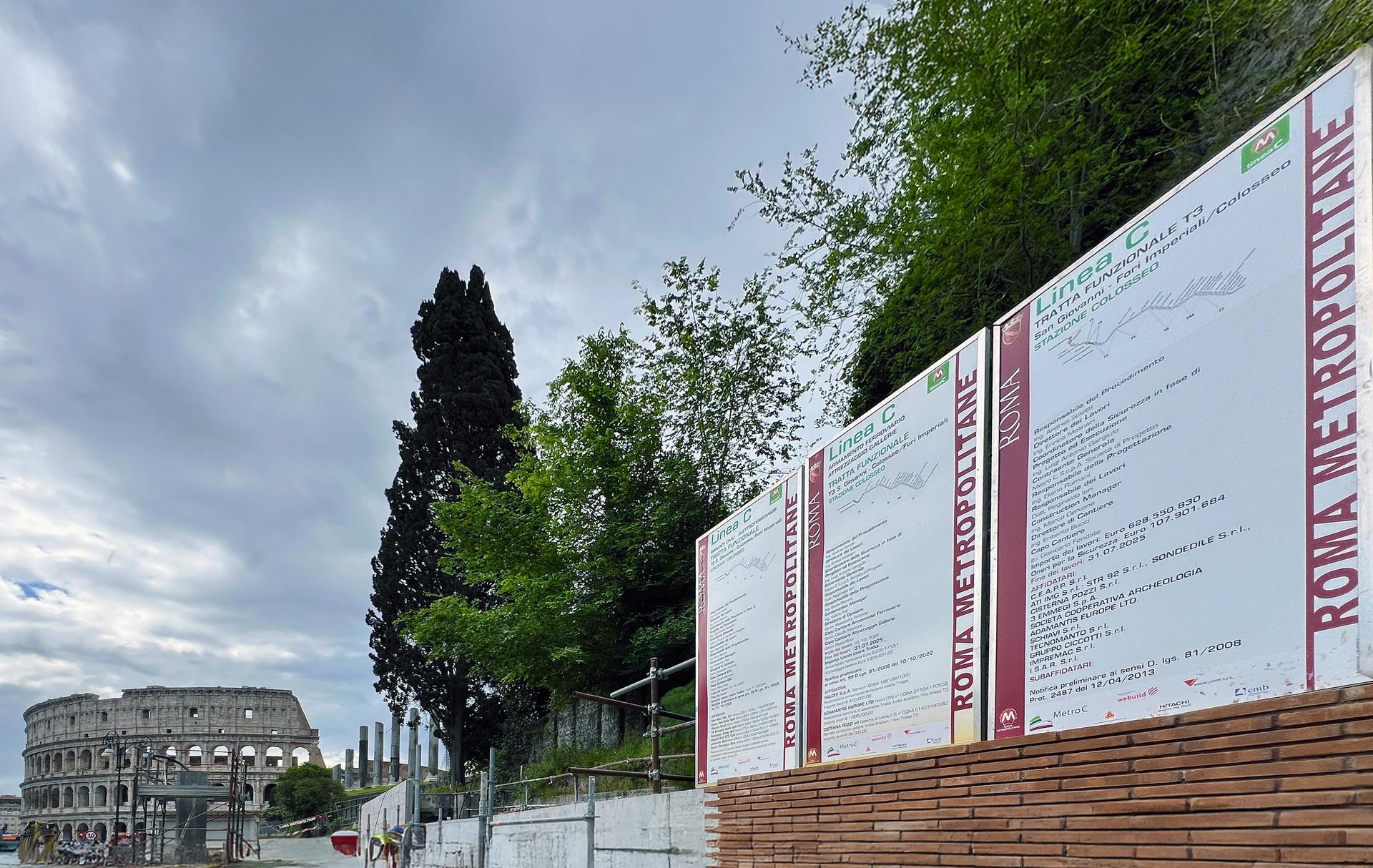





Both in Italy and abroad, it has been hailed as “the most beautiful station in the world”. It is described as an “archaeo-station”. And indeed, Rome’s new Colosseo-Fori Imperiali stop on Metro Line C, inaugurated in late 2025, is more than a transport facility: it is a project in which design and archaeology come together to turn a place of transit into somewhere worth visiting. After all, it stands in one of the world’s most extraordinary urban and archaeological settings. The design by architects Andrea Grimaldi and Filippo Lambertucci, together with Livio Carriero, Amanzio Farris, Davide Leogrande, Edoardo Marchese, Valerio Ottavio and Leo Viola, was conceived precisely with the aim, as they explained in an interview, of “transforming a public space envisaged purely as a service facility into a fully fledged urban space of real quality”.
The remarkable discoveries made during the preliminary excavations proved decisive for the project. These included ancient wells originally built for water management and later repurposed as repositories for votive offerings. This discovery shaped the entire narrative. The underground station thus takes the form of a vast well, bringing to light fragments and stories from the distant past through contrasts between solid and void, darkness and light.
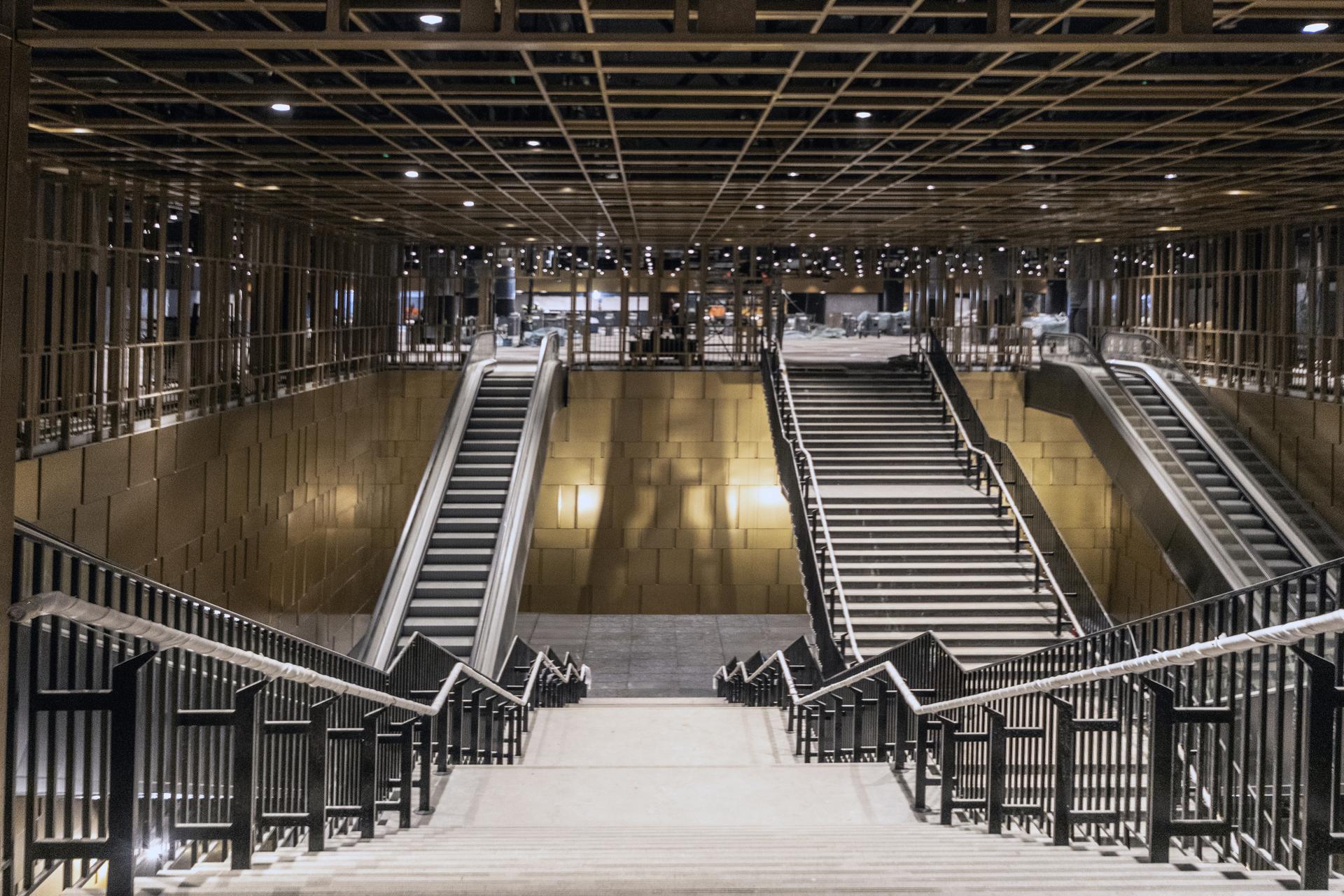
The station unfolds through a series of distinct spaces, from the vast entrance hall, which evokes a basilica and highlights its two ends facing the Imperial Fora and the Colosseum, to the monumental stairwell with its criss-crossing flights. This spatial approach continues on the mezzanine level, where backdrops frame the archaeological finds and votive wells. As passengers descend towards the platforms, they are greeted by large, suspended bell-shaped light fittings that extend the space upwards, enhancing the sense of volume.
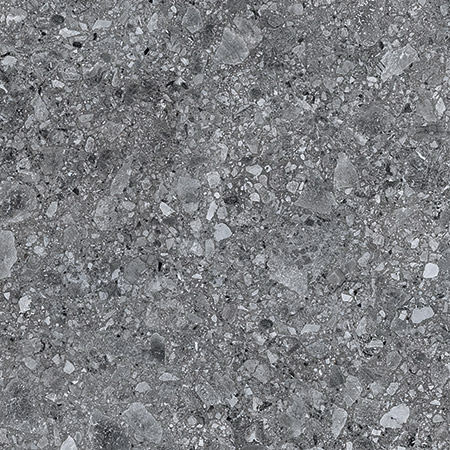
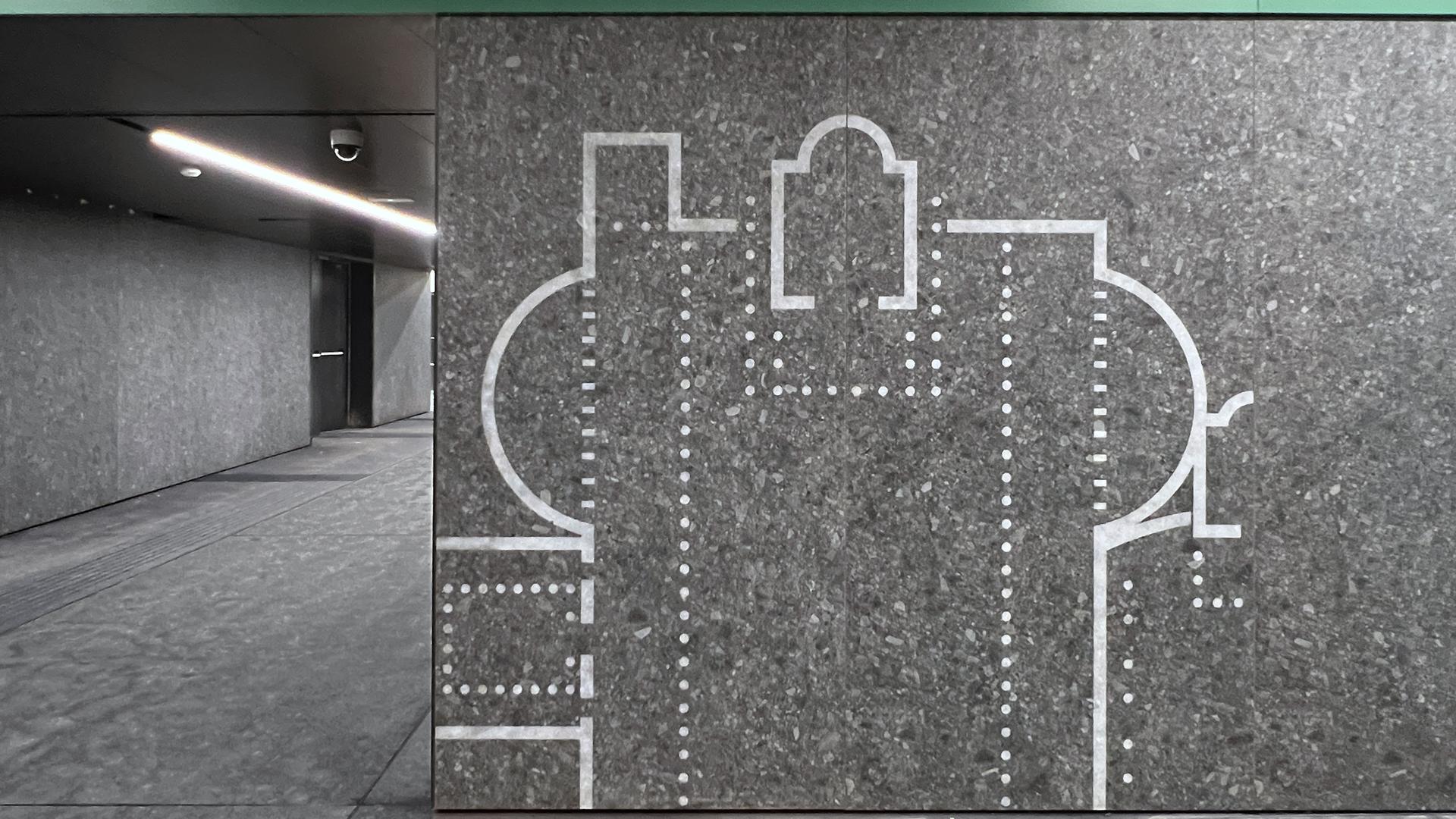
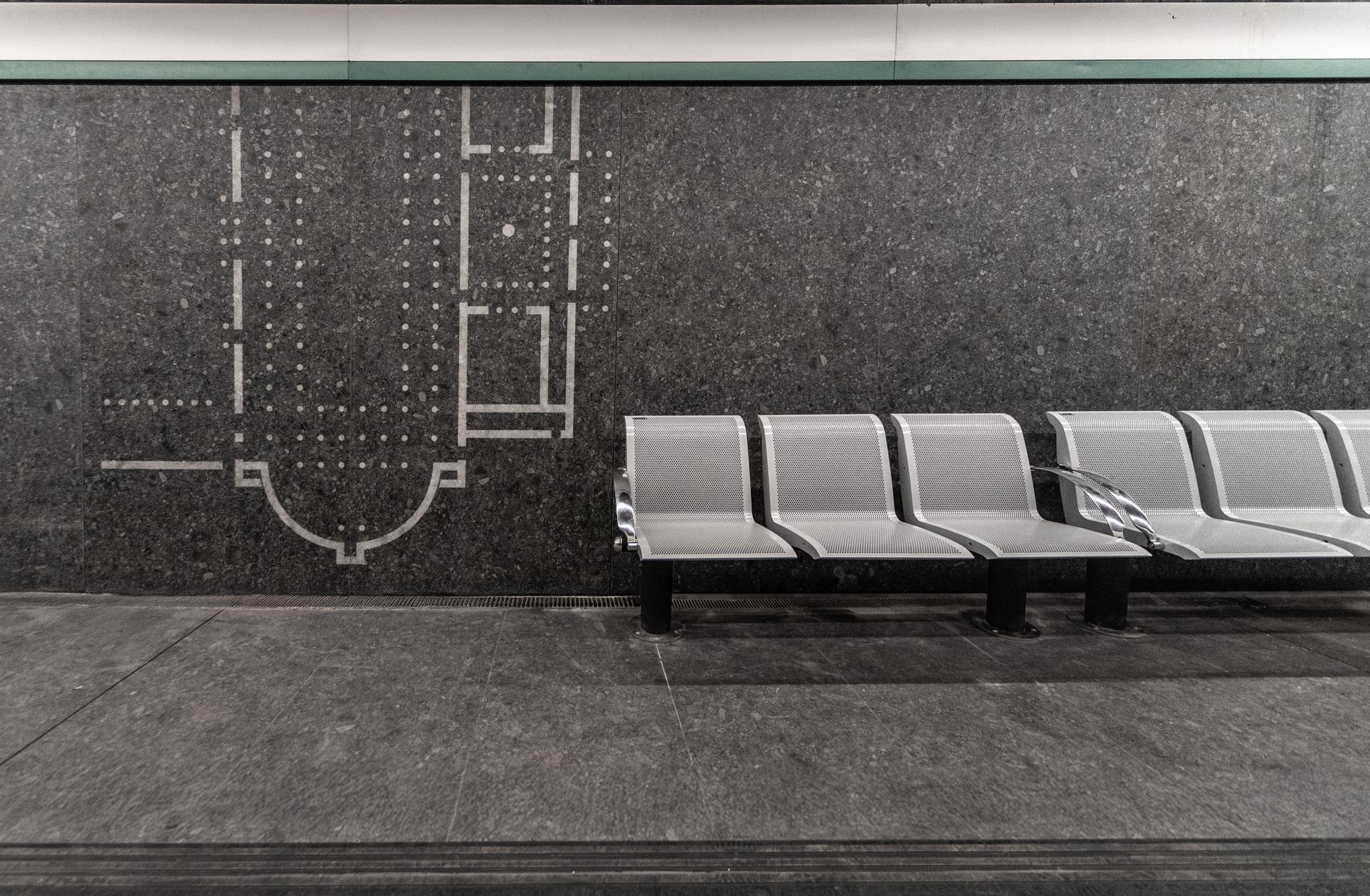
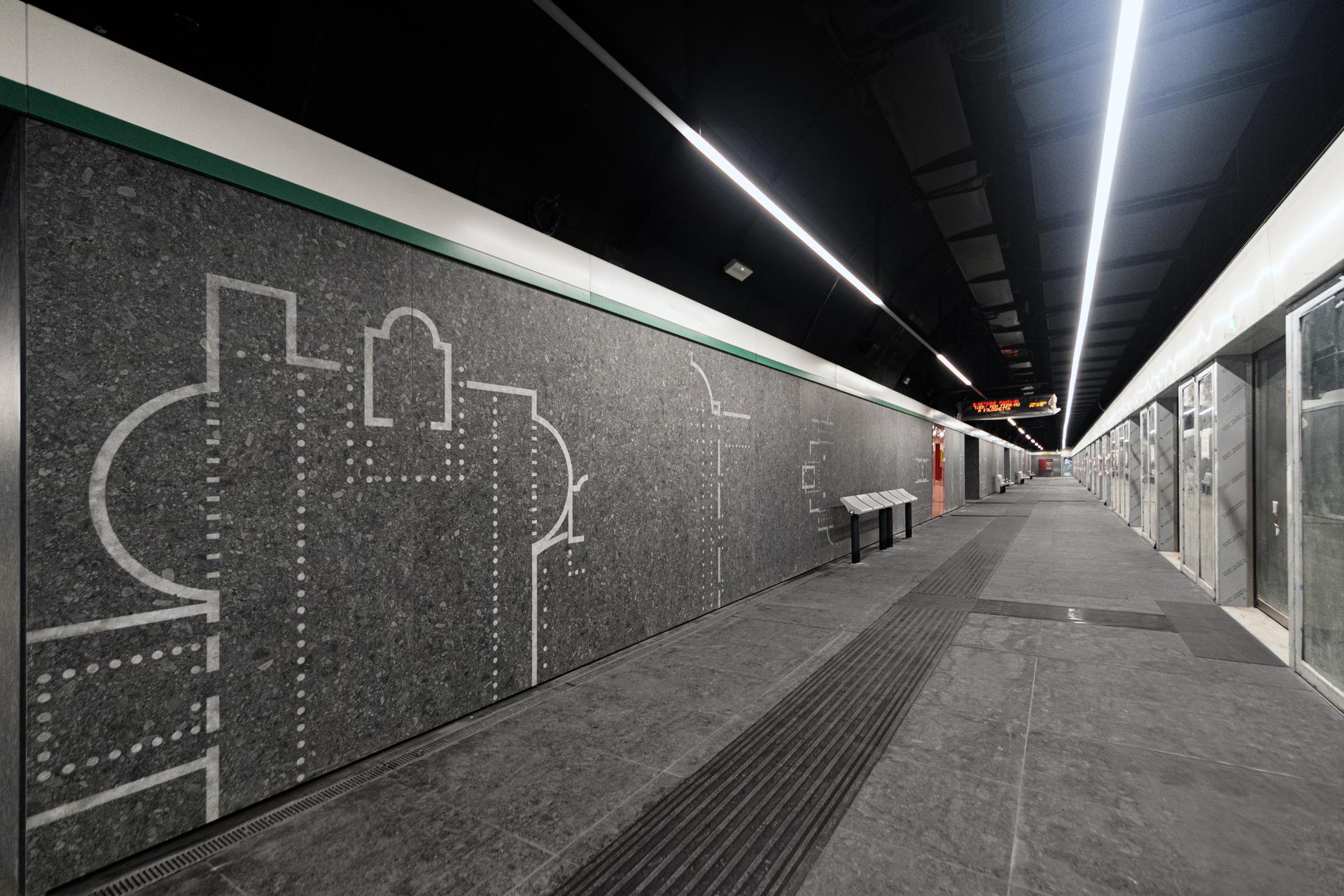
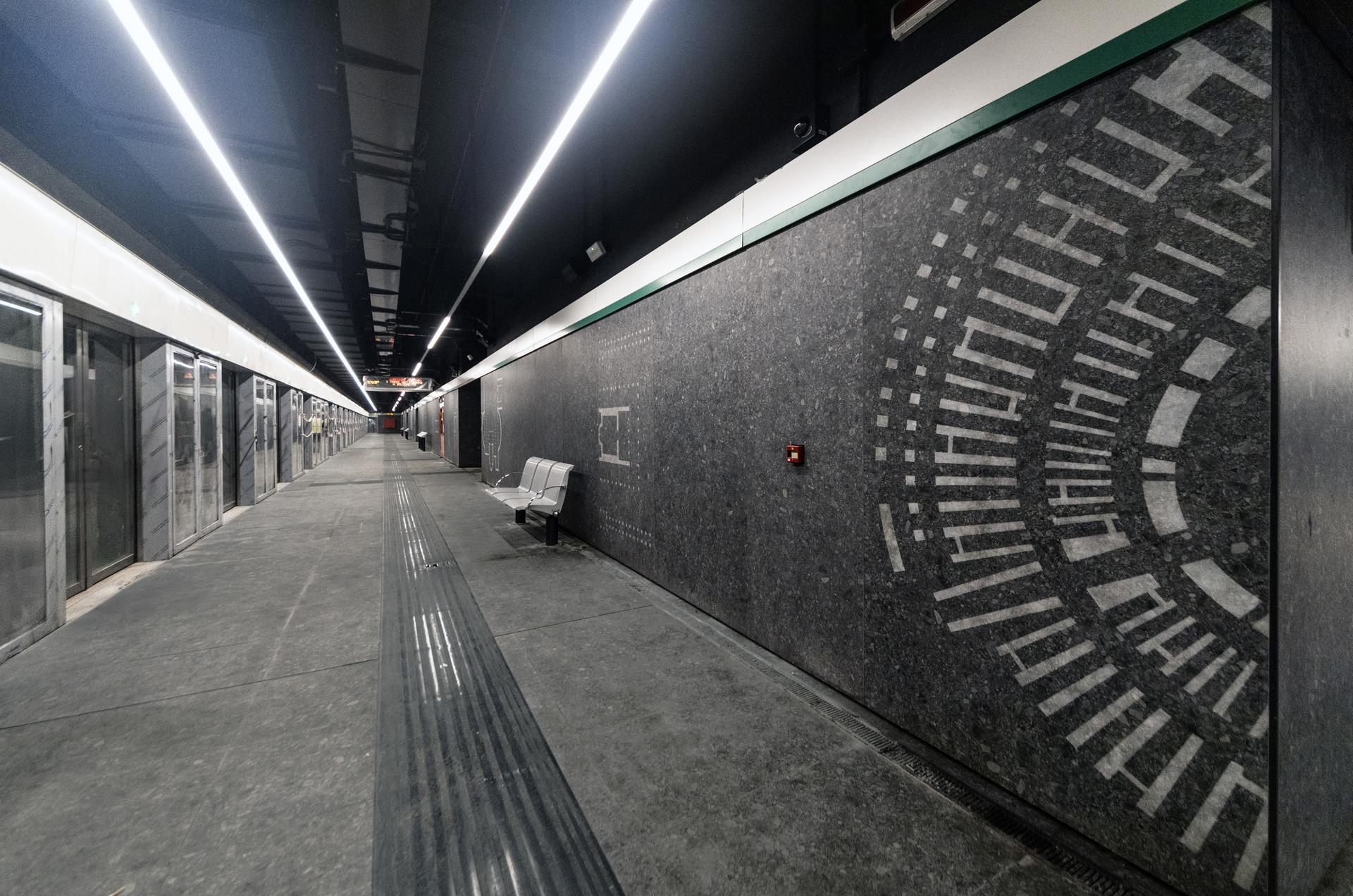
Italian ceramics proved a valuable ally in this ambitious project. The walls and floors are clad in large porcelain slabs from Casalgrande Padana’s Pietre di Paragone collection, used here in the Gré Nero shade. The collection combines the material’s technical performance with the appeal of the traditional Alpine and European stones that inspired it. Together with the sandblasted maps, the chosen ceramic surfaces give the passageways an orderly, museum-like character while providing the durability required for a busy metro station. These qualities also earned the project first prize in the “Large surfaces and façade cladding” category at the 13th Grand Prix, the international architecture competition organised by Casalgrande Padana. Finally, gold-coloured metal details break up the uniform dark background, marking archaeological areas and points of interest while helping passengers find their way. The daily routine of public transport thus becomes an evocative journey underground and through time.