











Interviews


Between the primordial and the modern
(November 2025) | UNICA Architects is a Dubai- and Bologna-based practice that explores living as a sensitive, personal and transformative experience. Founded in 2017, its activities span the fields of architecture, interior design and emotive curation of spaces, weaving together matter, time and landscape in projects that speak to the most intimate part of those who live there. Each home is conceived as a narrative of living, each space a refuge, every detail a conscious gesture.
Riccardo Robustini, founder and Director of the Dubai Office, believes that architecture must “find a balance between the primordial and the modern, a delicate dance between our primal instincts – when homes were both shelters and caves – and the needs of contemporary society. This approach is reflected in UNICA’s projects, which harmoniously reconcile opposing elements to create an architecture that allows us to live as complete, embodied and spiritual beings.”
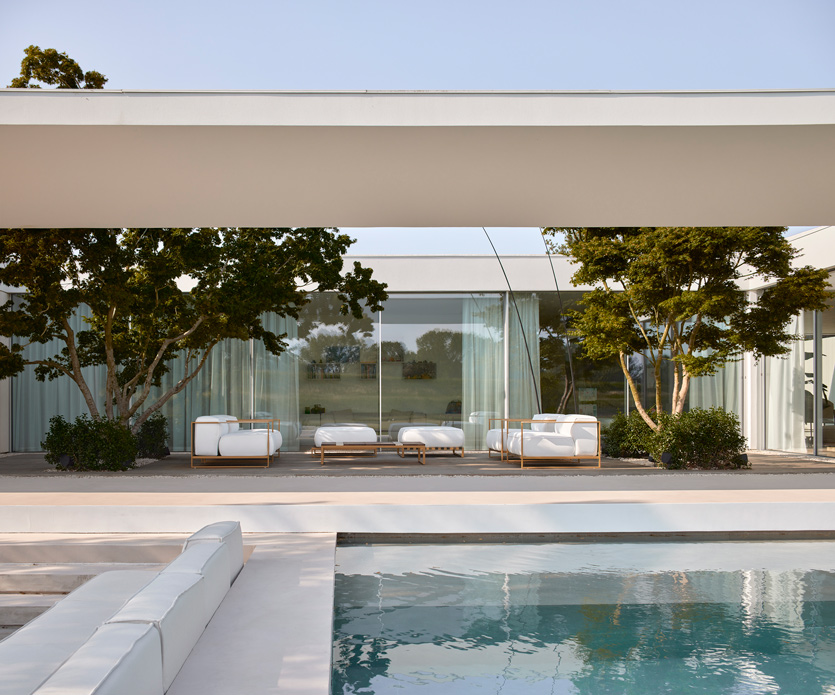
Villa Orizzonte, Ferrara.
When was your multidisciplinary Bologna- and Dubai-based practice founded? What is your design philosophy?
UNICA was founded in 2017. From the outset, we worked on projects in both Italy and the Middle East, two seemingly distant worlds that in reality share deep cultural roots and an ancestral bond with matter, light and space. Over the years we have increasingly specialised in high-end residential design, and today our portfolio continues to grow, with around a dozen active projects scheduled for completion between 2025 and 2027. Our philosophy centres on the idea of space as an inner reflection: architecture not simply as form but as an emotional and sensory experience, a tool for forging a deep connection with our inner world and with the natural rhythm of life. For us, living means protecting, accepting and slowing down. This is why we prioritise dialogue with the context, with light, and with everything that reconnects human beings to their most intimate dimension. We strive to approach every project in a holistic way, considering the rhythms and lifestyles of those who will inhabit the space and will experience it not merely as architecture, but as a place of refuge and introspection.
Many of your projects are residential, such as villas in Dubai and Italy. How does your attention to place influence your design choices? Villa Orizzonte in Ferrara, for example, extends into the countryside.
In recent years, we have increasingly focused on residential design, which now represents our most vital and meaningful field of activity. It is a field that demands intimacy, empathy and understanding, where every design gesture is above all an act of care. For UNICA, living is never just a question of space or function: it is a subtle dialogue between the visible and the invisible, between the external landscape and the inner world of the building’s inhabitants. Over time, we have forged a design identity that places emotions, human relationships and desires before predefined forms. If anything, form is a consequence. “From within outwards” is the principle that guides all our projects. We never design from above, but from within. Every home is a world unto itself, born from the encounter between a physical place and the intimate universe of those who live there. In this process, the context is never a mere backdrop; it is a silent yet powerful co-author. Landscapes shape geometries, suggest orientations, inspire materials and modulate light. But they do not always ask to be celebrated: sometimes they must be listened to in silence, concealed or even denied in order to protect the space of intimacy and interiority. Villa Orizzonte was one of the first projects to embody this vision. Its linear geometry is not a result of formal virtuosity but of an act of listening: following the course of the river that borders the property, moving with its flow, embracing its rhythm. The entire project developed in response to this presence and involved a profound dialogue with the client, allowing us to envision a house that would be unique not so much in its architecture as in its essence: a personal and inimitable way of inhabiting the world.
In every project, our task is to create architecture that reflects this fragile balance between inside and outside, between desire and restraint, between openness and protection. It is to build, step by step, a habitat that does not seek to impress but to accompany, that celebrates not itself but the life that passes through it.
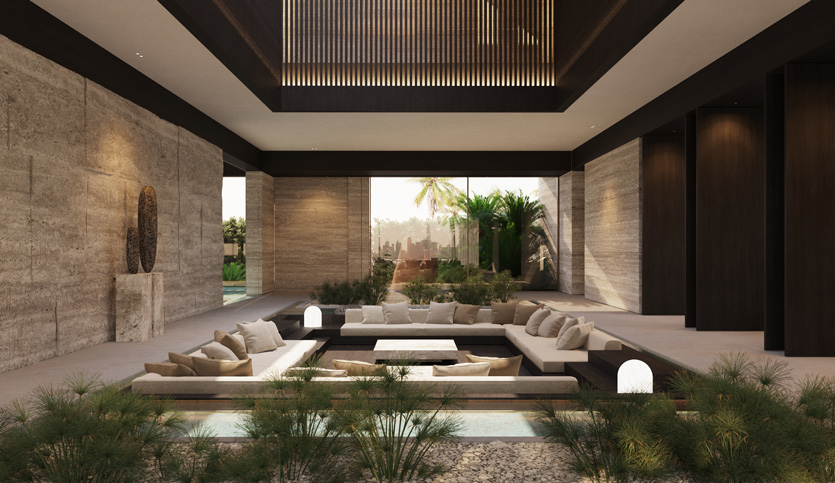
Casa ALQ, Jumeirah Bay, Dubai, UAE.
How do you express the complex relationship between the natural and the artificial in your projects? You recently began working in the field of collectible design: how does your approach to architecture translate into objects?
For us, the relationship between the natural and the artificial is a constant source of creative energy, not a dichotomy to be resolved. We see it as fertile ground for exploration, where human intelligence becomes a respectful extension of nature rather than its antagonist. Designing means entering into a relationship with what is alive, with a place, material and the people who live there, and finding a form that does not impose but reveals.
In our residential projects, this translates into continuous attention to both human needs and the surrounding context. In object design, the process becomes even more radical and intimate. Each piece is an opportunity to express ourselves without constraints, to sculpt a presence, a threshold between human gesture and geological memory. This approach gradually led us to establish Creations, our collectible design department. Our first collection, Native, debuted with an installation entitled Inhuman at Milan Design Week 2025. It is not just a collection of designed forms, but an attempt to translate a process of listening into matter. When we reflected on the fact that the materials we work with are the product of hundreds of millions of years of sedimentation, it seemed inevitable to ask a fundamental question: who are humans to impose form on a material that carries with it such a weight of history? Matter comes first, before the idea, before ego. We do not impose form; we search for it within the material itself. We observe veins, fractures, volumes and shadows. We try to understand and listen. When we find a block of stone that speaks to us, we follow its lead. Each object is unique, not only in its form but in the very process that generated it. Each object is a project in itself, born of time, of a relationship, of an intuition.
Your hospitality and residential projects are extremely measured and elegant. Is the concept of new Italian understated luxury also changing in the United Arab Emirates?
The concept of luxury is undergoing a profound transformation. Today, both in Europe and the Middle East, true luxury lies not in addition but in subtraction. It is bound up with experience, with clarity and the possibility of rediscovering oneself in spaces that are welcoming without being overbearing. This shift is particularly evident in the world of hospitality, where value is increasingly measured in terms of perceptive quality, silence and authenticity. The same applies to residential design, where our clients now seek emotional resonance rather than grandeur. They want to live in spaces that speak to their senses, that represent them without ostentation. This process is particularly evident in Dubai. More and more people are in search of essential, material spaces where subtraction becomes an act of creativity. It is not a matter of stylistic restraint but of returning to our origins, to an architecture that awakens the senses, shelters and protects. A luxury made of presence, time and attention, where every detail has meaning and every void becomes a space for breathing.
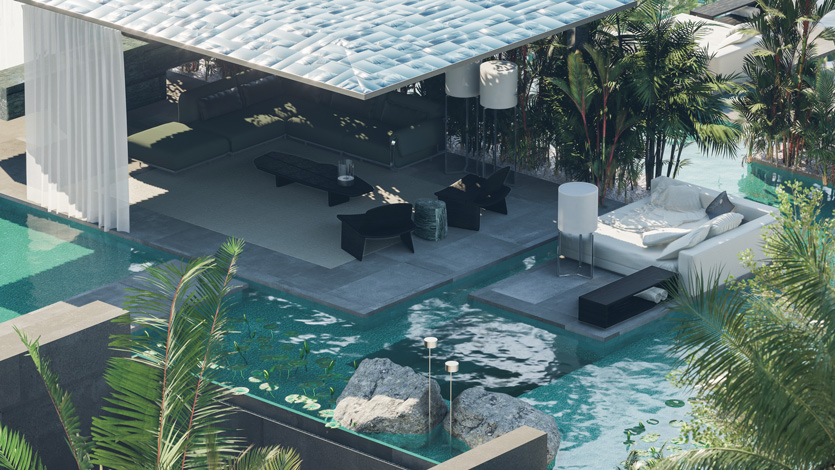
Sadhana Resort, Bali (Indonesia).
Which of your current projects poses the greatest design challenges?
We are currently working on the interior and landscape design of a residential tower in Dubai, a highly prestigious commission and a stimulating challenge for our team. Rather than just a project, we see it as a complex ecosystem to be approached with a holistic vision centred on the meaning of living. Every decision, from the finishes to the spatial layout, from the visual pathways to the perceptual quality of light and materials, aims to create a living, sensitive architecture capable of establishing an intimate dialogue with its inhabitants. It is the first project in which we are experimenting with a complete curatorial approach: a process that goes beyond architecture and design to embrace true stylistic authorship. We oversee the entire design process, exploring not only functions but also atmospheres, sensations and all the details that make a space truly lived in.
Have you used ceramic materials in any of your projects?
We recently used a very special ceramic product for the roofing in a hospitality project in Bali. Our aim was to create an image of strong emotional and visual impact, especially when viewed from above, where the roofs interact with the blue tones of the large rooftop pool – conceived as a natural lagoon rather than an artificial feature – and dissolve seamlessly into the ocean horizon.
This use of handcrafted ceramics reflects the local traditions and artisanal sensitivity, while at the same time offering a contemporary reinterpretation of the relationship between material, landscape and design. It clearly expresses our vision of architecture as a cultural gesture in harmony with place, nature and memory.
BIOGRAPHY
BIOGRAPHY
Founded in 2017 by Riccardo Robustini and Lorenzo Capucci, UNICA Architects is a multidisciplinary studio based in Dubai and Bologna. Its experience ranges from architectural and interior design to product design and urban planning. The team consists of architects, landscape architects, 3D visualisers, BIM experts, interior designers and external consultants. With an extensive portfolio of projects in Italy and the United Arab Emirates as well as experience in Spain, the studio’s approach integrates technological innovation, sustainability and a constant focus on the natural context and landscape of each location.
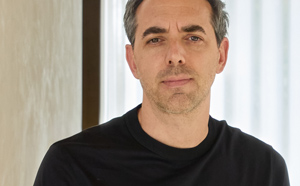
Riccardo Robustini, founder and Director of the Dubai Office, holds degrees in Architecture and Engineering from the University of Bologna and a Master’s in Advanced Architectural Design for Collective Building from UPM (Universidad Politécnica de Madrid) and ETH Zurich (Swiss Federal Institute of Technology). He has also completed a postgraduate course in Smart Cities at MIT (Massachusetts Institute of Technology). Before moving to Dubai, he worked on large-scale international projects in Europe, the USA, China and South America with Juan Herreros Arquitectos in Spain and Open Building Research in Italy. Before founding UNICA Architects with Lorenzo Capucci in 2014, he served as Design Director for the Office of H.H. the Crown Prince of Dubai and for X-Architects.
