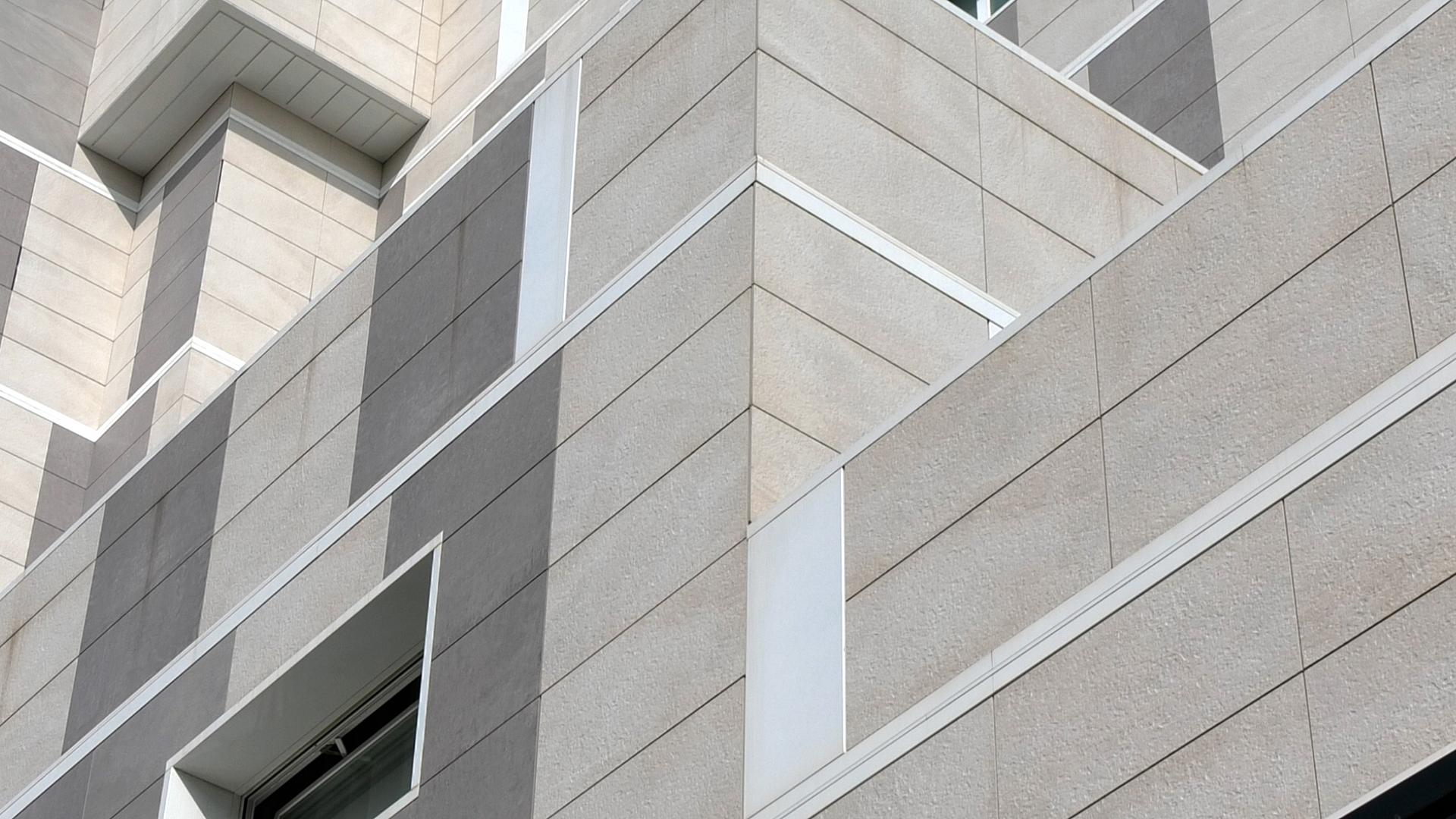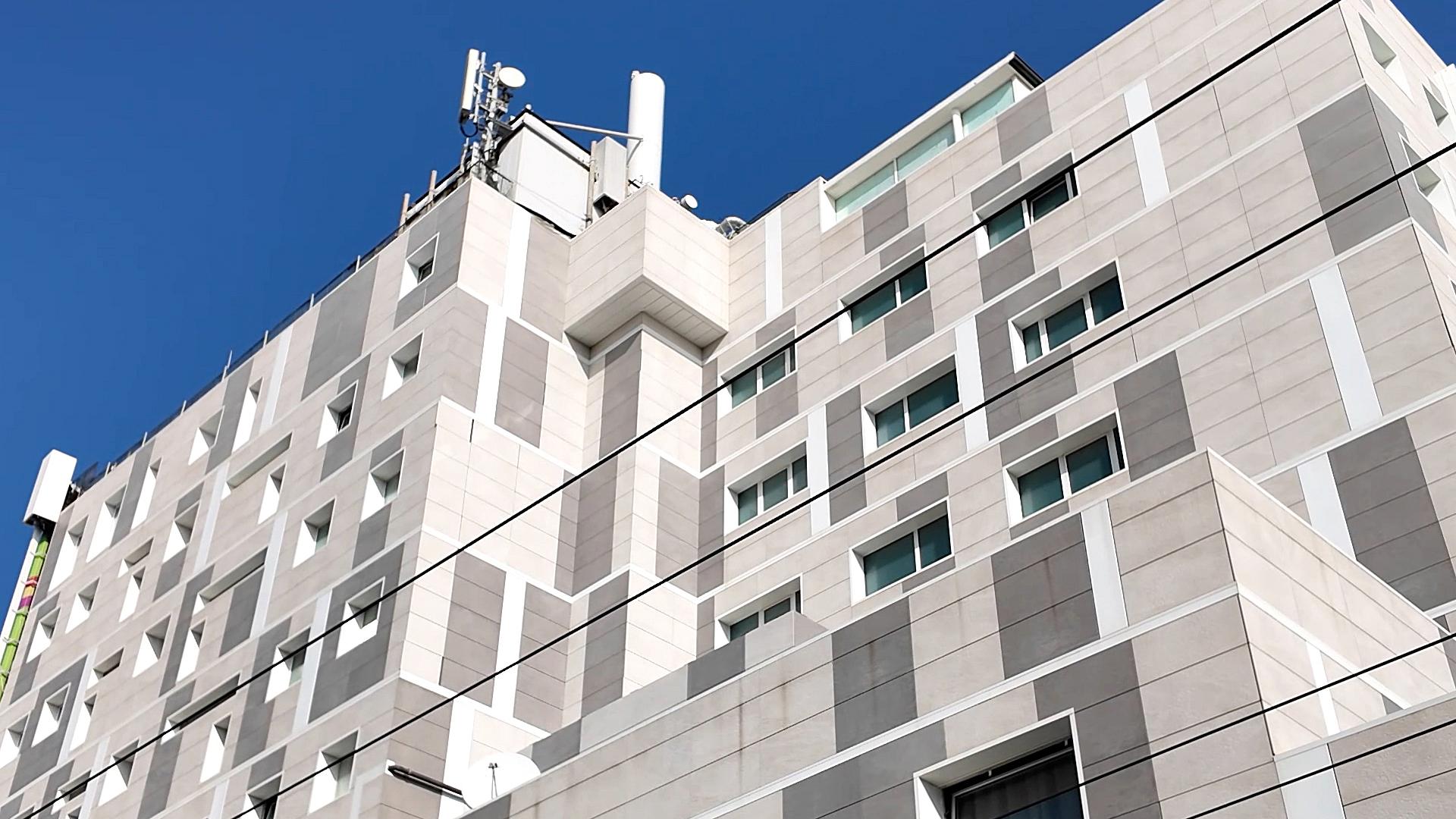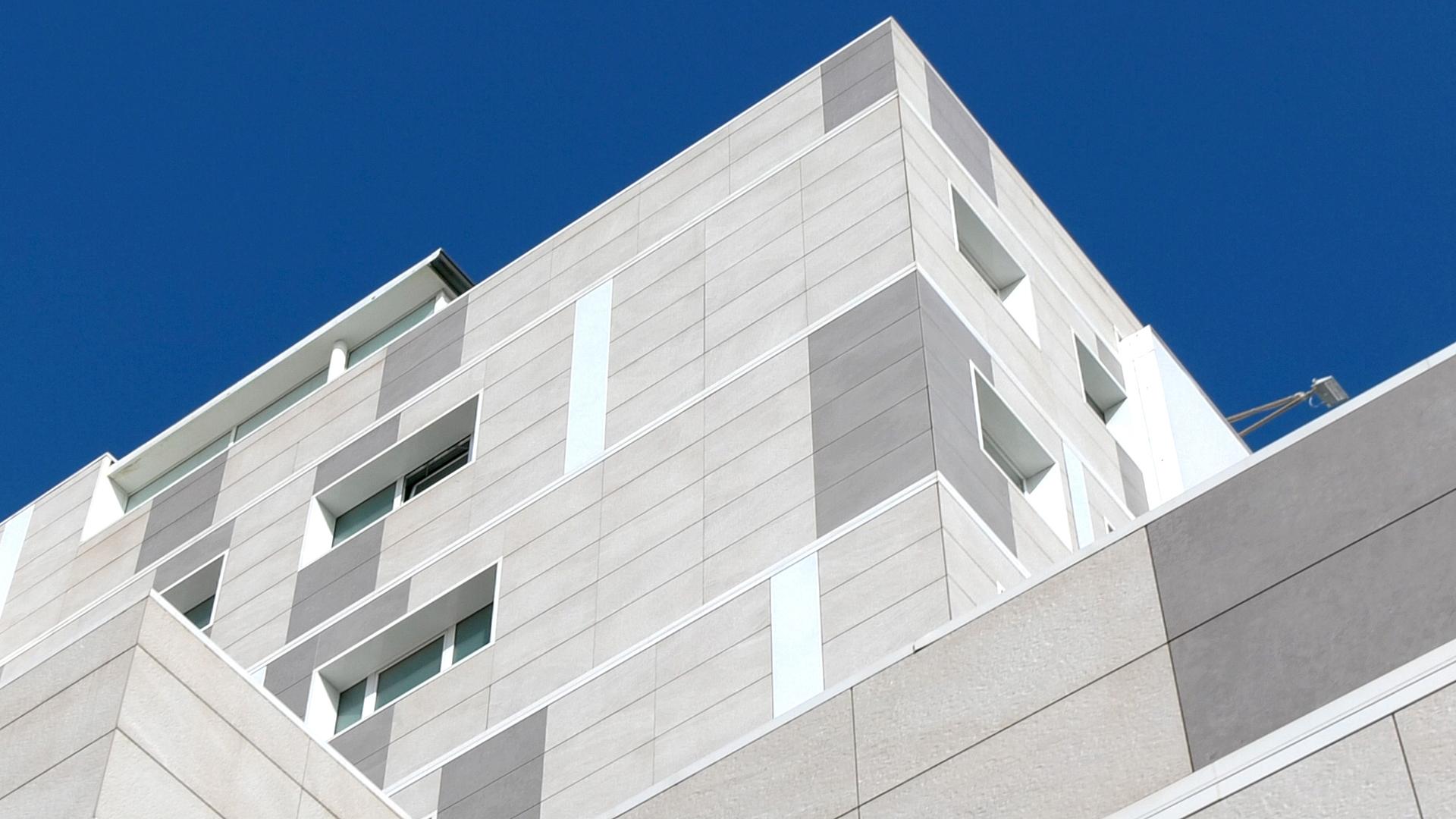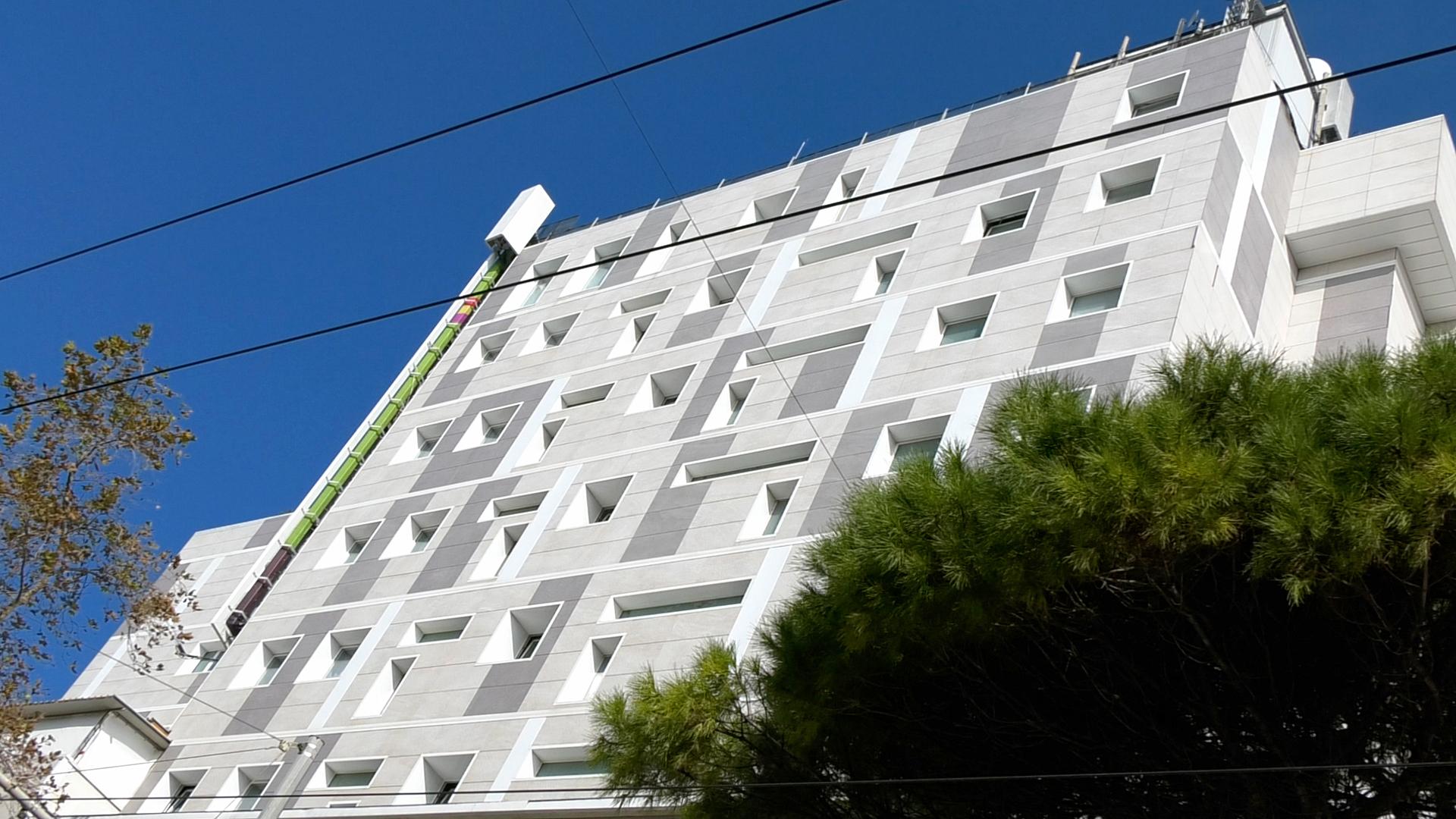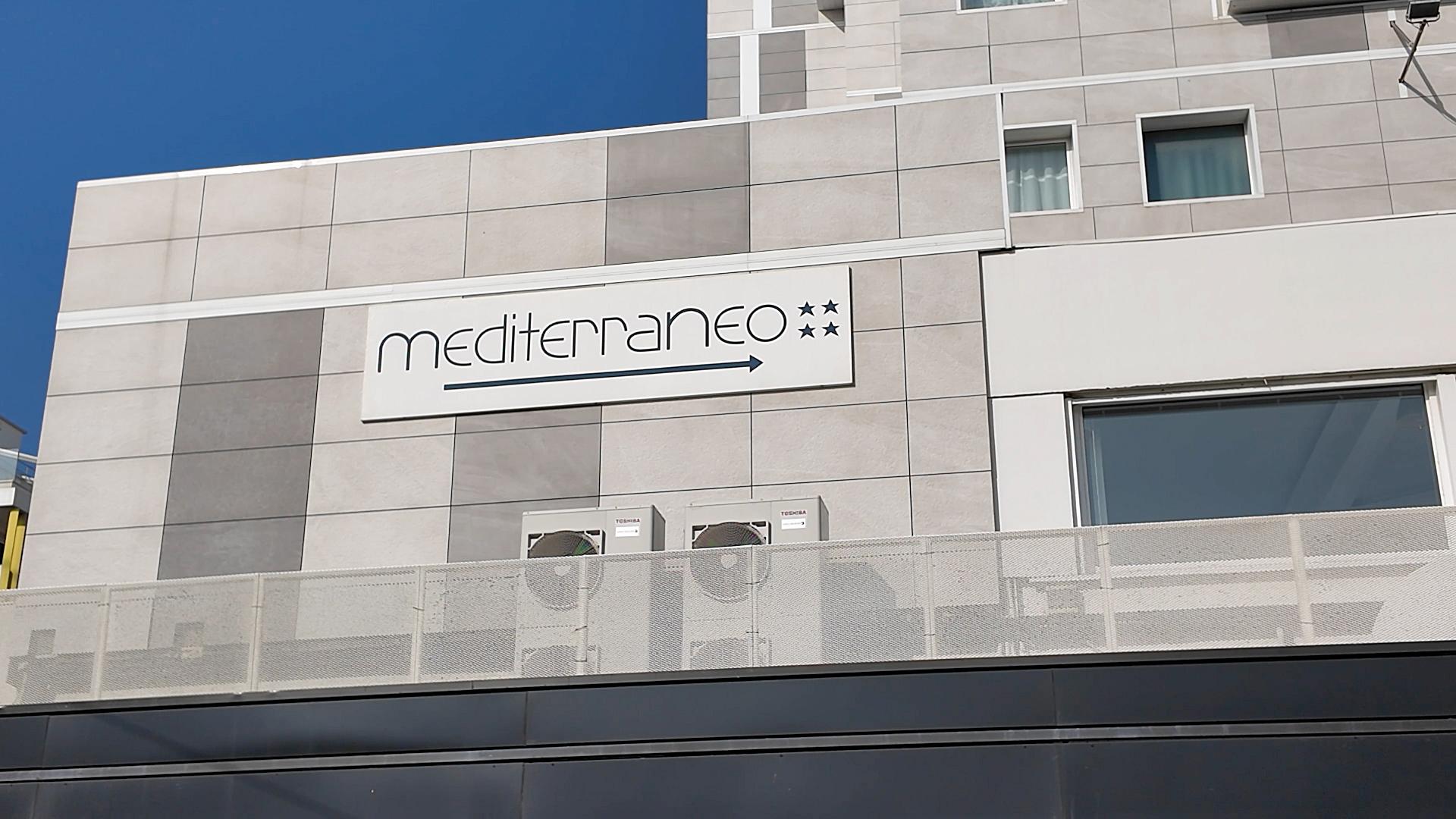






Situated on the Riccione seafront just a short walk from the famous Viale Ceccarini, Hotel Mediterraneo has undergone several transformations over the years. A popular destination for the international jet set during the Dolce Vita era, the hotel was reimagined in the early 1990s as a luxury establishment with extensive conference facilities at a time when the Adriatic coast was still dominated by traditional family-oriented seaside resorts.
The latest refurbishment focused on the energy upgrading of the building envelope, with the aim of improving performance and reducing consumption as part of a broader commitment to environmental sustainability. The prestigious intervention was led by Polistudio A.E.S., which successfully combined innovation, ecology and aesthetics. “The client’s primary objective was to give the building a new identity using innovative, low-maintenance materials within a sustainable framework,” explains architect Gianluca Corvina, head of Polistudio’s architecture division. “The ground-floor commercial units also required a fresh aesthetic identity, along with improved solar protection and interior comfort.”
Utilising the Italian “Bonus Facciate” tax incentive, the project involved approximately 2,500 square metres of previously rendered external surfaces. These were upgraded with an advanced ventilated facade system designed to improve thermal insulation, indoor comfort and overall energy efficiency. Following extensive research, Corvina specified porcelain stoneware surfaces. “Porcelain ensures high weathering resistance, optimal thermal and acoustic insulation, and energy savings of up to 20%,” he said. “It offers easier maintenance and greater durability than any other option. Furthermore, its modular flexibility allowed us to enhance the building’s aesthetic, creating a solution that is as beautiful as it is functional.”
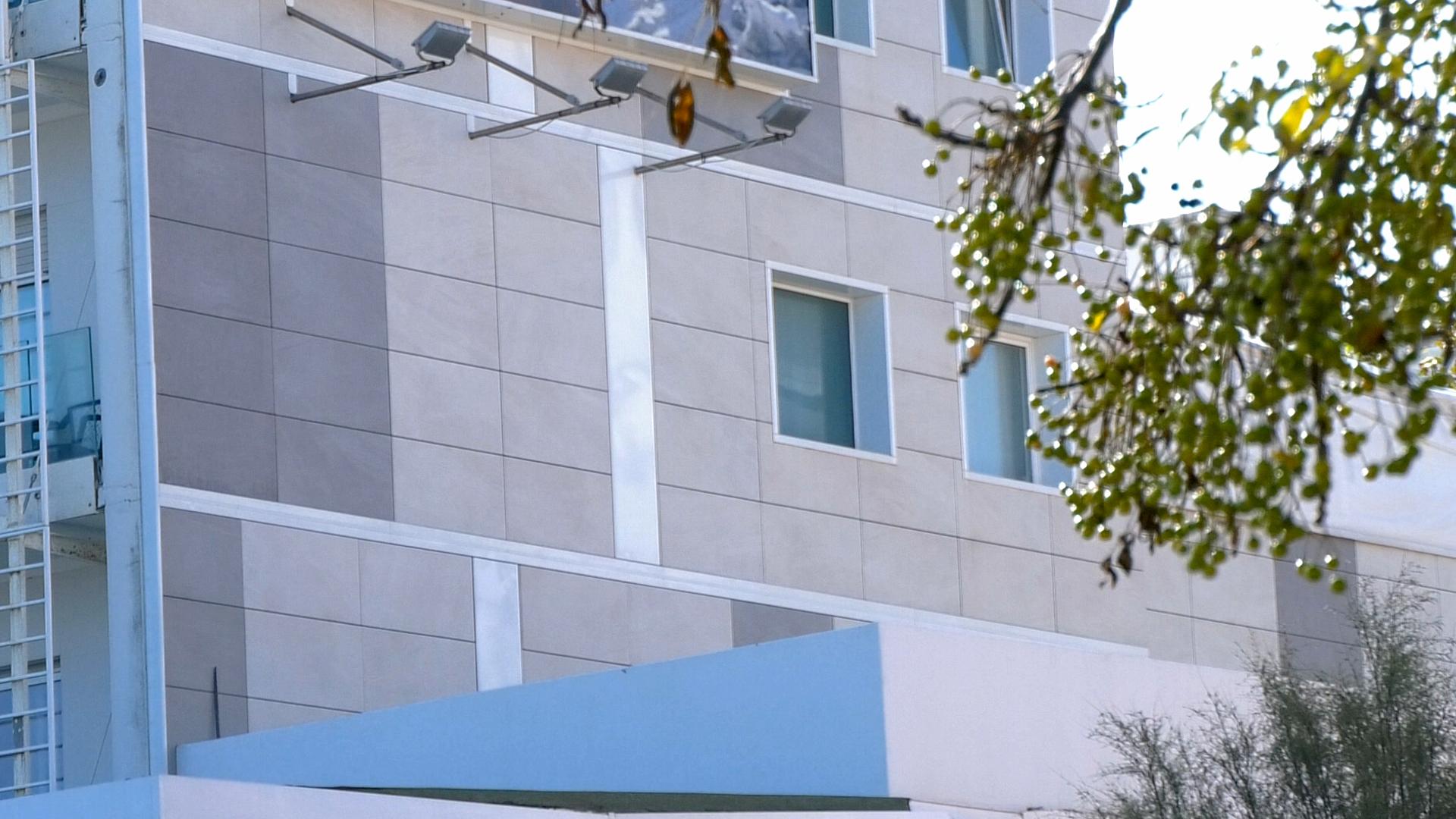
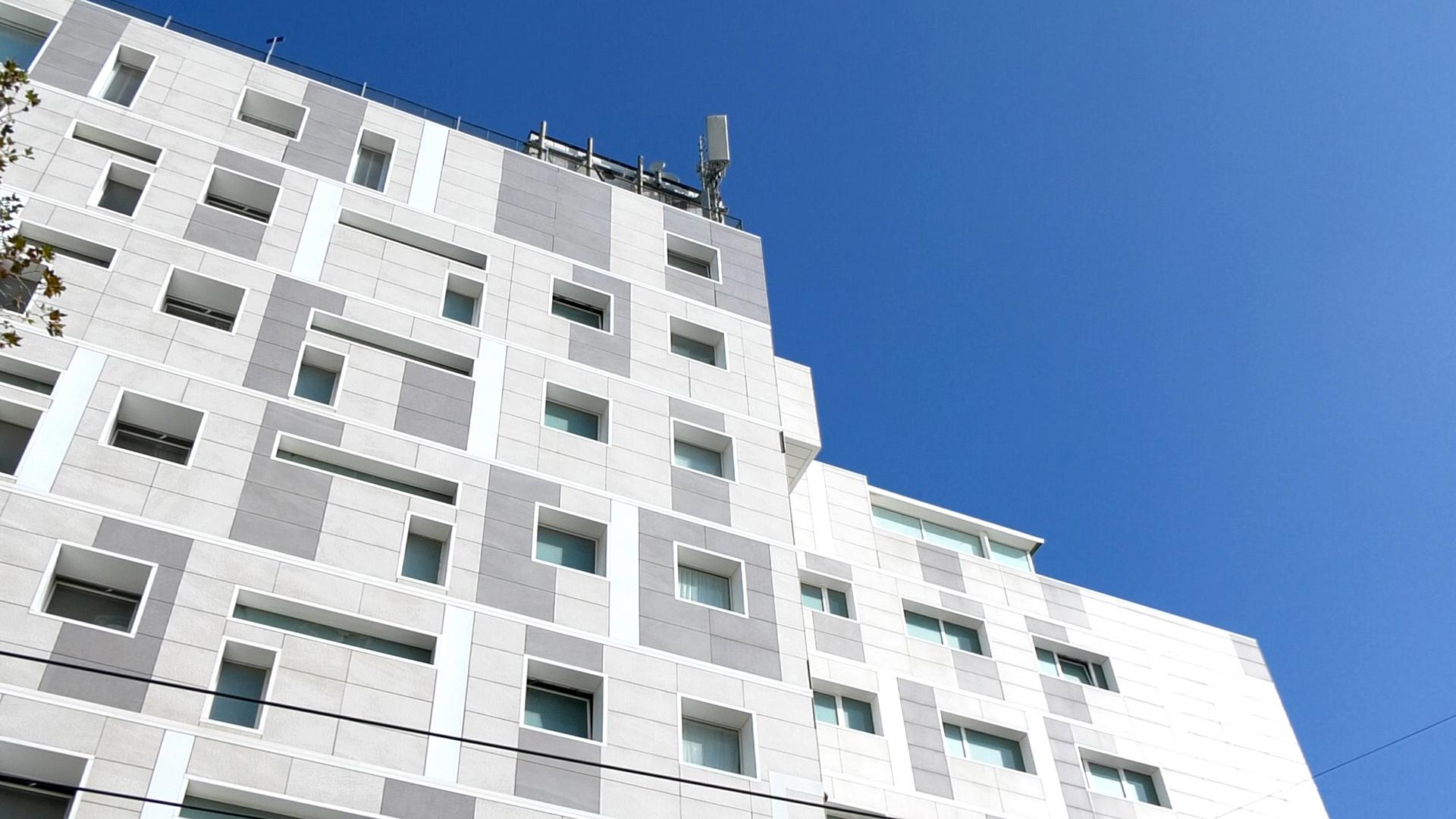
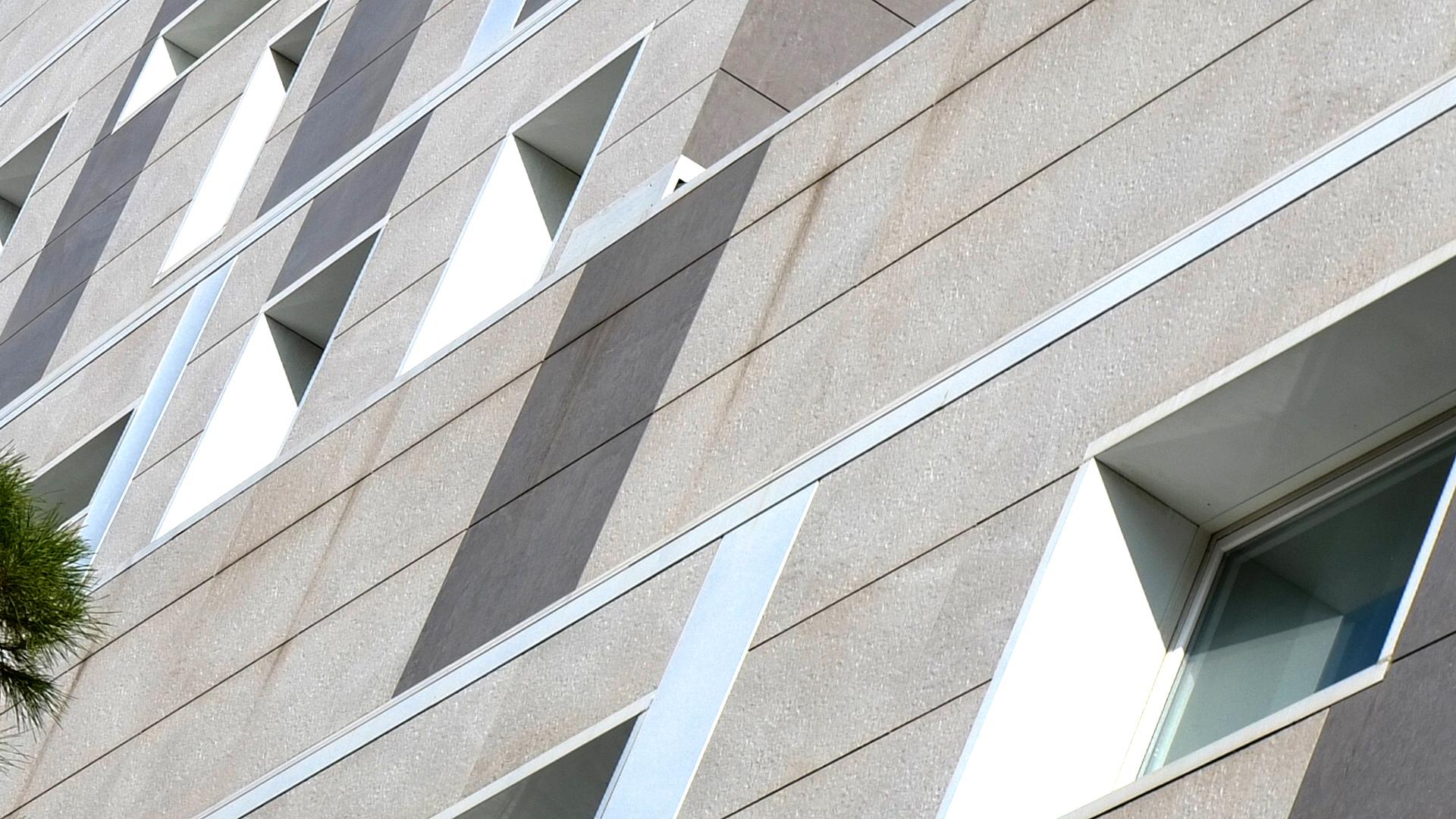
To create a “pixelated” effect – a striking patchwork of colours with a bold identity – Polistudio specified collections from Cotto d’Este renowned for their high resistance to mechanical stress, weathering and thermal shock. The exterior cladding consists of 60×120 cm slabs in a 14 mm thickness chosen in two colours from the Limestone collection: Clay (Natural finish) and Oyster (Blazed finish). Completing the composition is the X-BETON series (in the DOT-50 version), which reinterprets the texture of rolled concrete. The slabs were installed using a concealed mechanical fixing system, which preserves the aesthetic integrity of the materials while ensuring maximum safety and durability. Thermal and acoustic insulation was further improved through the use of fibreglass panels of natural origin.
One distinctive feature of the design is the integration of recesses and shadow gaps for linear LED strip lighting, which transforms the hotel into a contemporary “urban lantern” after dark.