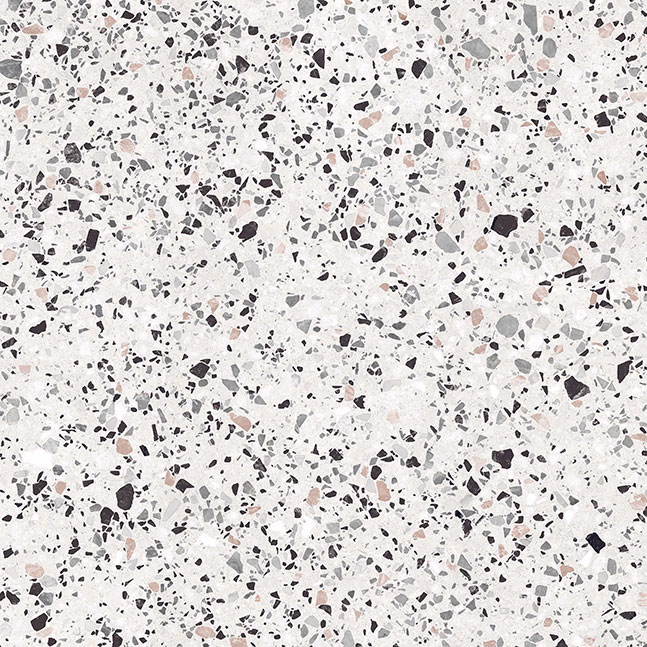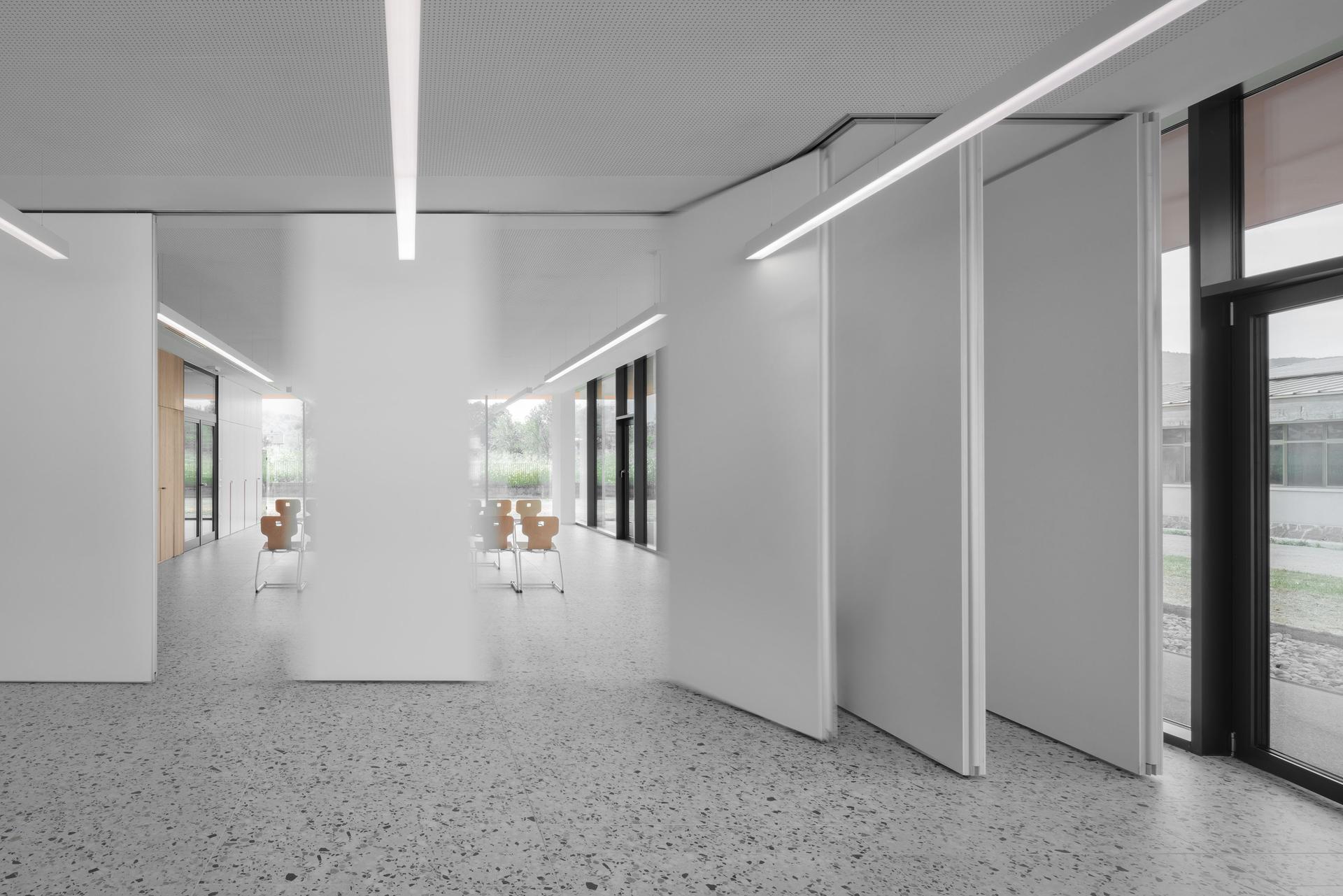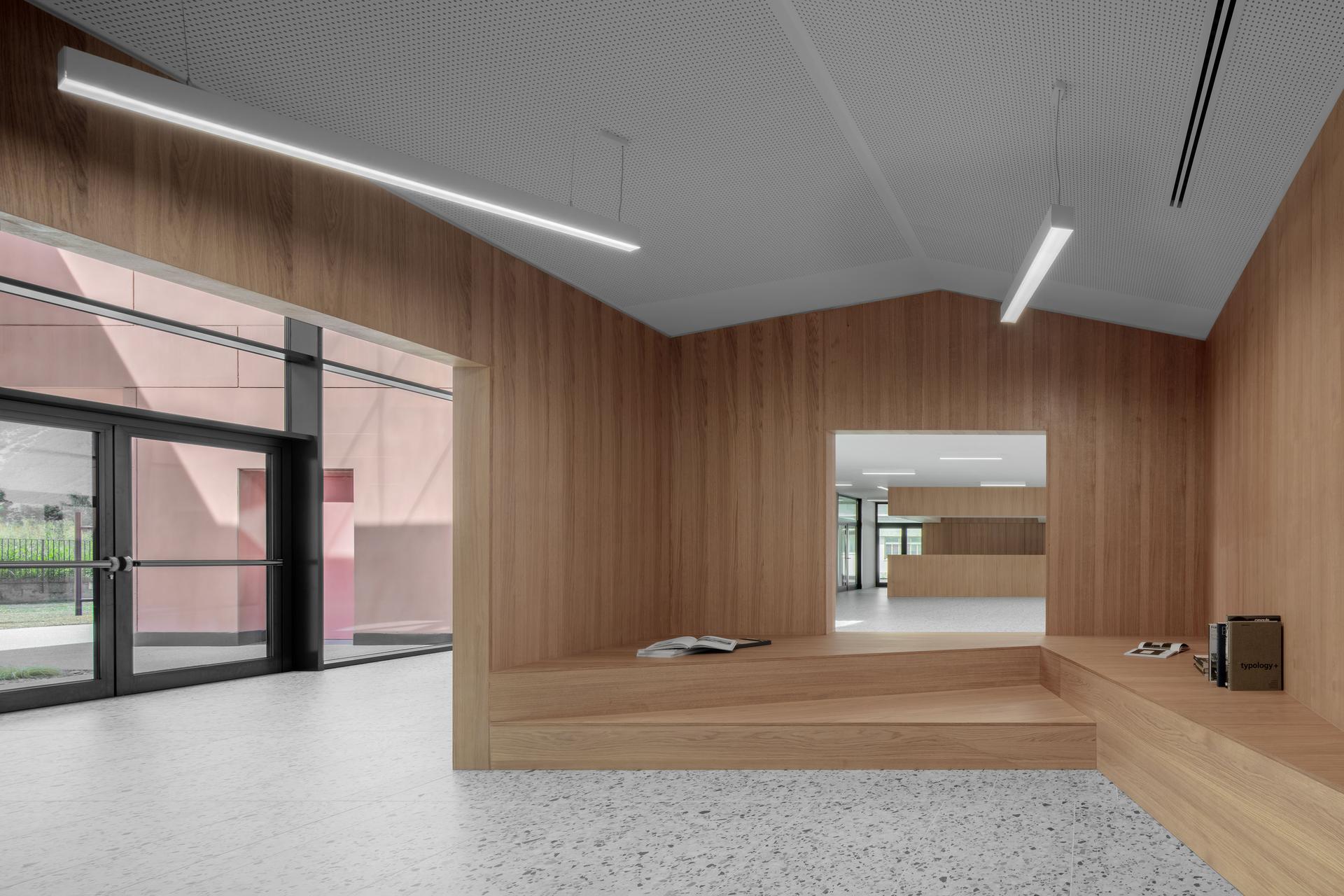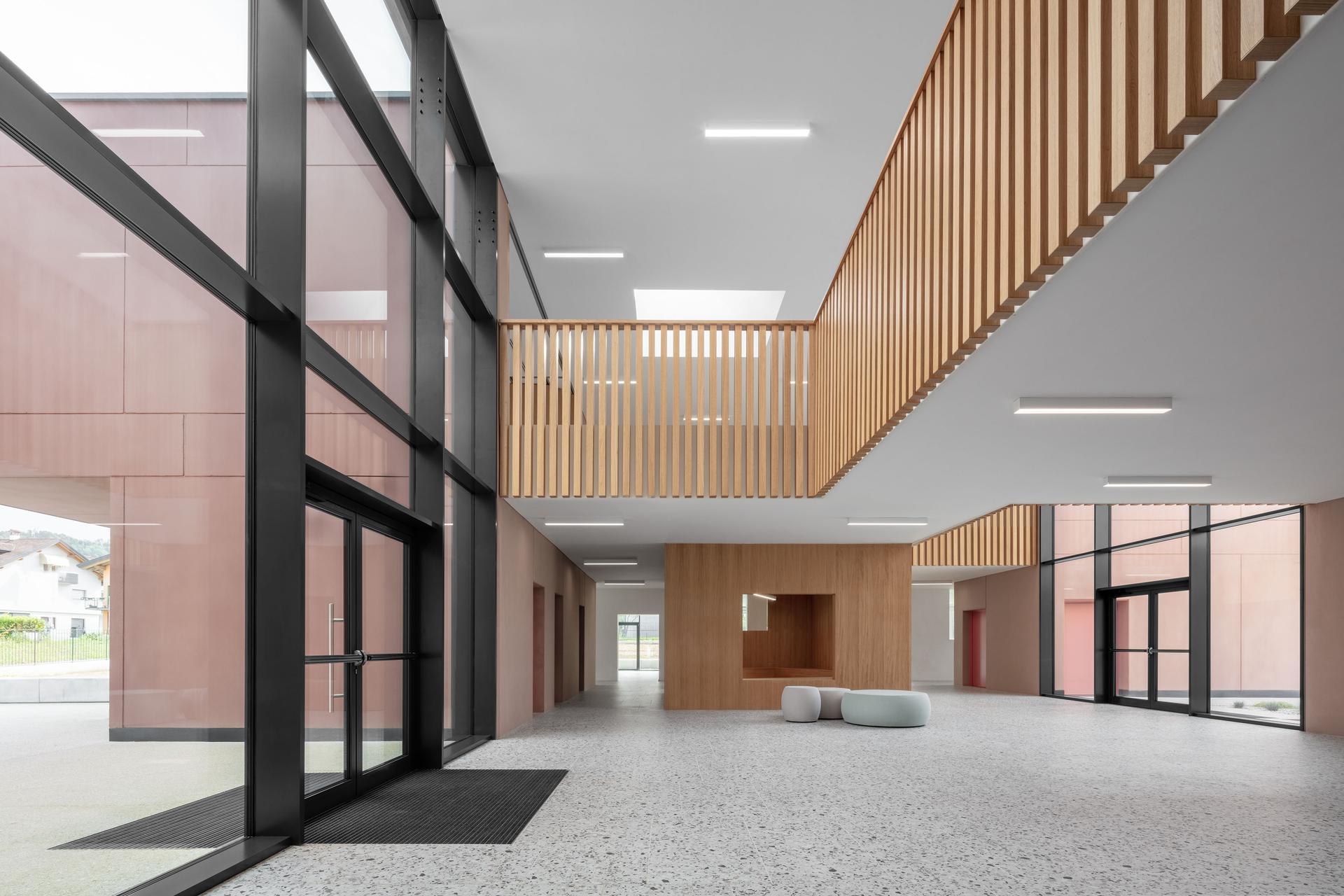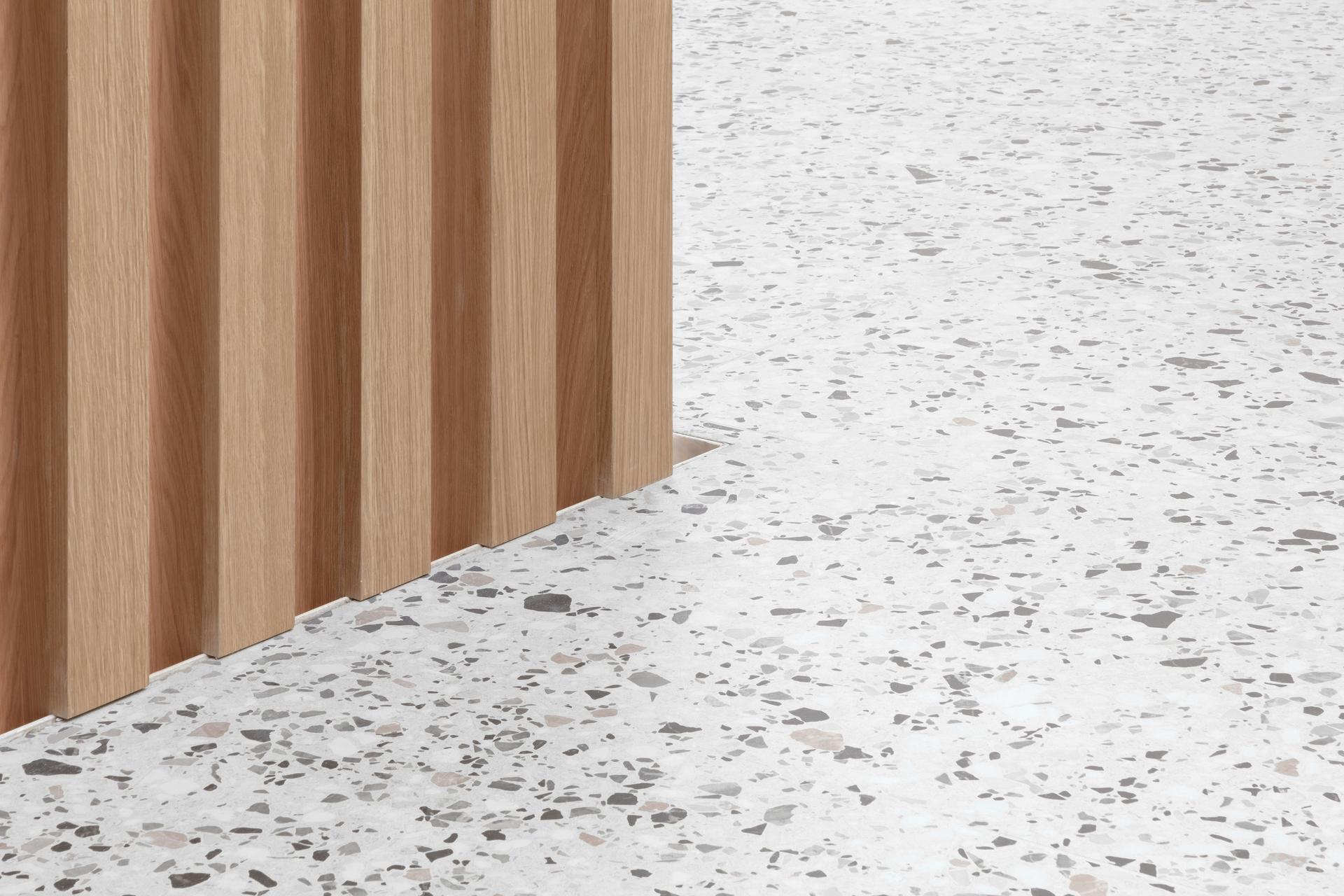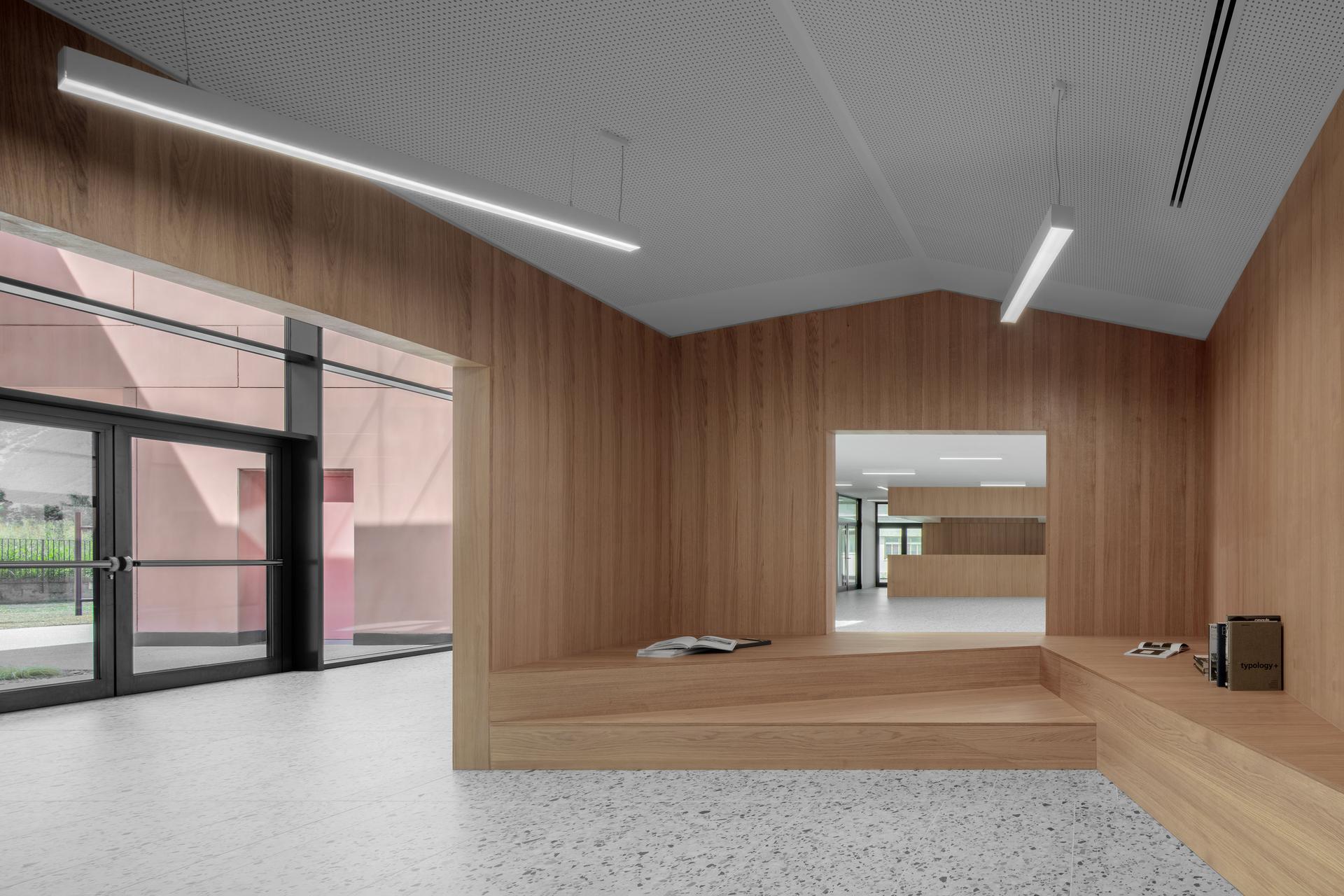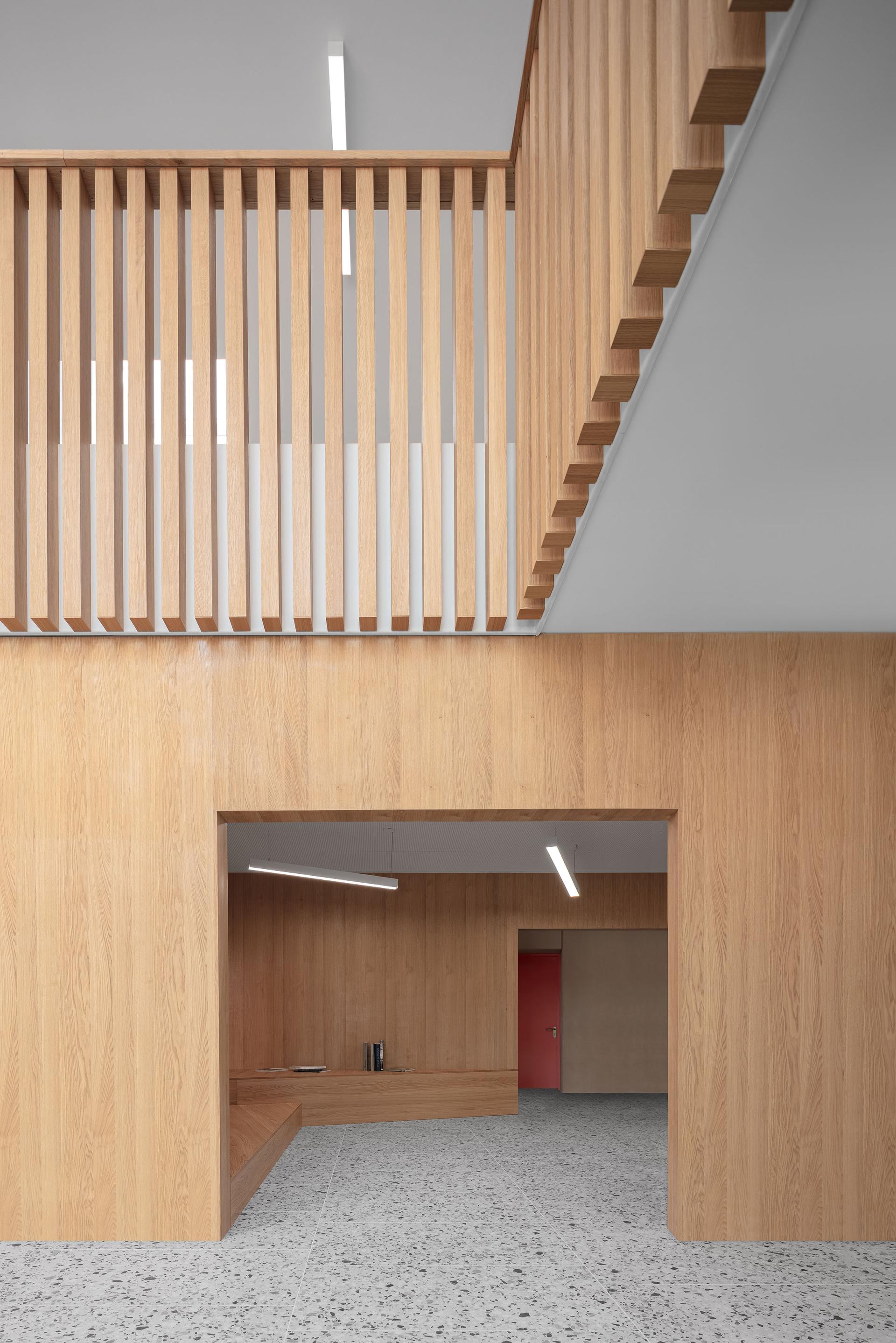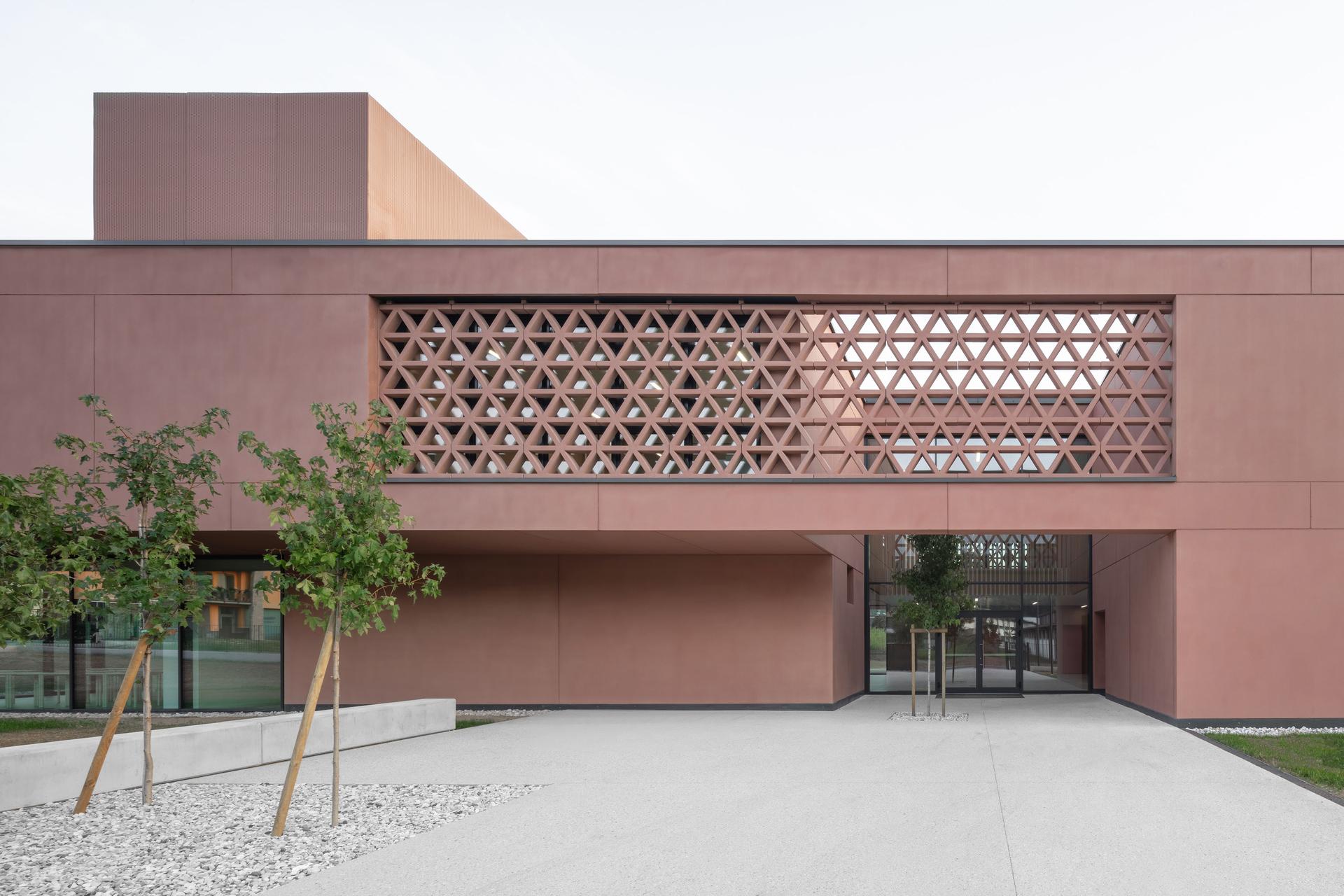






“The project addresses one of the key challenges in contemporary school design: transforming the school into a genuine civic centre, open to the entire community,” says architect Gianluca Facchinelli. This is the vision that underpins Puos d’Alpago Secondary School in the province of Belluno. Completed by Studio Facchinelli in 2024, the school originated from a competition launched in 2018 as part of efforts to counter depopulation in the area. The project also won first prize in the “Office, commercial, public and service buildings” category at the 13th edition of the Grand Prix architecture competition. “For Puos d’Alpago Secondary School, we wanted to reinterpret the concept of the covered square, creating a communal space conceived as a versatile, fluid environment with a seamless connection between indoors and outdoors,” Facchinelli explains. The building sits discreetly among the hills, its compact exterior finished in a terracotta tone. The monolithic exposed-concrete envelope brings together form, material and structure. Advanced fabrication methods eliminate the need for additional finishes, while thermal insulation and service routes are integrated within the envelope itself. The volume is raised on four coloured concrete cores that define a central agora, creating an internal landscape where classrooms, laboratories and timber volumes for reception and reading are interconnected through glazed and sliding partitions. Permeability is central to the design, with visual connections between the different spaces creating a fluid, dynamic interior. The tree-lined avenue envisaged in the masterplan continues into the building, extending the greenery into the perimeter courtyards that bring daylight into the communal spaces. The interior surfaces provide a warmer counterpoint to the architectural rigour. All floors and vertical surfaces are finished with porcelain stoneware slabs from Casalgrande Padana’s Le Ville collection, in a 60×120 cm size and 9 mm thickness. A total of 1,700 square metres was installed in the Pisani colour, a terrazzo-effect surface with a pale background flecked with grey and earth-toned chips that gives the communal areas an elegantly irregular look and a warmer, more welcoming atmosphere.