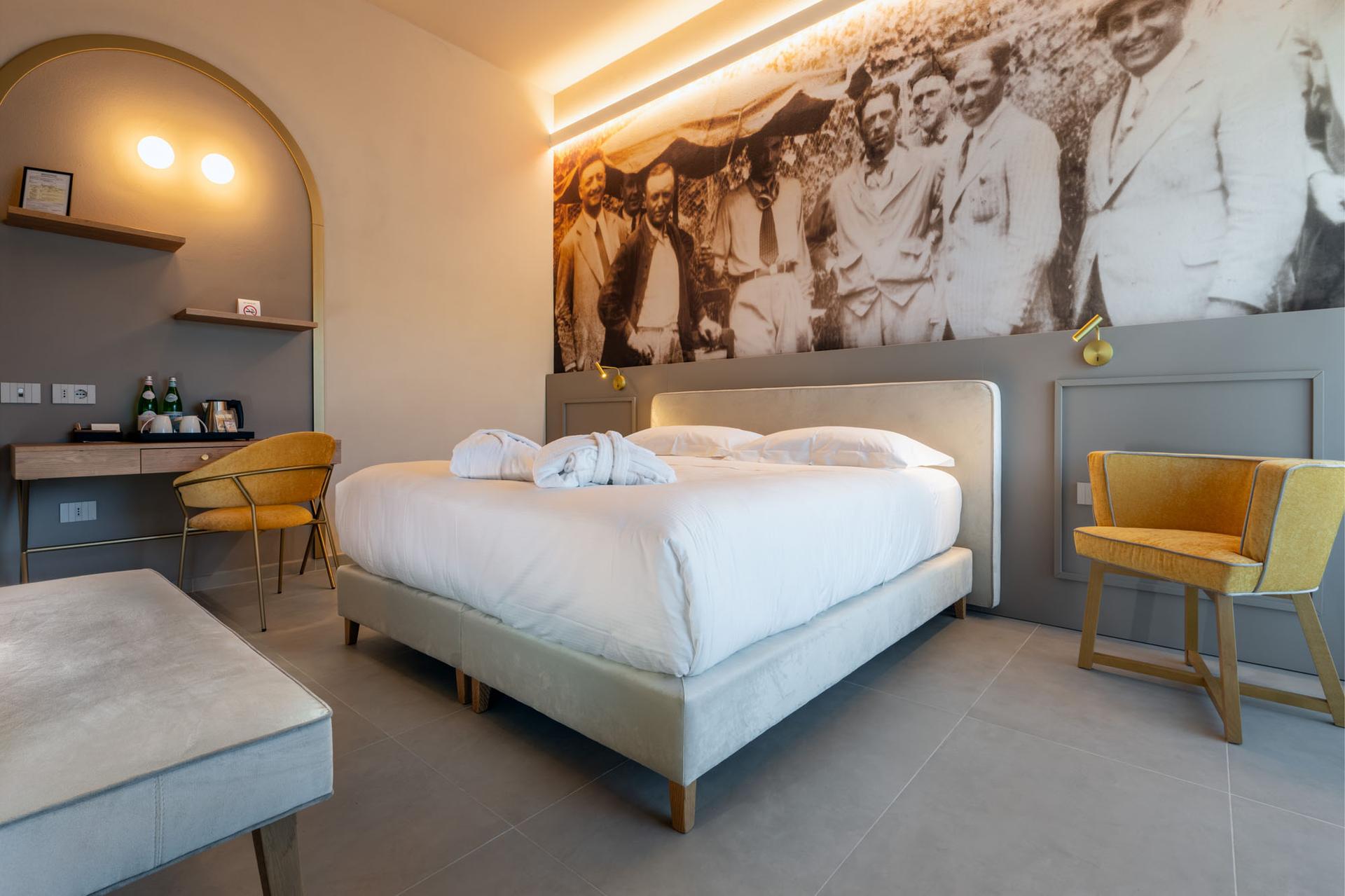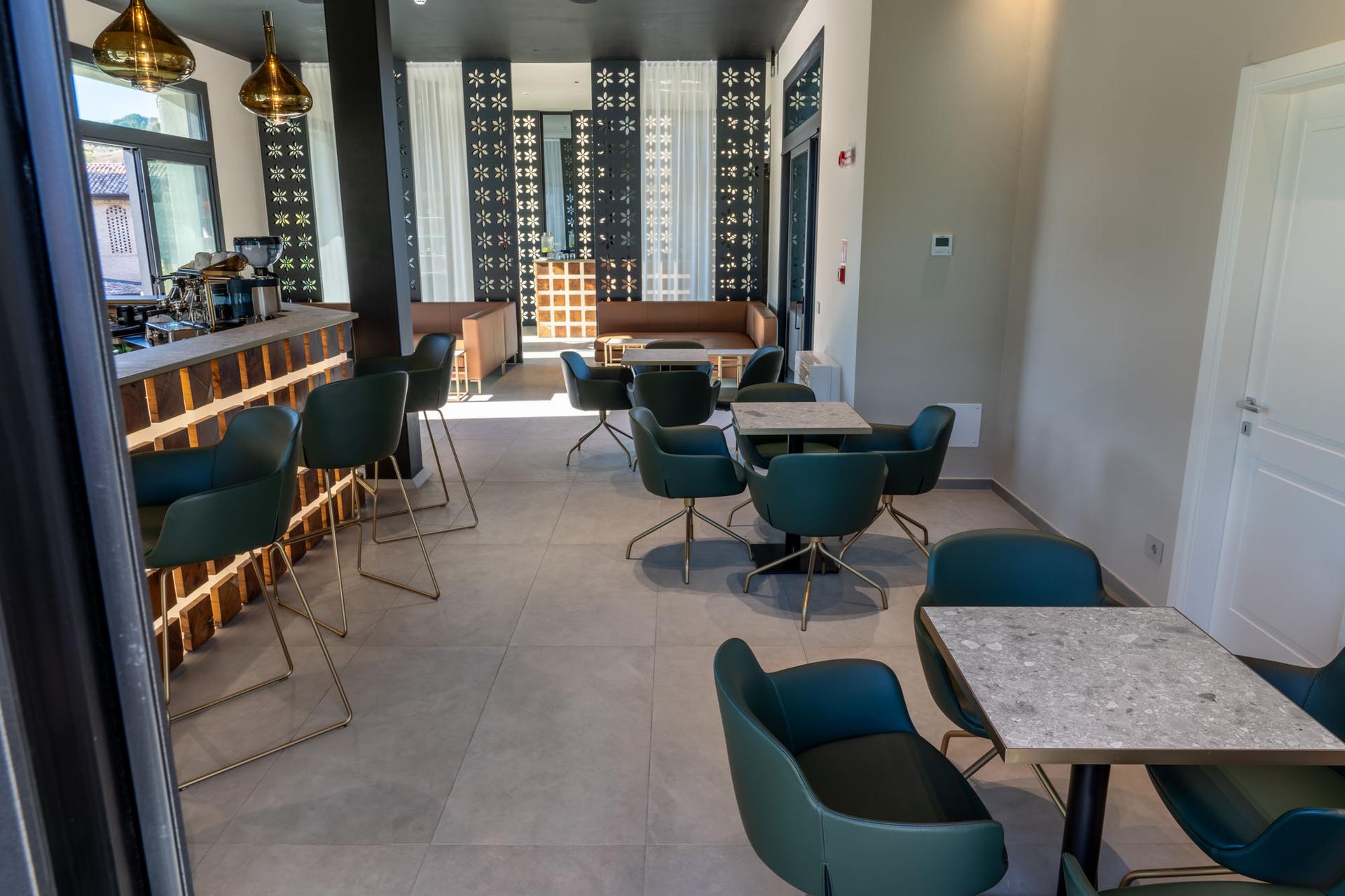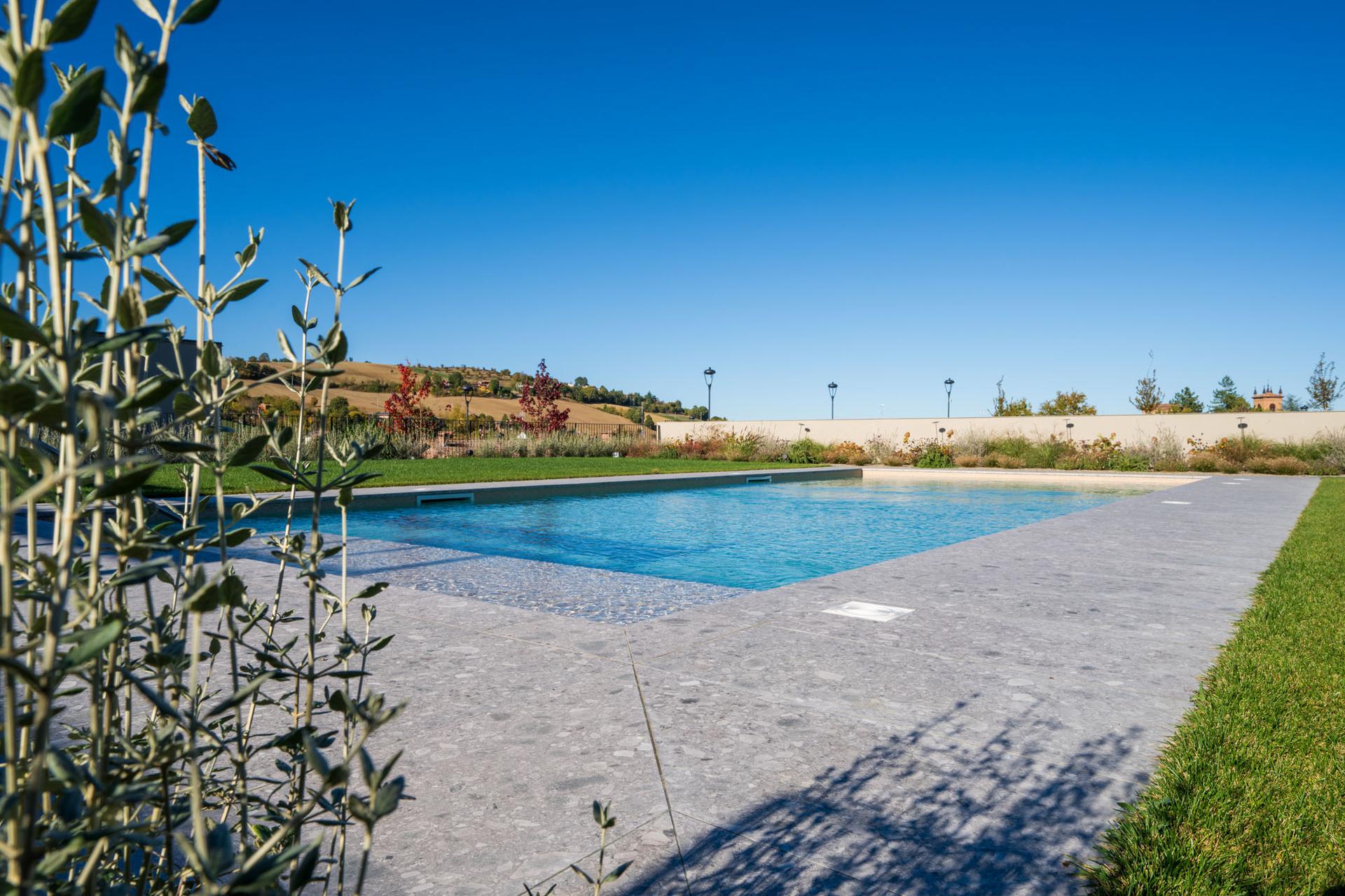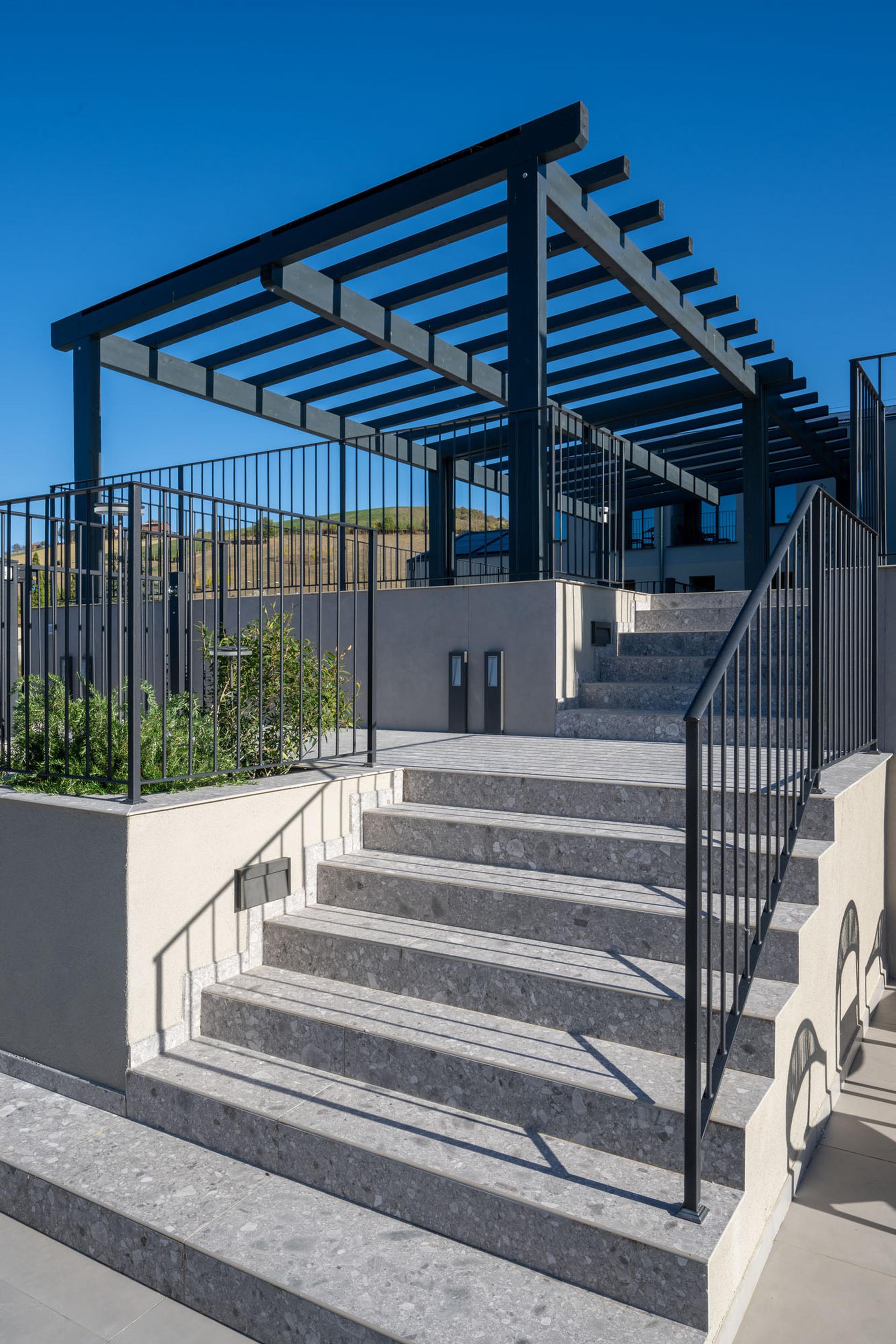






The Maranello Resort Borgo Torre della Montina has a single, clear mission: to make every guest feel part of a timeless narrative. Located a few kilometres from Maranello amidst the gentle hills of the Modena countryside, the complex was designed to offer a hospitality experience that is entirely out of the ordinary.
“We want those who cross our threshold to feel like the protagonist of a story, one that spans the charm of the Middle Ages, the glamour of the 1950s and the innovation of the future,” explains Andrea Bazzani, founder of ARCKIZONE and lead architect on the project. “The brief was complex: we had to take the 13th and 14th century hamlet of Torre Maina, which had been abandoned for years, and reinvent it as a premier luxury destination.”
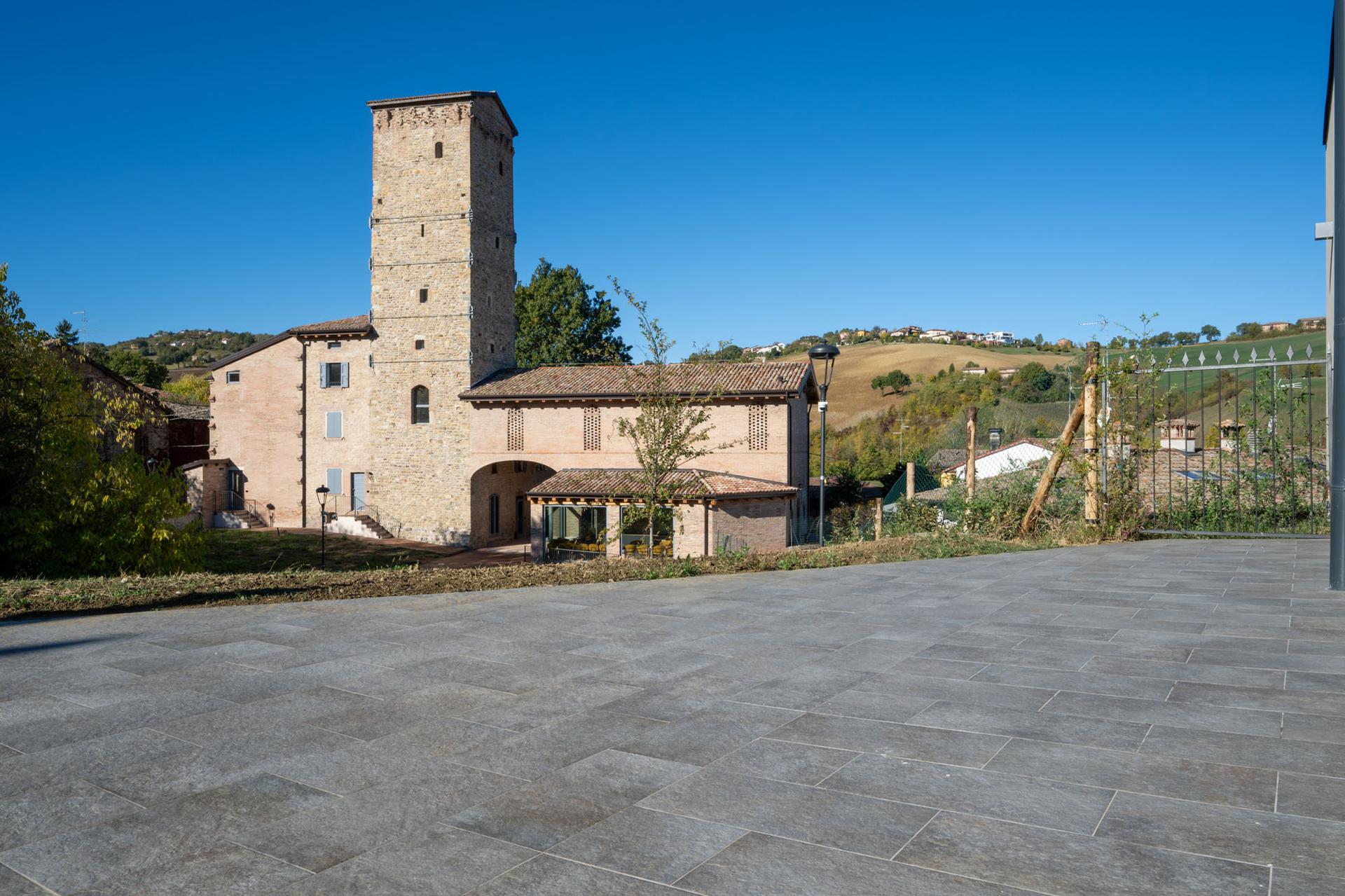
“We began with a rigorous feasibility study dedicated to preserving the ancient Torre della Maina (the Montina Tower) and its fortified settlement. Simultaneously, we planned a modern extension on the adjacent land to house the resort’s essential amenities, including the restaurant, the landscaped grounds and the swimming pool area,” the architect continues.
This architectural concept is a dialogue between memory and innovation. On one hand, the historically sensitive restoration of the hamlet has kept the original layout intact. Today, these ancient stone buildings house the resort’s most exclusive suites or have been adapted to new functions. “The beating heart of the project is the Montina Tower itself, a majestic medieval structure reimagined as a five-storey master suite, complete with its own internal lift,” where guests can quite literally reconnect with history, says Bazzani.
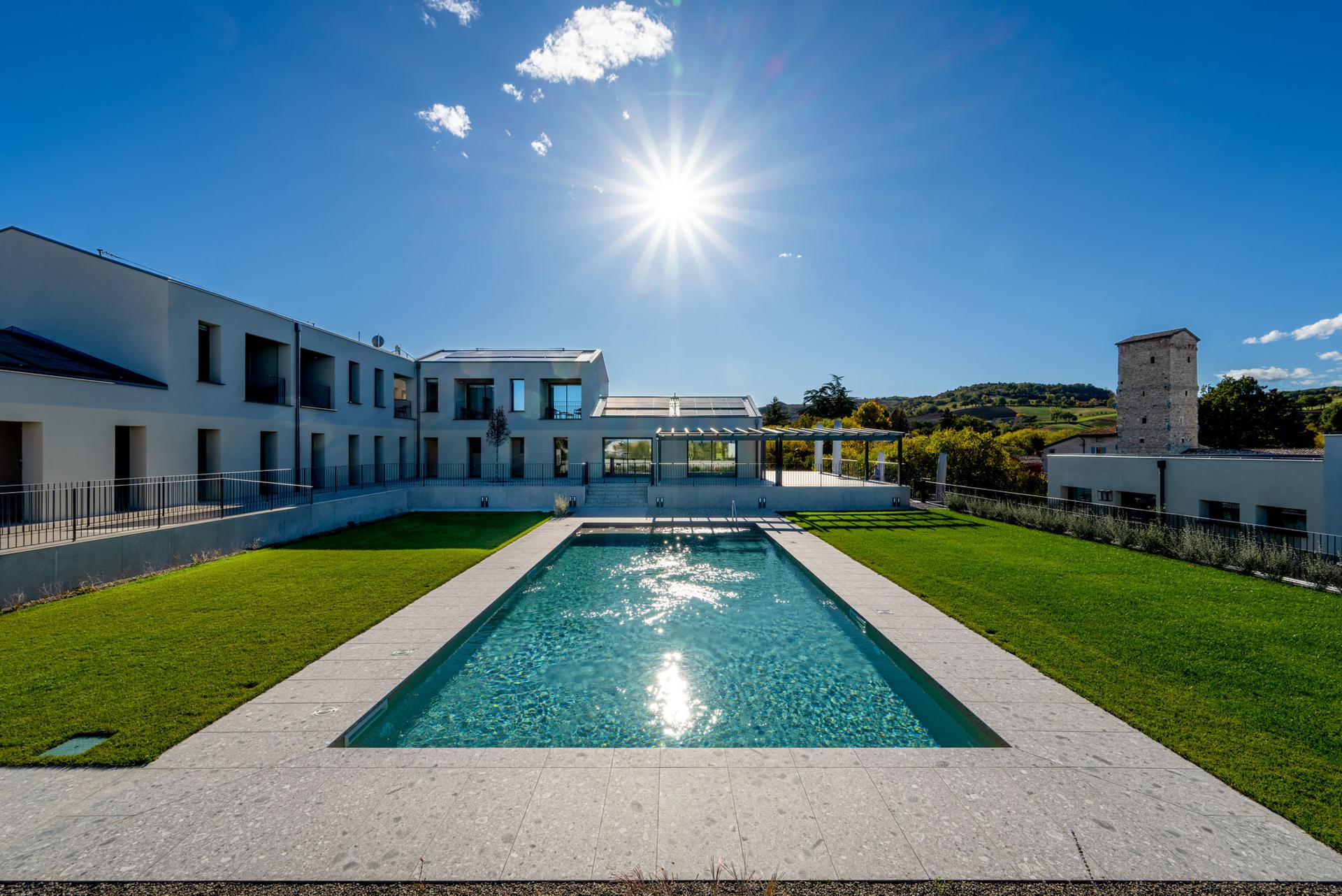
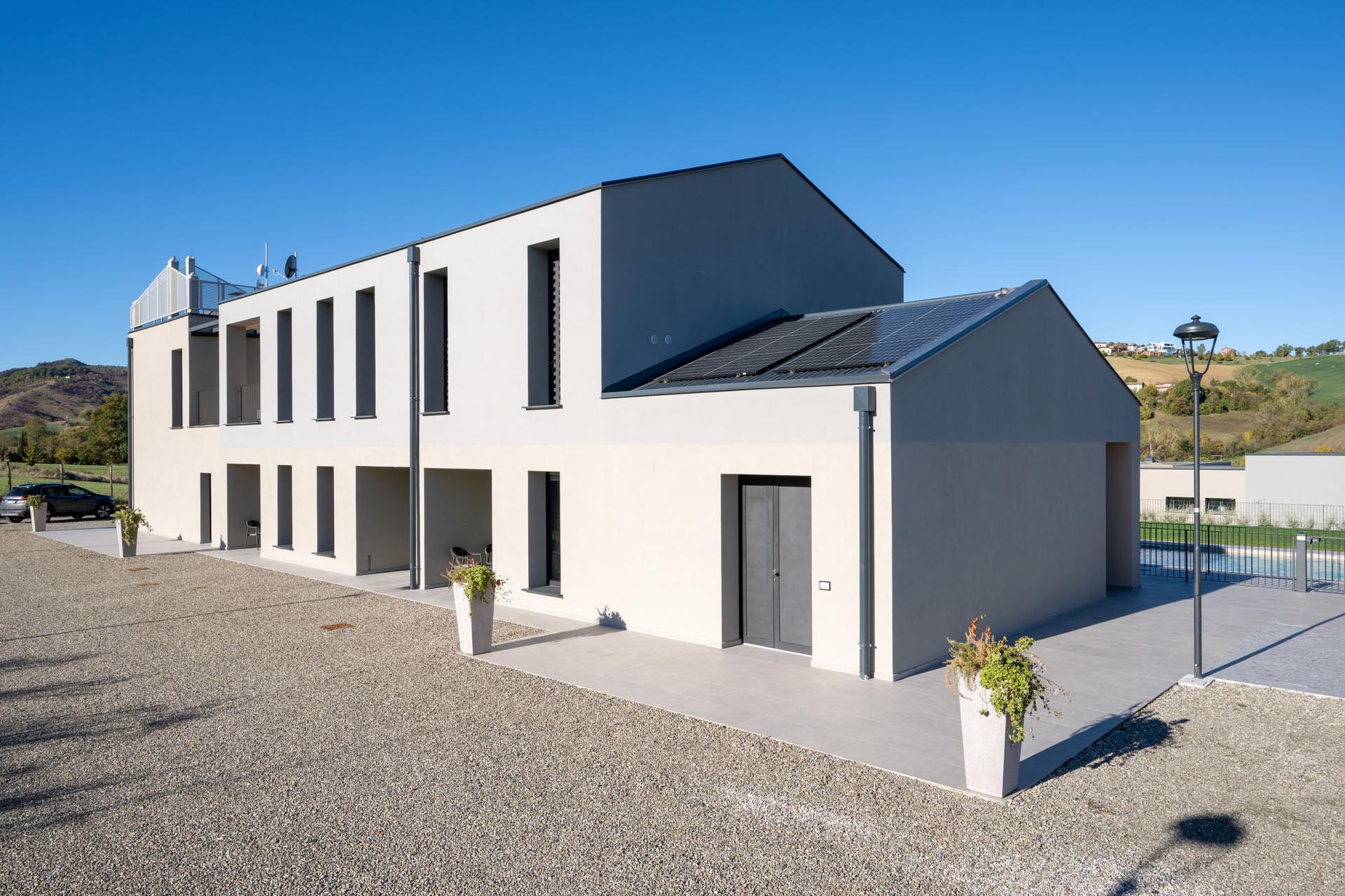
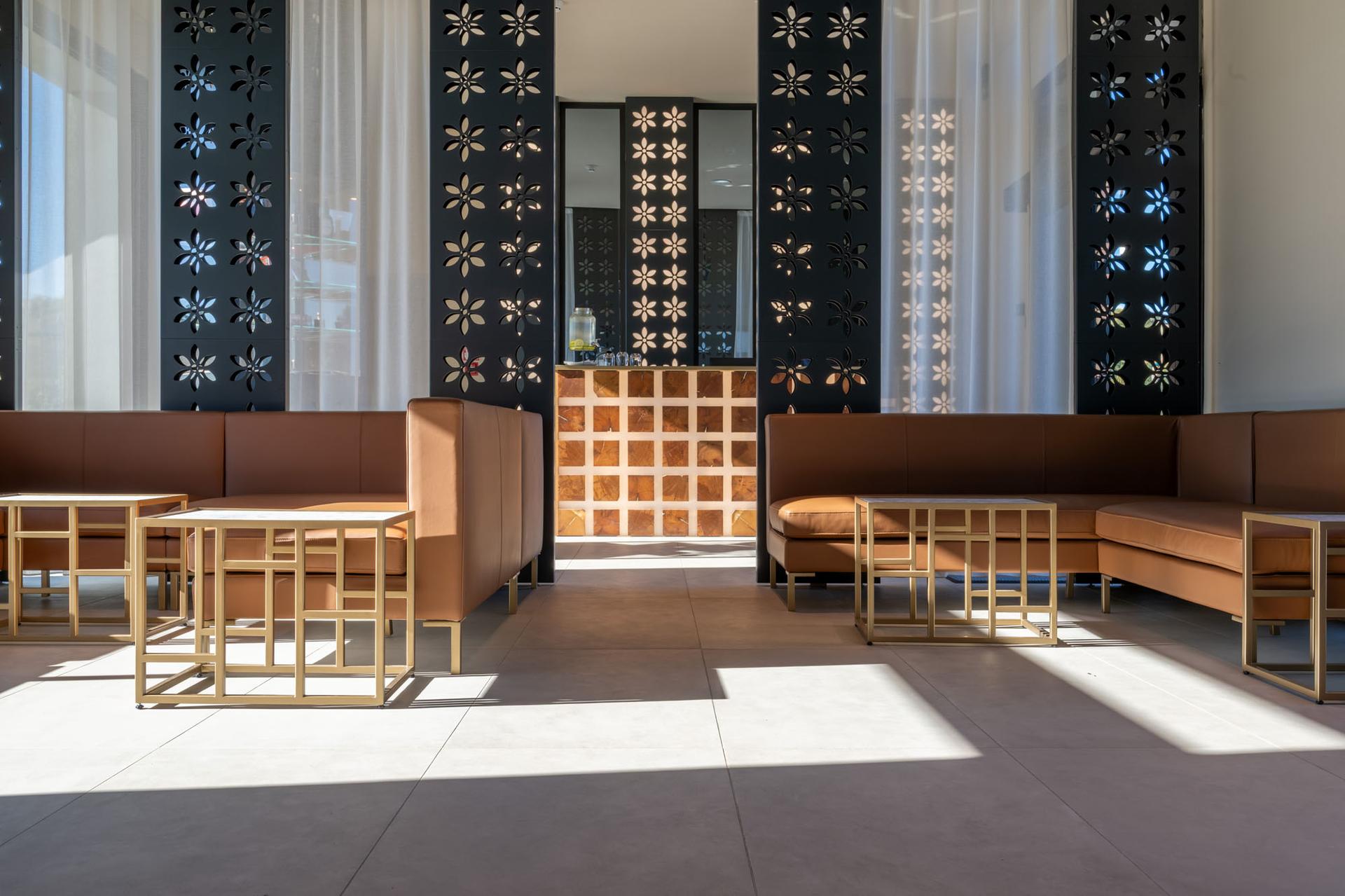
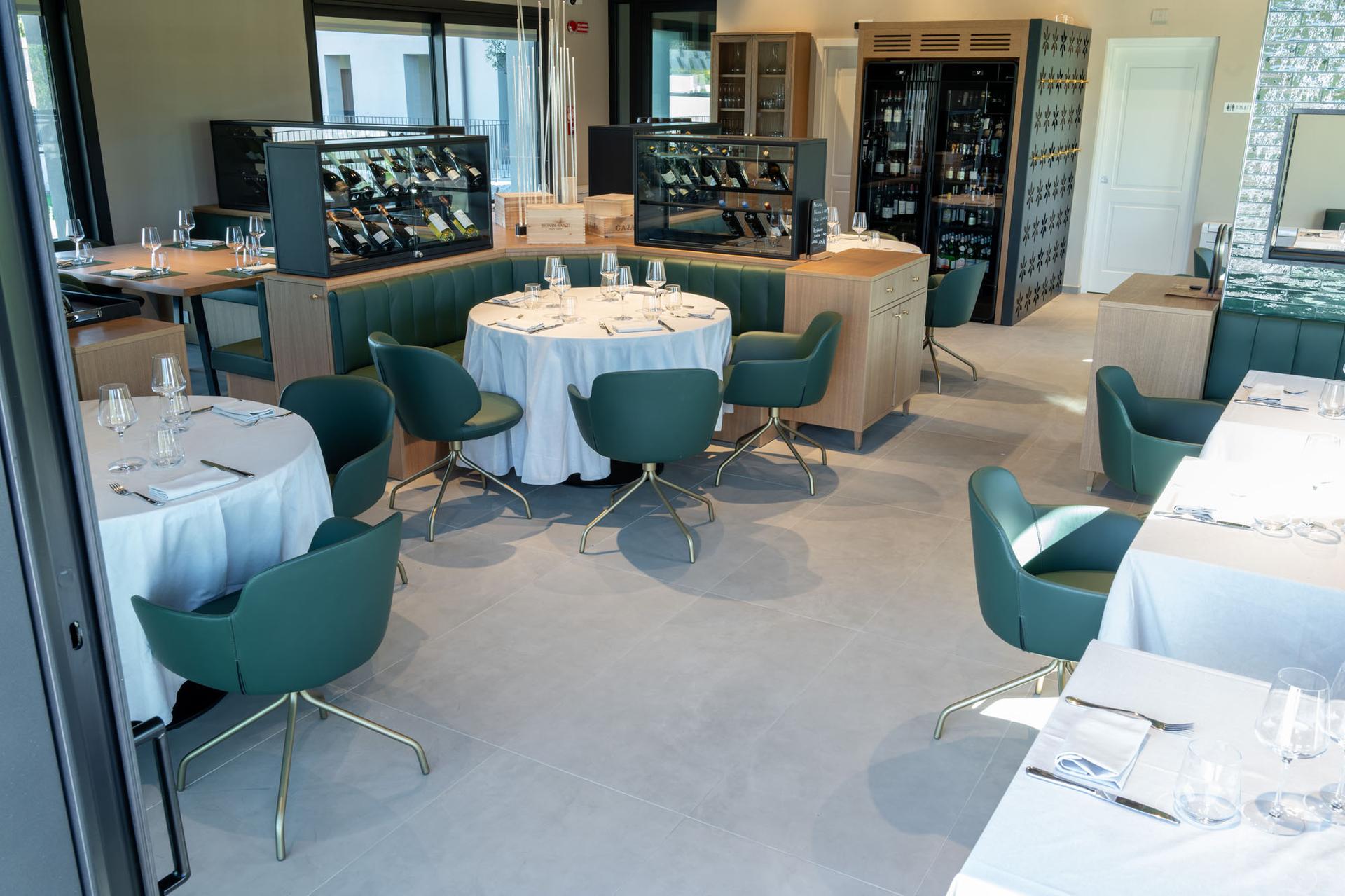
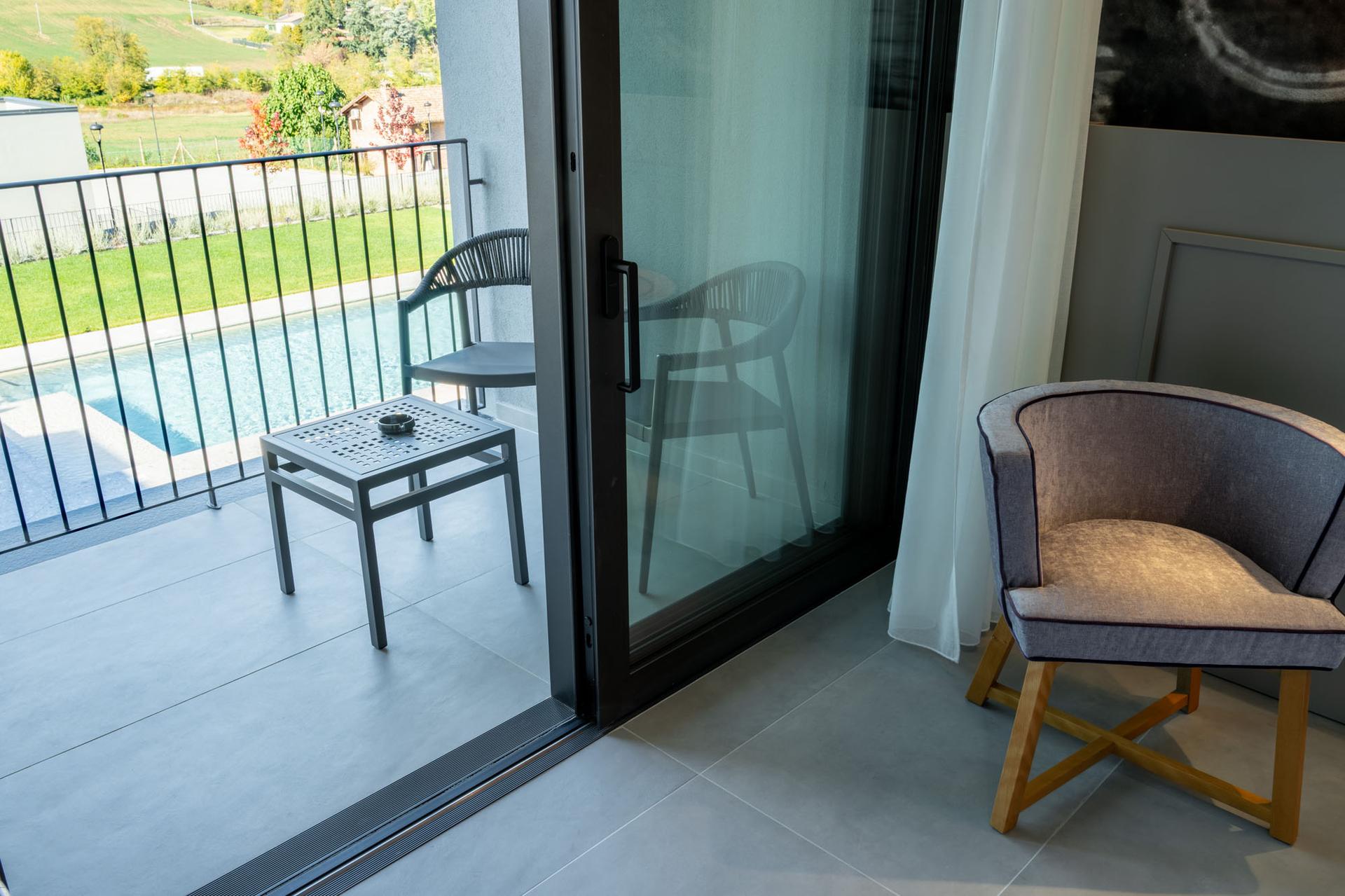
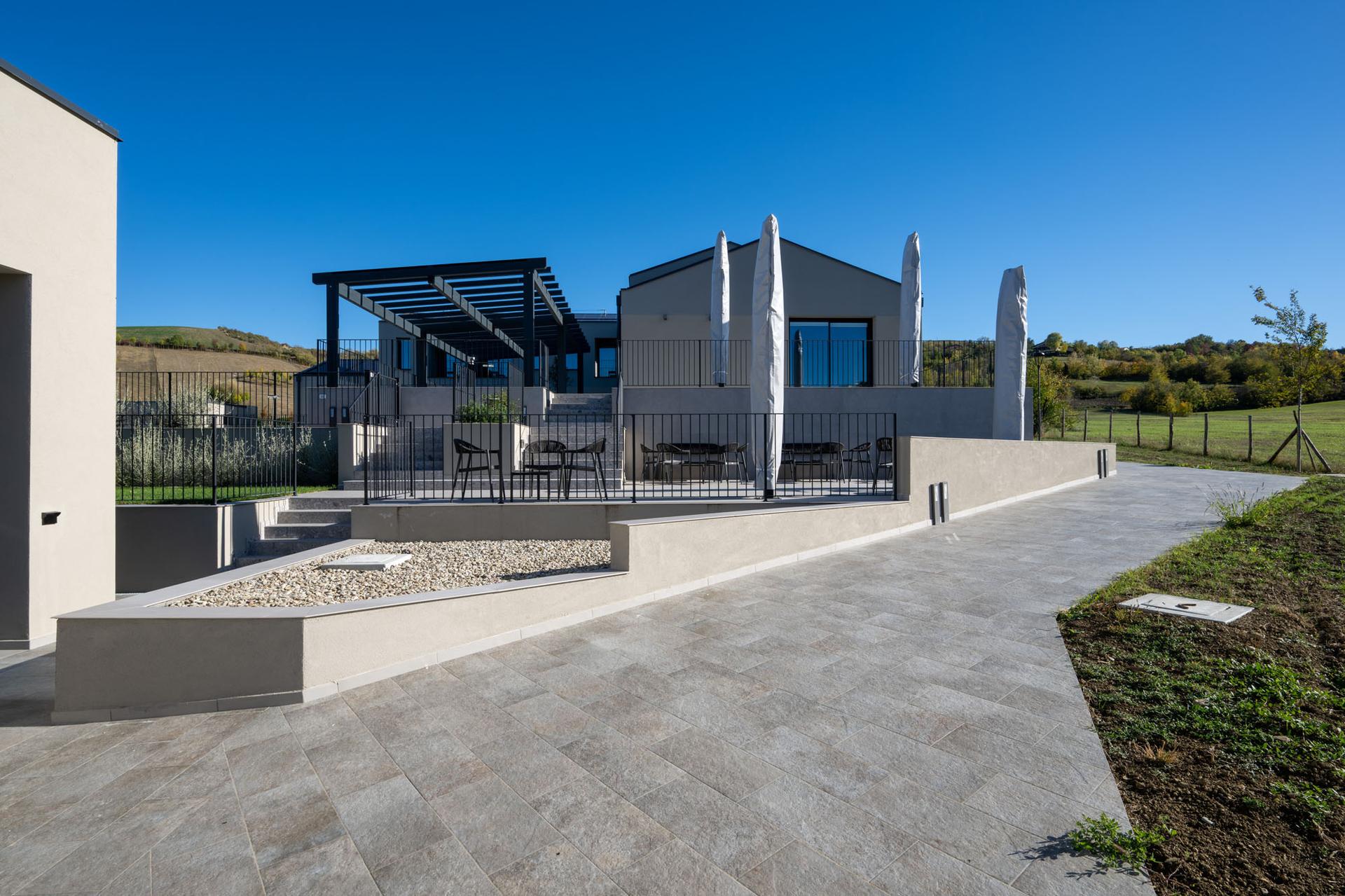
In deliberate contrast to the stone heights of the tower is the subterranean modernism of the new extension. Built directly into the natural slope of the hillside to minimise its visual profile, this structure uses expansive glass walls to dissolve the boundary between the interior and the surrounding landscape and swimming pool. The extension houses the reception, the lounge bar, the restaurant and eight deluxe rooms.
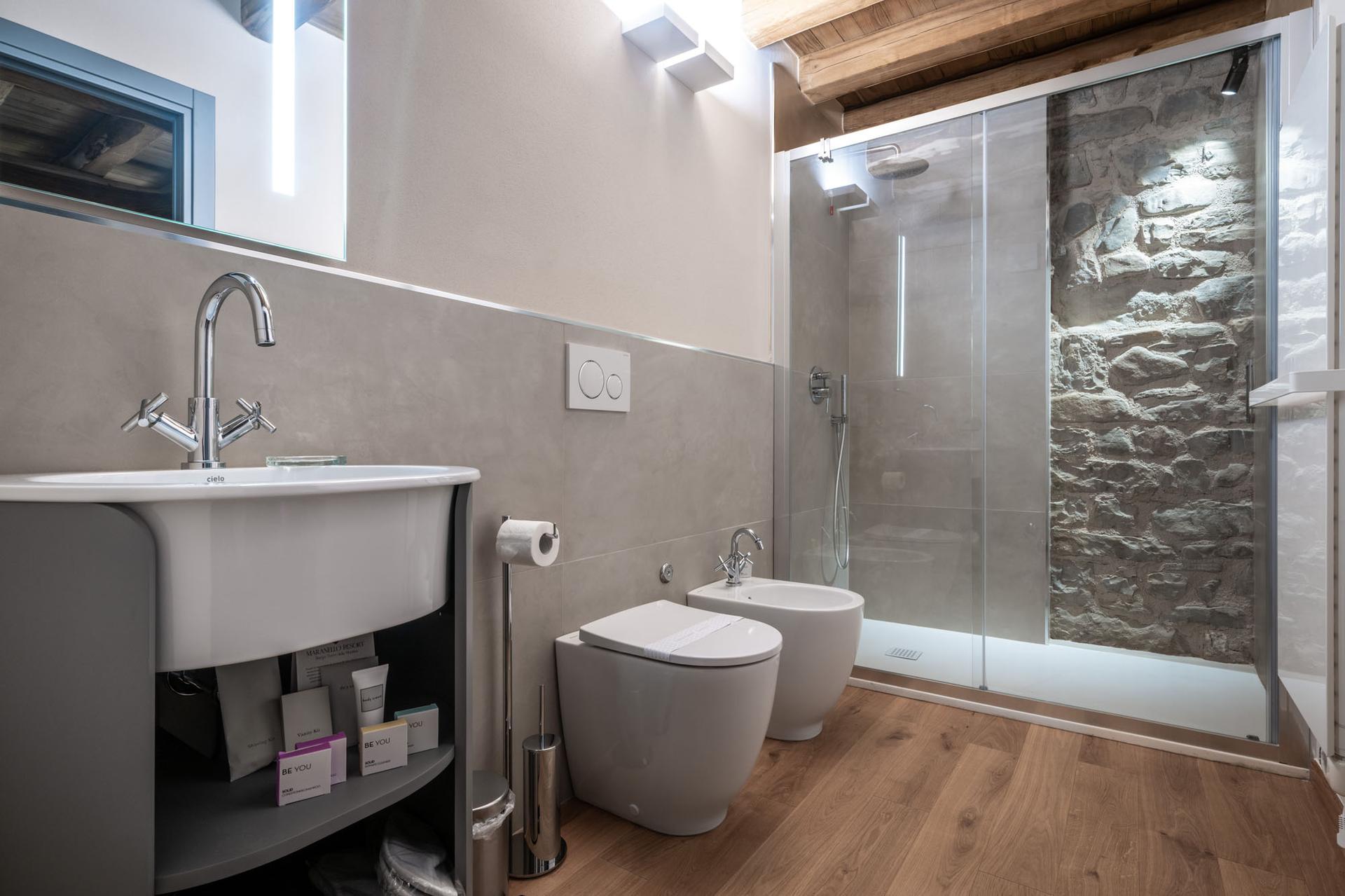
This dialogue between contrast and design is also expressed through the materials, which were chosen “with a desire to create a sensory journey that guides guests through the different eras of the complex. For the historic hamlet and the tower, we used ‘living’, traditional materials like original stone and oak. For the contemporary building, we shifted to the language of glass and metal to provide a sense of lightness and transparency,” explains the architect.
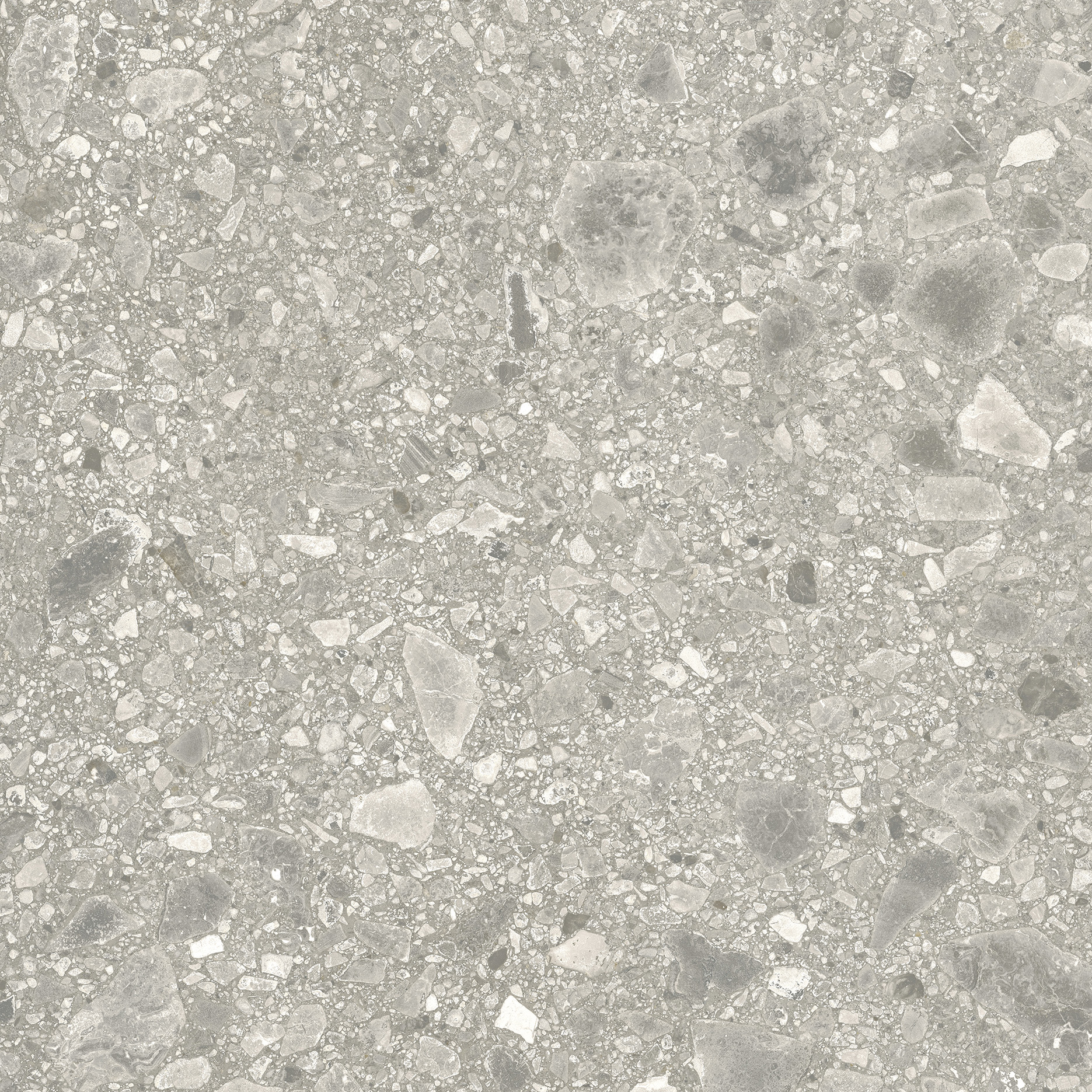
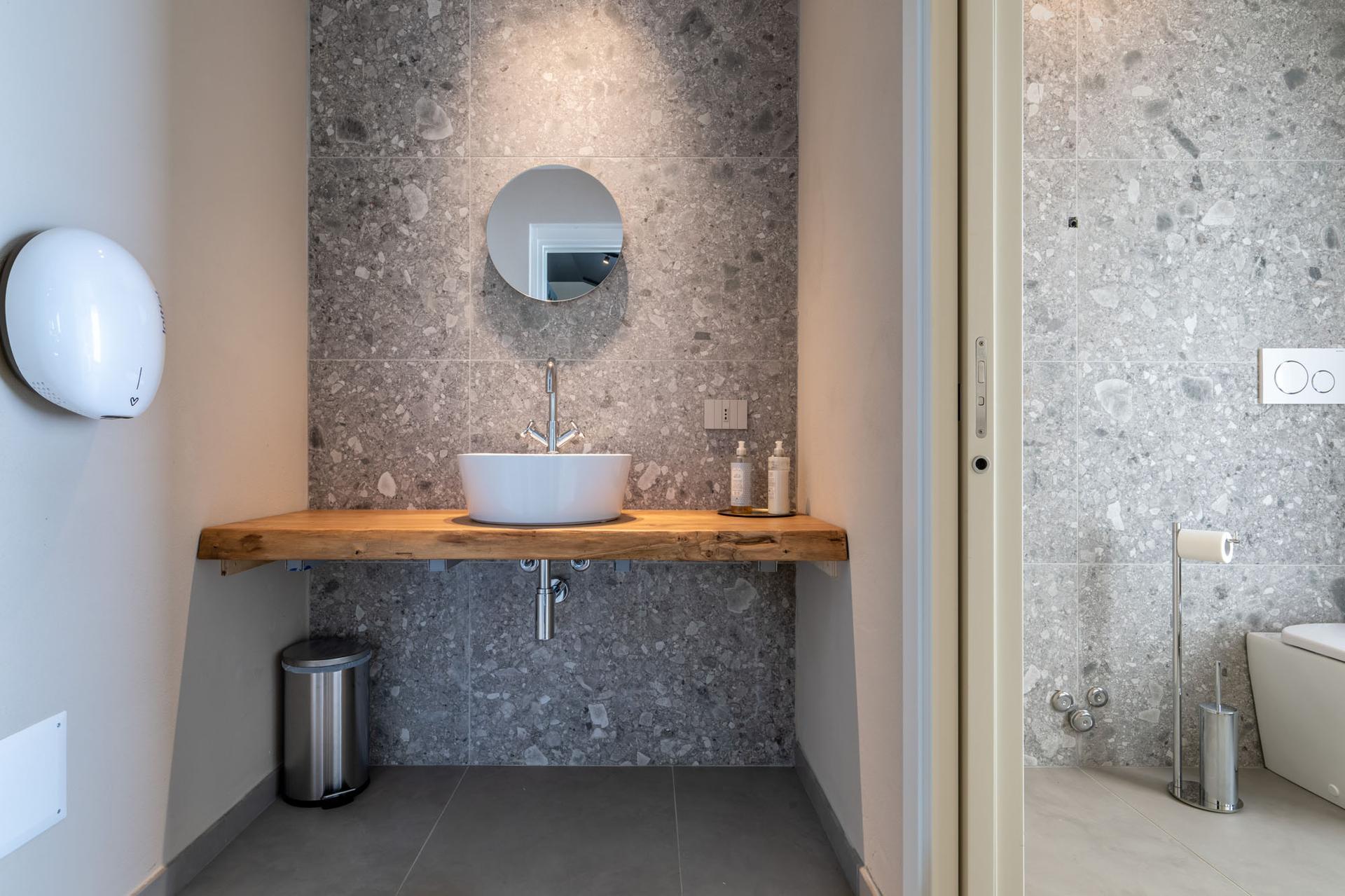
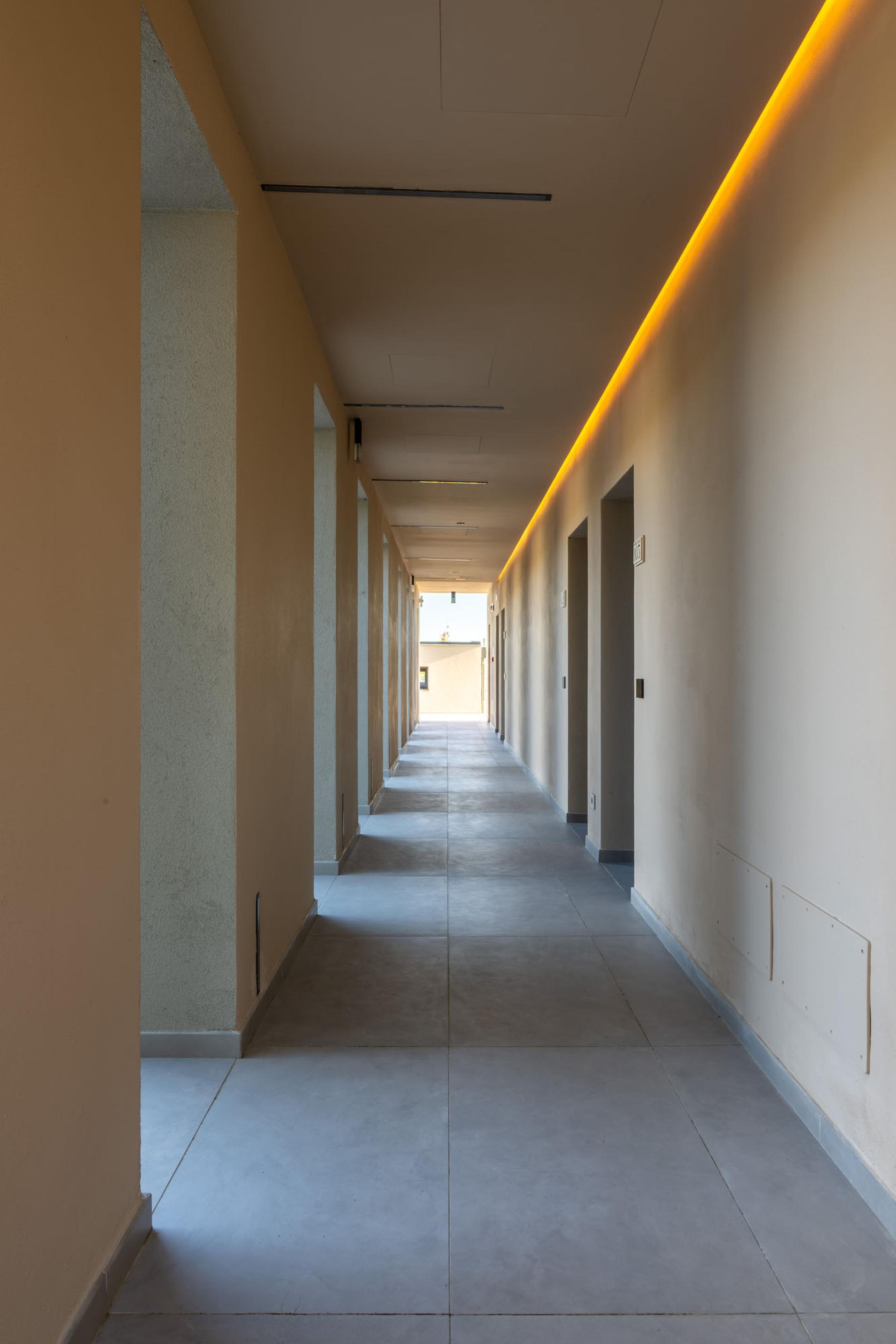
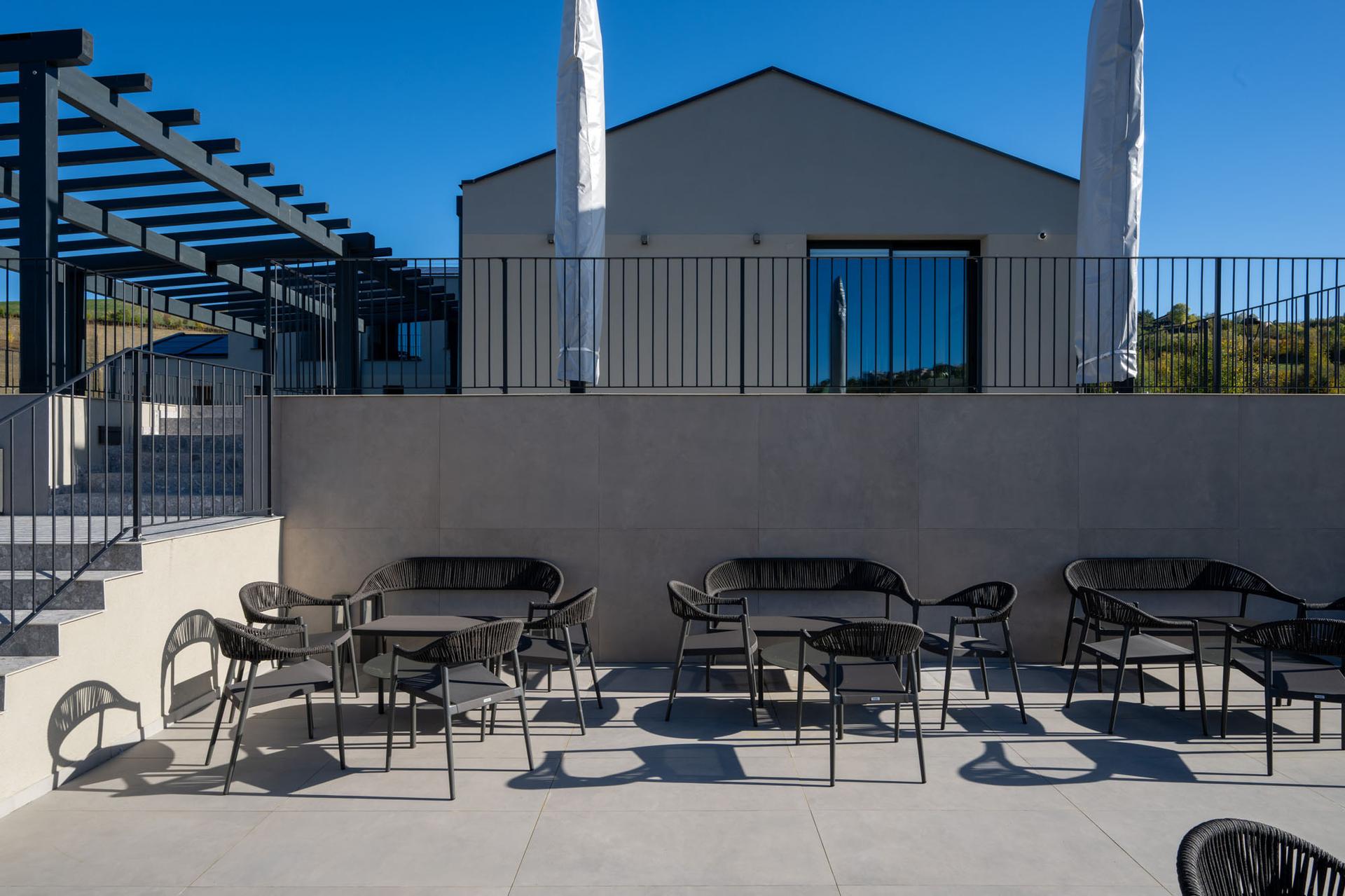
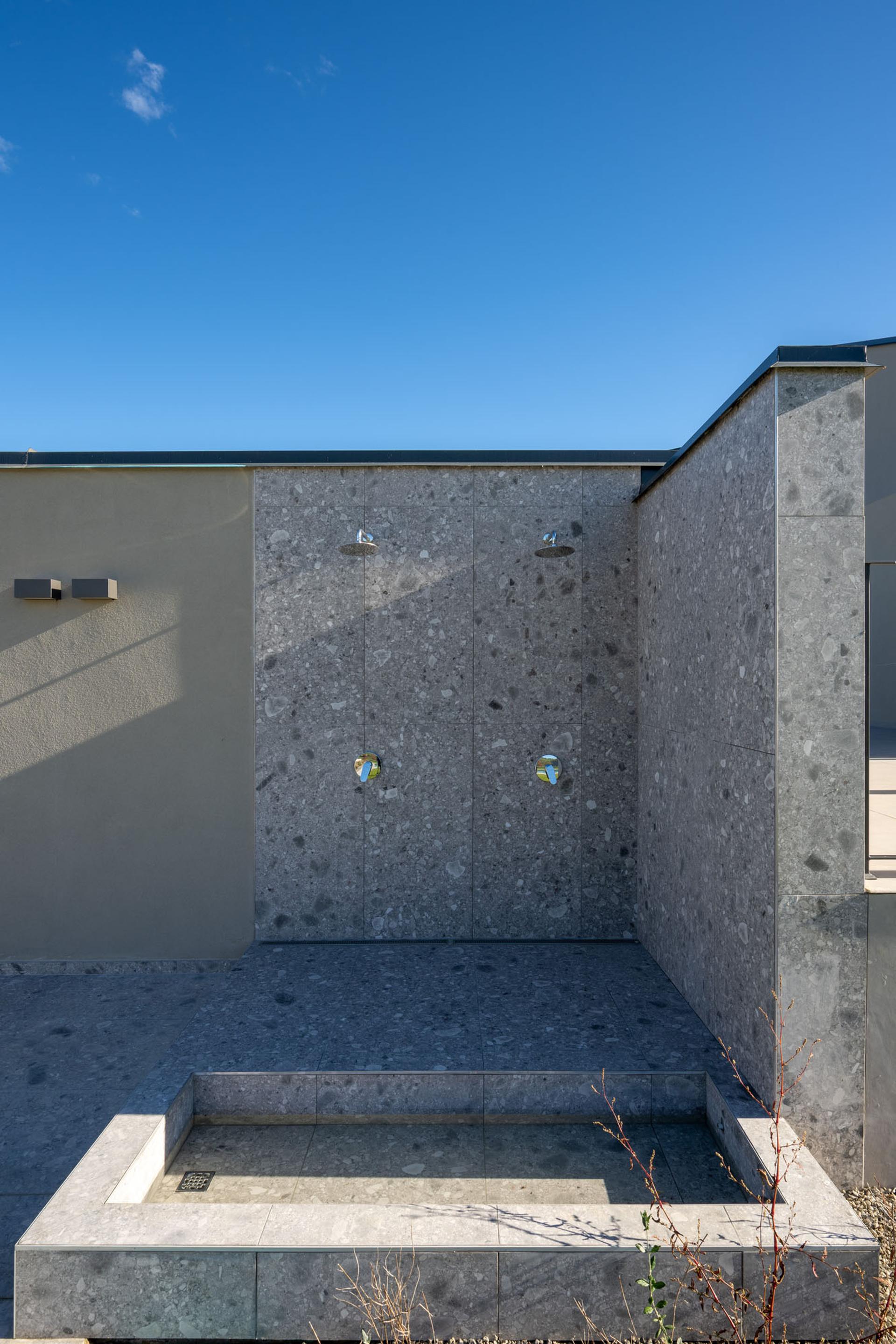
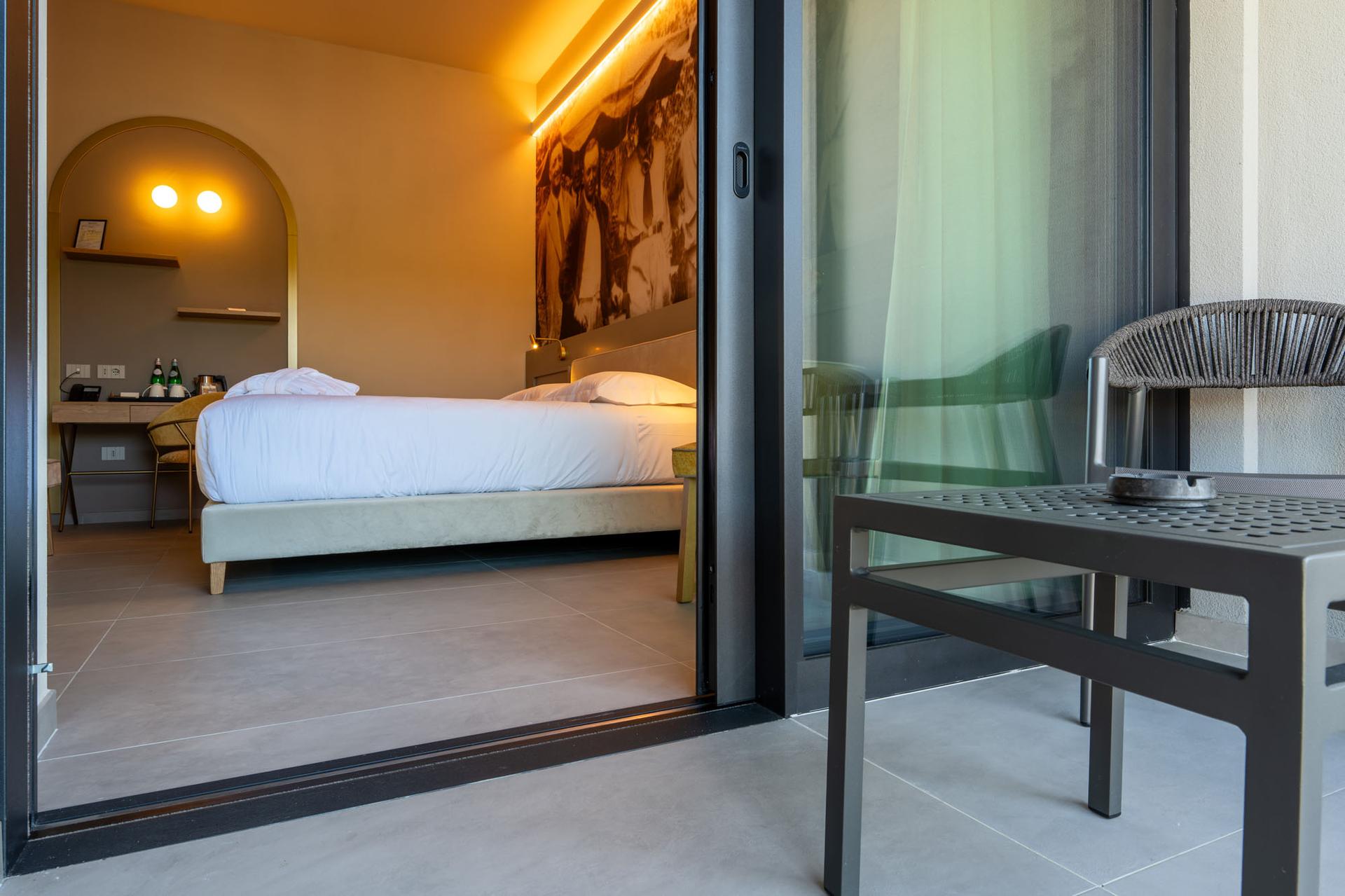
Ceramic surfaces from Caesar serve as the unifying element between these two worlds, providing faithful interpretations of concrete and natural stone. The Join collection, used for the flooring in the reception, lounge bar and new restaurant in the contemporary structure, provides visual continuity throughout the various spaces. It is also used for the wall tiling in the guest bathrooms, demonstrating its ability to complement historic materials. For the terraces and walkways, the slip-resistant Join Grip version ensures a seamless flow between indoors and out.
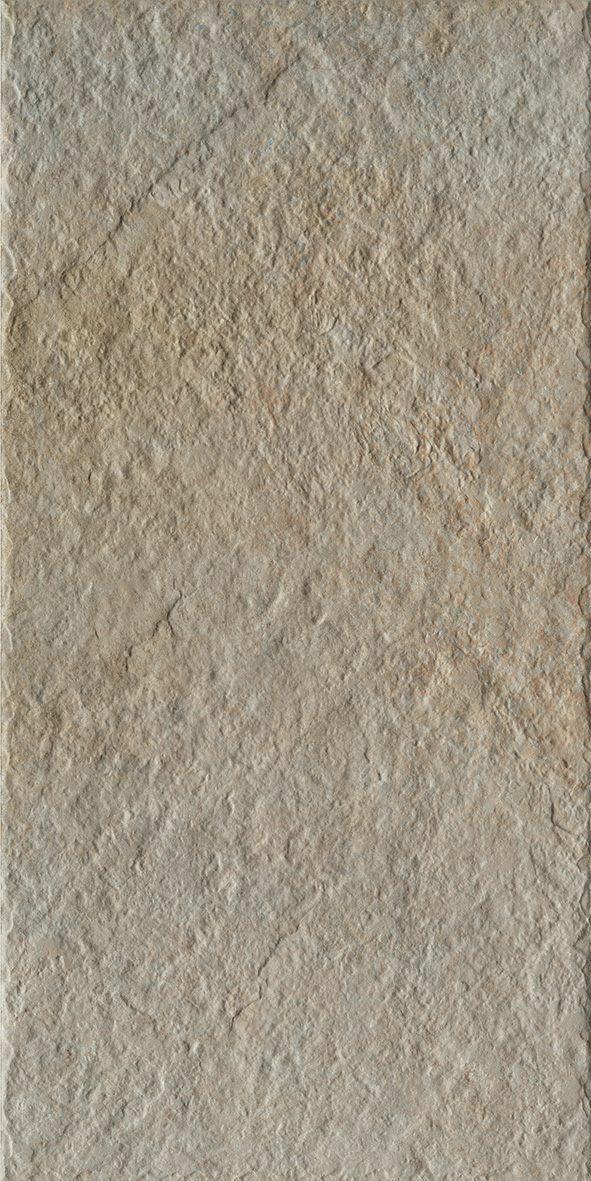
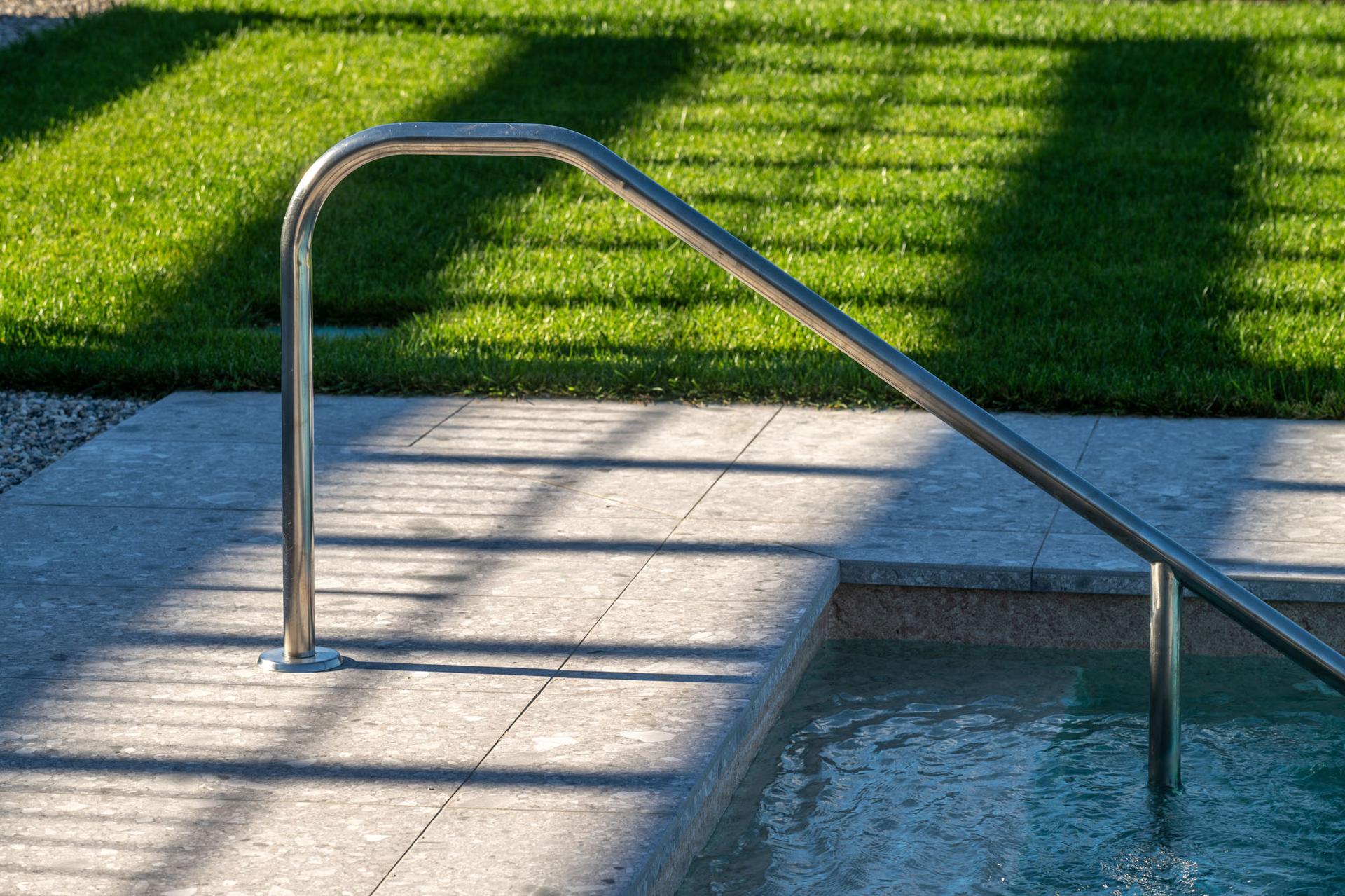
Similarly, the Portraits Brera collection – containing 20% recycled material – is used for technical areas, professional kitchens and service bathrooms, while the Grip version, together with Pool edges, was used for the perimeter of the swimming pool. Step Out, a series that blends reclaimed stone and weathered concrete, paves the path leading up the hillside.
The project also pays homage to local heritage and Emilia-Romagna’s legendary Motor Valley, celebrating the friendship between racing driver Francesco Severi – a descendant of one of the noble families who once inhabited the hamlet – and Enzo Ferrari. Consequently, the interior design adopts the bold palettes and aerodynamic curves of the 1950s, with burnished metals and polished chrome details that subtly evoke the golden age of Italian motor racing.
“In this multisensory experience, luxury is never an end in itself but a storytelling tool,” Bazzani concludes. “The defining feature of the Maranello Resort lies in its perfect balance between the silence of history and the dynamism of a legend.”