










Technical


Ceramic materials and fire prevention
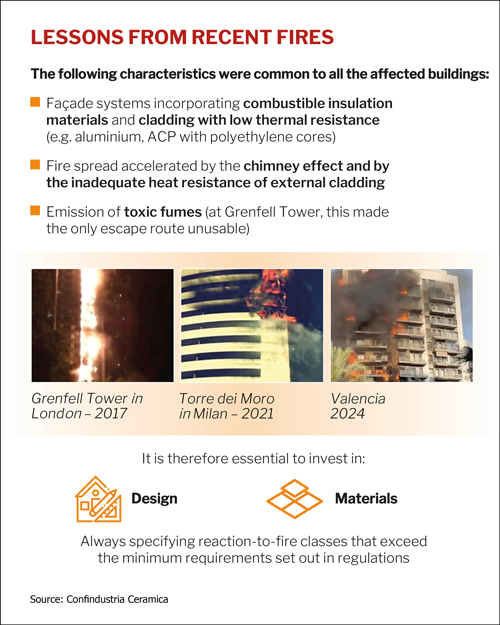
(November 2025) | In recent years, several major fires have occurred in high-rise buildings fitted with façade cladding systems designed to improve energy efficiency (Grenfell Tower in London in 2017, Torre dei Moro in Milan in 2021 and Valencia in 2024). The severity of these fires and consequent loss of life have raised serious concerns about the fire performance of buildings.
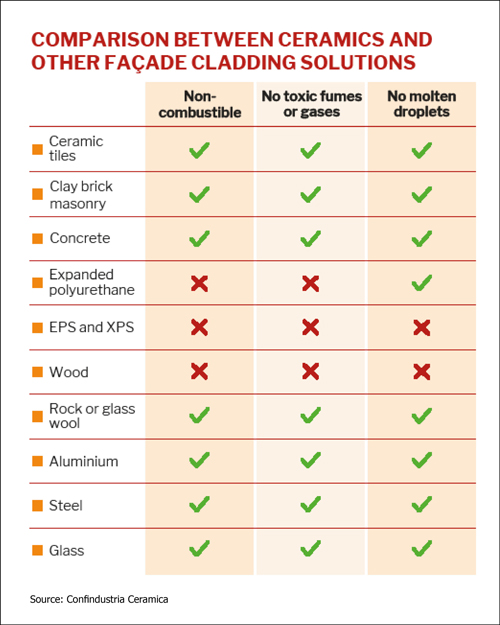
Although each fire originated differently, all three buildings shared one critical feature: façade systems containing combustible components and cladding with limited heat resistance, such as aluminium composite panels (ACP) with polyethylene cores. In all cases, the fires followed similar dynamics due to vertical air cavities within the façade assemblies, which enabled rapid upward and downward flame spread through the chimney effect. The inadequate thermal resistance of the external cladding further increased the oxygen supply, accelerating combustion. In the case of the Grenfell Tower fire, toxic fumes made the only escape route unusable and hindered rescue operations.
In all three cases, the combination of combustible façade materials and the presence of vertical cavities played a decisive role in the rapid propagation of the fires. These incidents expose systemic deficiencies in building design and regulation, underscoring the need for stricter adherence to modern fire safety standards to prevent similar tragedies from occurring in the future.
As further illustrated by the recent fires in Los Angeles, façade design and material specification are key factors in ensuring the fire safety of buildings.
The use of combustible components, particularly in vertical configurations with air cavities, greatly increases the risk of fires spreading rapidly due to the physics of fire propagation.
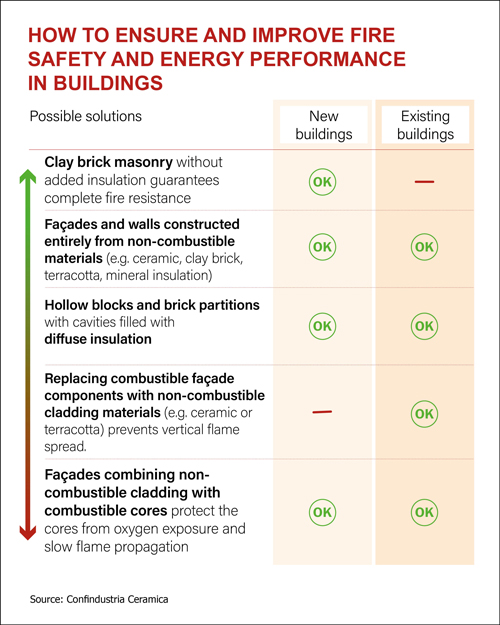
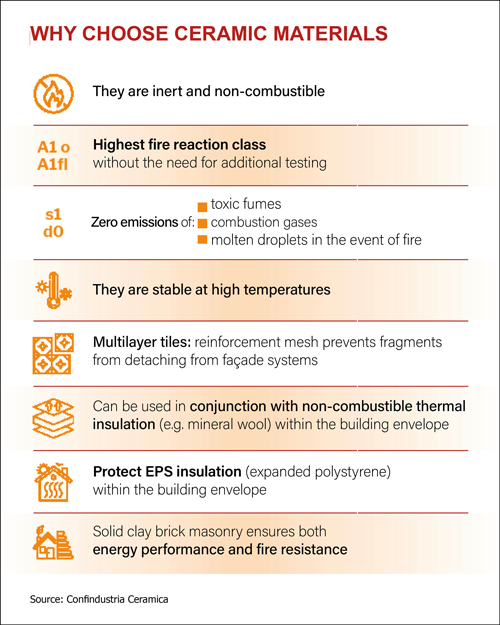
Improving fire safety therefore depends on careful selection of materials for each façade system, favouring solutions with reaction-to-fire classifications that exceed the minimum levels required by current regulations (in Italy, Ministerial Decree of 30 March 2022 – Vertical Technical Rule No. 13, “Enclosures for Civil Buildings”). The accompanying table summarises the various available solutions offering the best reaction-to-fire classes, listed in descending order of safety and grouped by the type of intervention: new construction, major renovation or energy retrofit of existing buildings.