(December 2023) – According to the CA4BM (Carbon Accounting for Building Materials) study, presented to a large and highly attentive audience at the latest edition of Cersaie. The best option for achieving a decarbonised built environment is to continue to decarbonise the manufacture of all construction materials across their whole life cycle. The study reflects the importance of achieving a carbon-neutral economy by 2050, a pivotal objective within the European Green Deal. To effectively mitigate the impacts of climate change, it is imperative to thoroughly assess the environmental impacts of building materials throughout their life cycles using comprehensive and reliable data. This evaluation serves as a basis for informed decision-making. For this reason, it is essential to promote the involvement and accountability of all stakeholders, including institutional bodies, in providing decarbonised energy carriers at a competitive cost.
The study, commissioned by a coalition of European and international federations representing the mineral building products sector (including Cerame-Unie, the European Ceramic Industry Association of which Confindustria Ceramica is a member) and conducted by LBP Sight and Royal Haskoning DHV, aims to advance scientific knowledge regarding methodologies for assessing the environmental impact of building materials. The ultimate goal is to promote a commitment to decarbonisation through standardised assessment methods. This scientific approach intends to assist policymakers in formulating appropriate European policies conducive to sustainable decarbonisation efforts within the building materials sector.
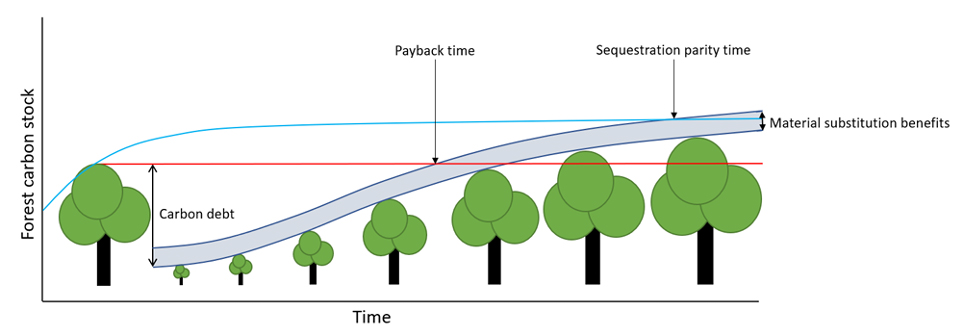
“Collectively, buildings in the EU are responsible for around 30% of greenhouse gas emissions,” said Dirk-Jan Simons, consultant and partner at LBP Sight. “Increased use of biobased products is perceived as the simple solution, a short-cut route for transforming the construction sector.” This thinking is partly based on claims that growing, transporting, and processing timber products have less impact on the environment, now and in the future. However, the study showed that buildings constructed from timber-based materials are not inherently carbon neutral. To correctly assess their impact, it is essential to consider all life cycle stages, from raw material sourcing to production, transportation and ultimately disposal. The study states that, in fact, timber-based construction products currently offer limited potential for global climate change mitigation. Additionally, it demonstrates that protected forests (where human activity is absent and the natural environment is preserved in its entirety) and sustainably managed forests have the highest potential to mitigate climate change. Therefore, initiatives focusing on preserving and expanding these areas, supported by reforestation projects, are the actions that currently offer the greatest potential for climate mitigation.
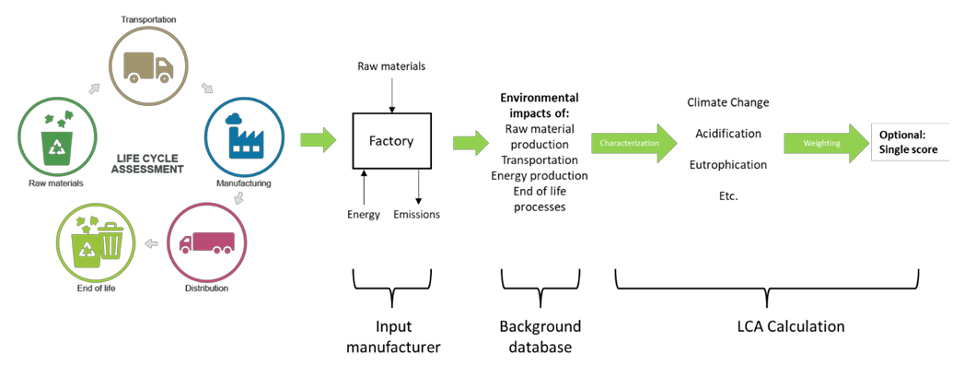
It is therefore emphasised that LCA studies are needed for covering the entire life cycle of buildings and products. Some LCA studies of building materials are not carried out with the necessary level of detail or intentionally omit certain life cycle stages, leading to incomplete and misleading conclusions. Developing specific guidelines for LCA studies is therefore becoming increasingly urgent in order to address these issues.
The study also highlights how architects should choose the most suitable materials for their projects on a case-by-case basis. In recent years, the Italian ceramic industry has made significant progress in improving its efficiency and reducing its energy consumption thanks to constant investments in upgrading and digitalising its production plants. The results achieved by the Italian ceramic tile industry are documented in Confindustria Ceramica’s industry-wide Environmental Product Declaration (EPD), obtained from official data and validated by independent third-party auditors, reports the average environmental performance of Italian ceramic manufacturers. Many Italian ceramic producers also publish their own product-specific EPDs to highlight their commitment to efficiency and decarbonisation.
Si informa che questo sito utilizza cookie, anche di terze parti, al fine di analizzare il traffico sul sito e personalizzare i contenuti e gli annunci più adatti a te.
Cookie Policy