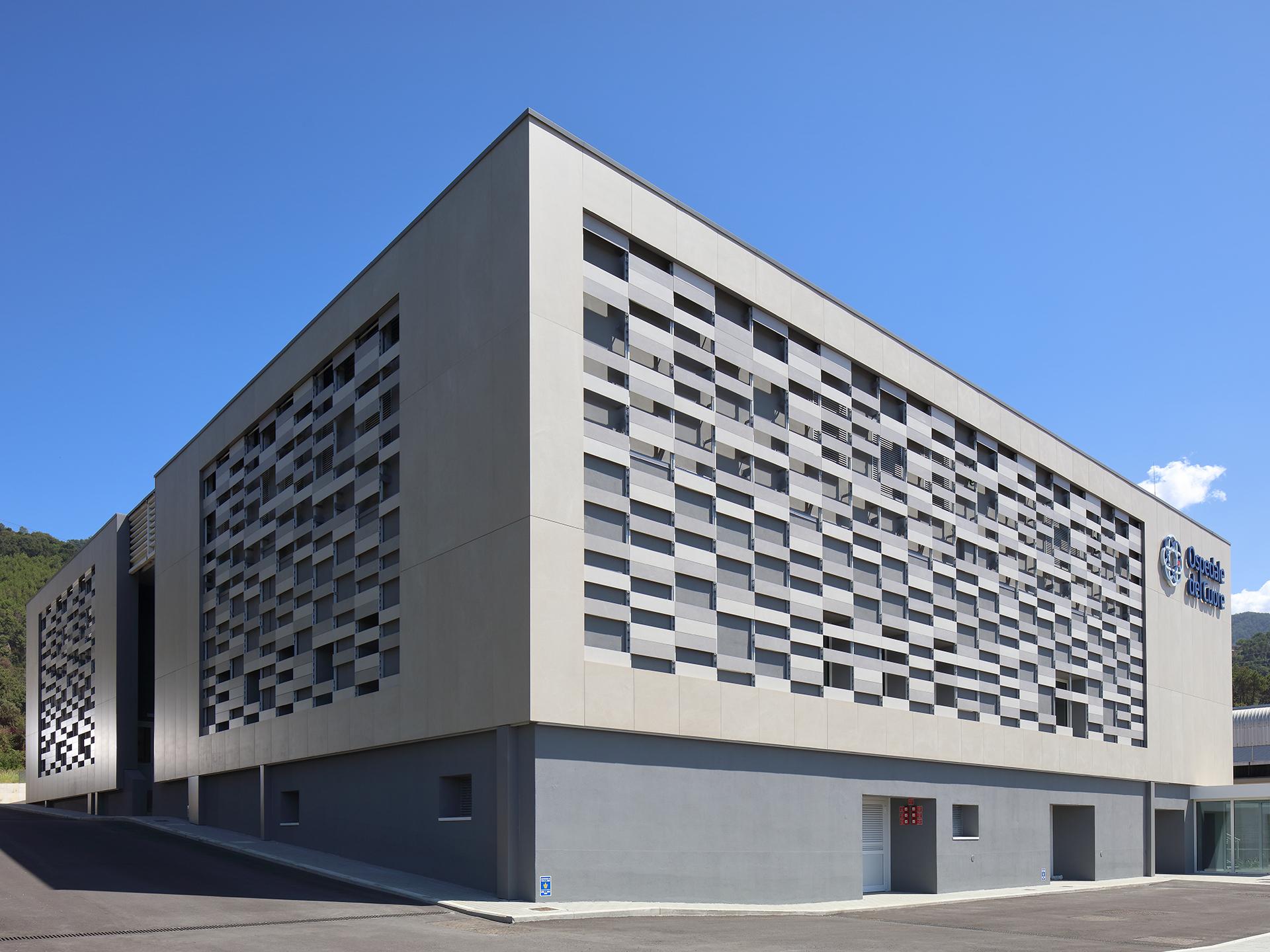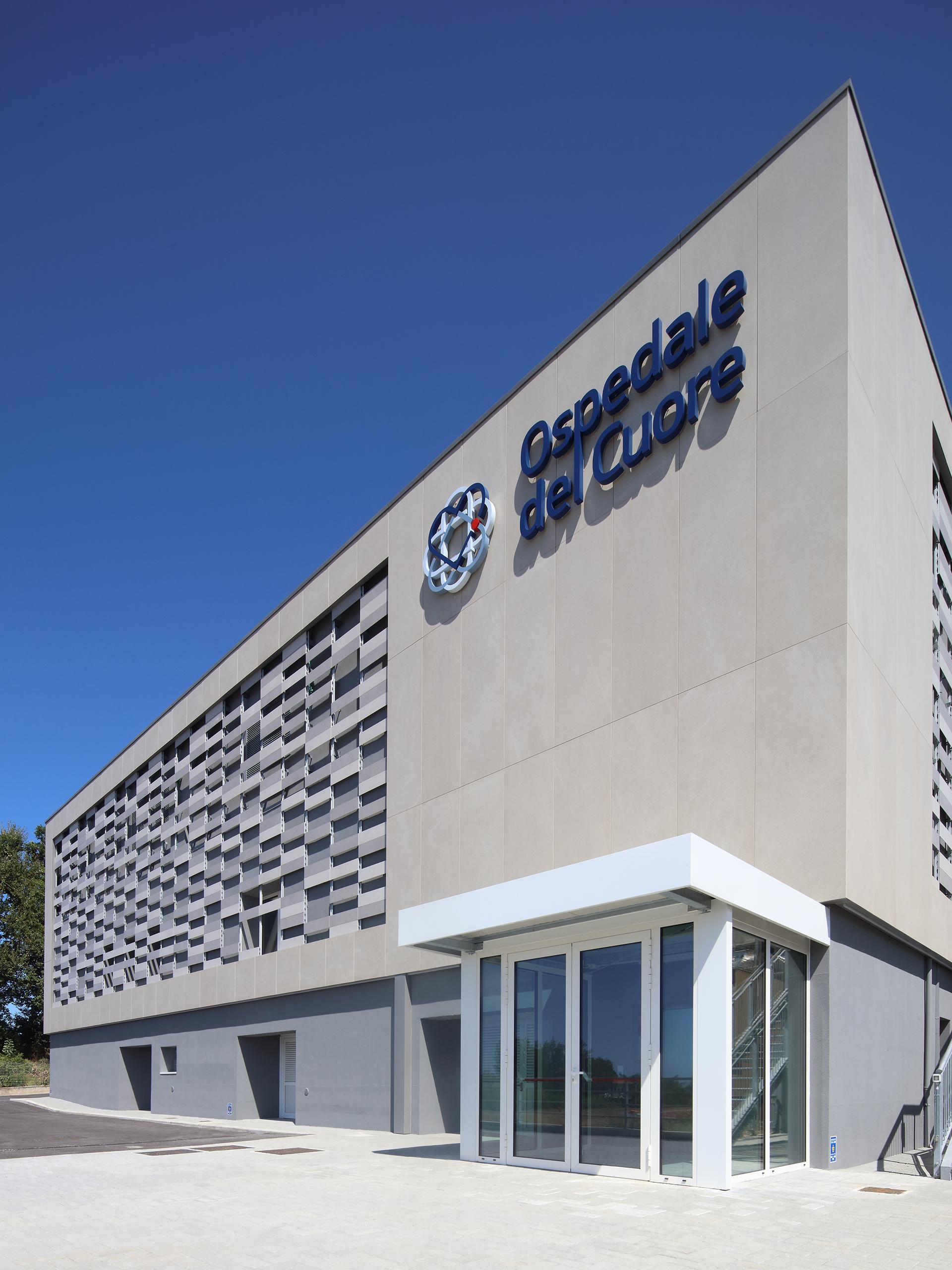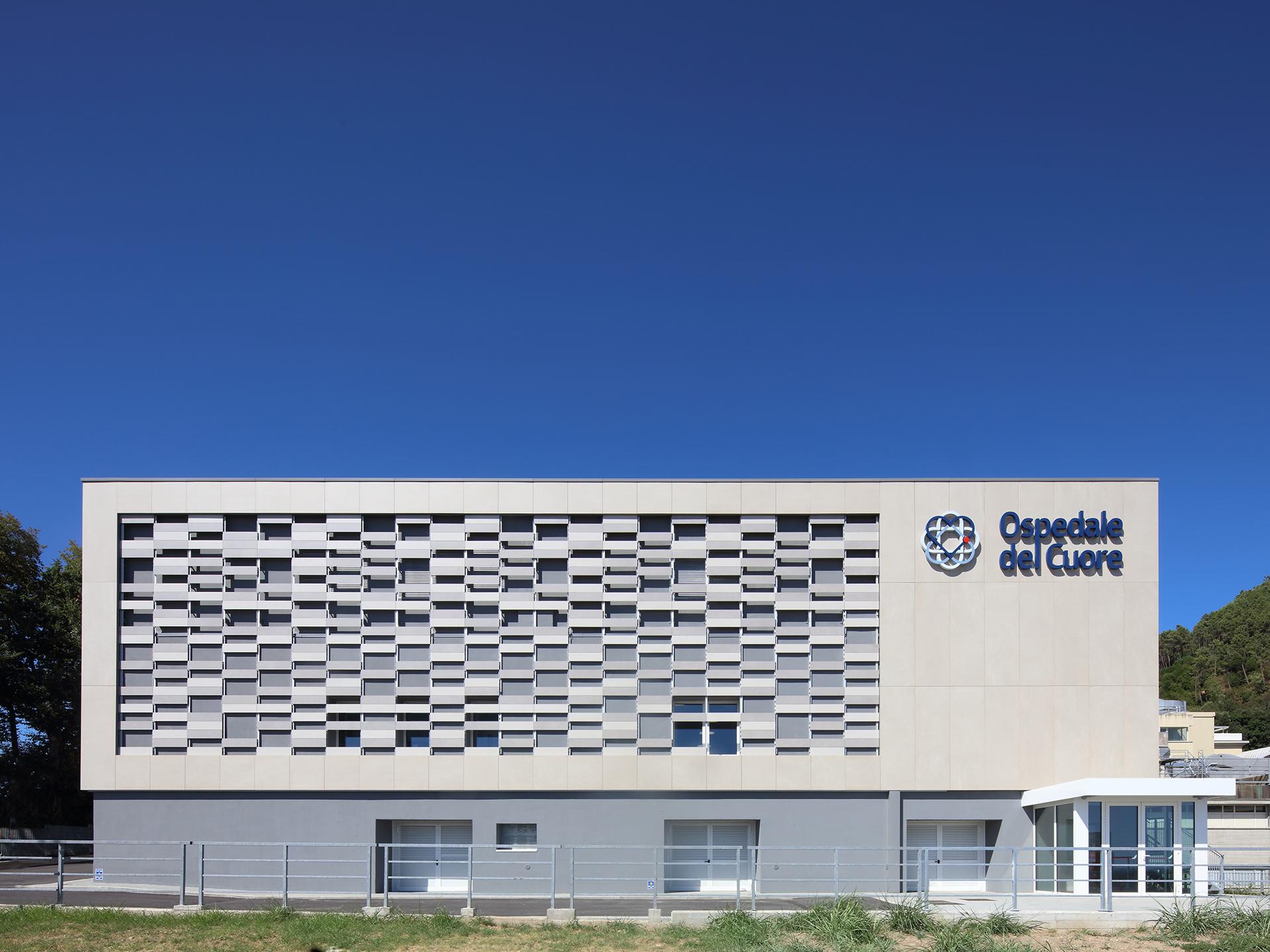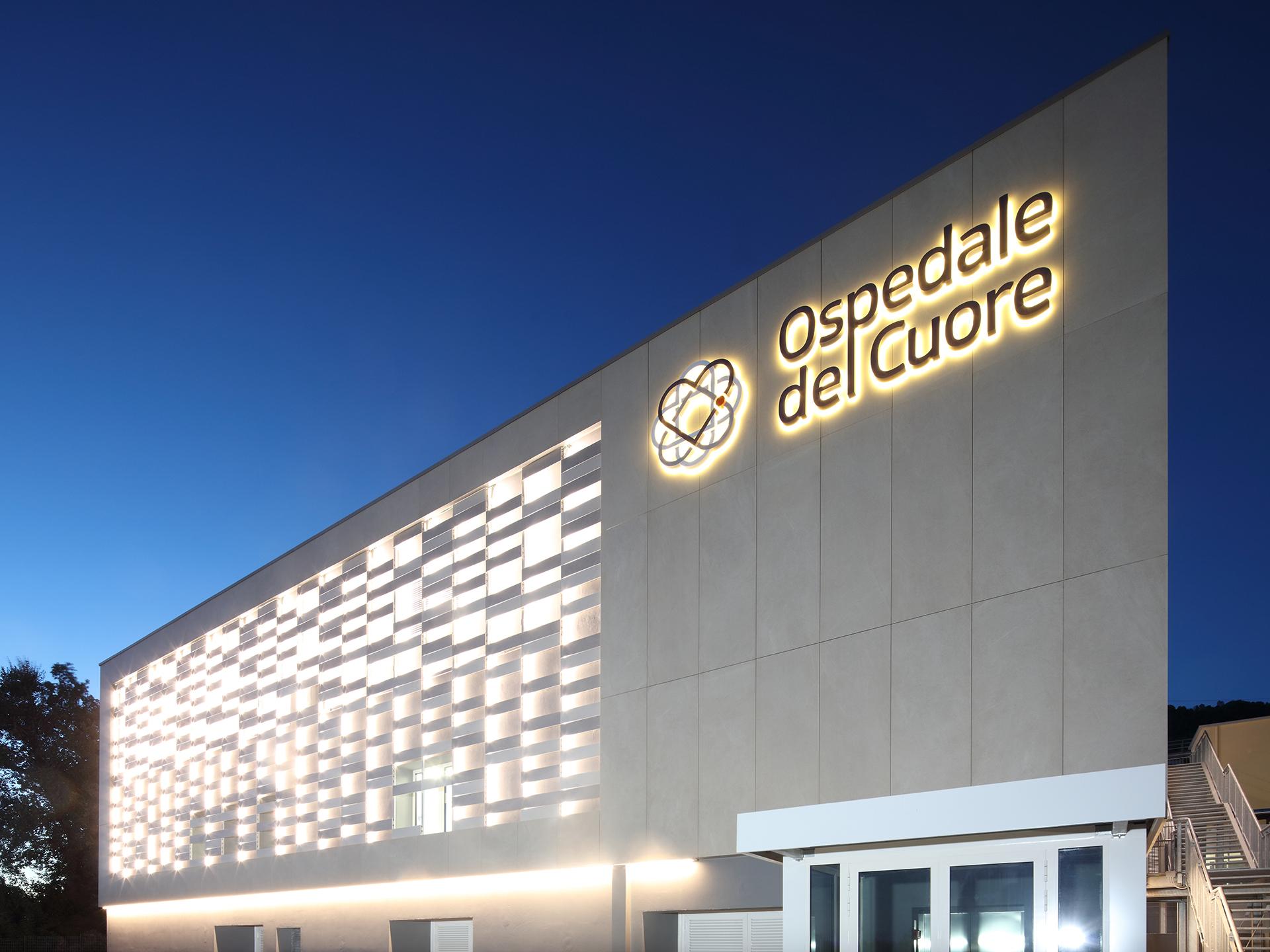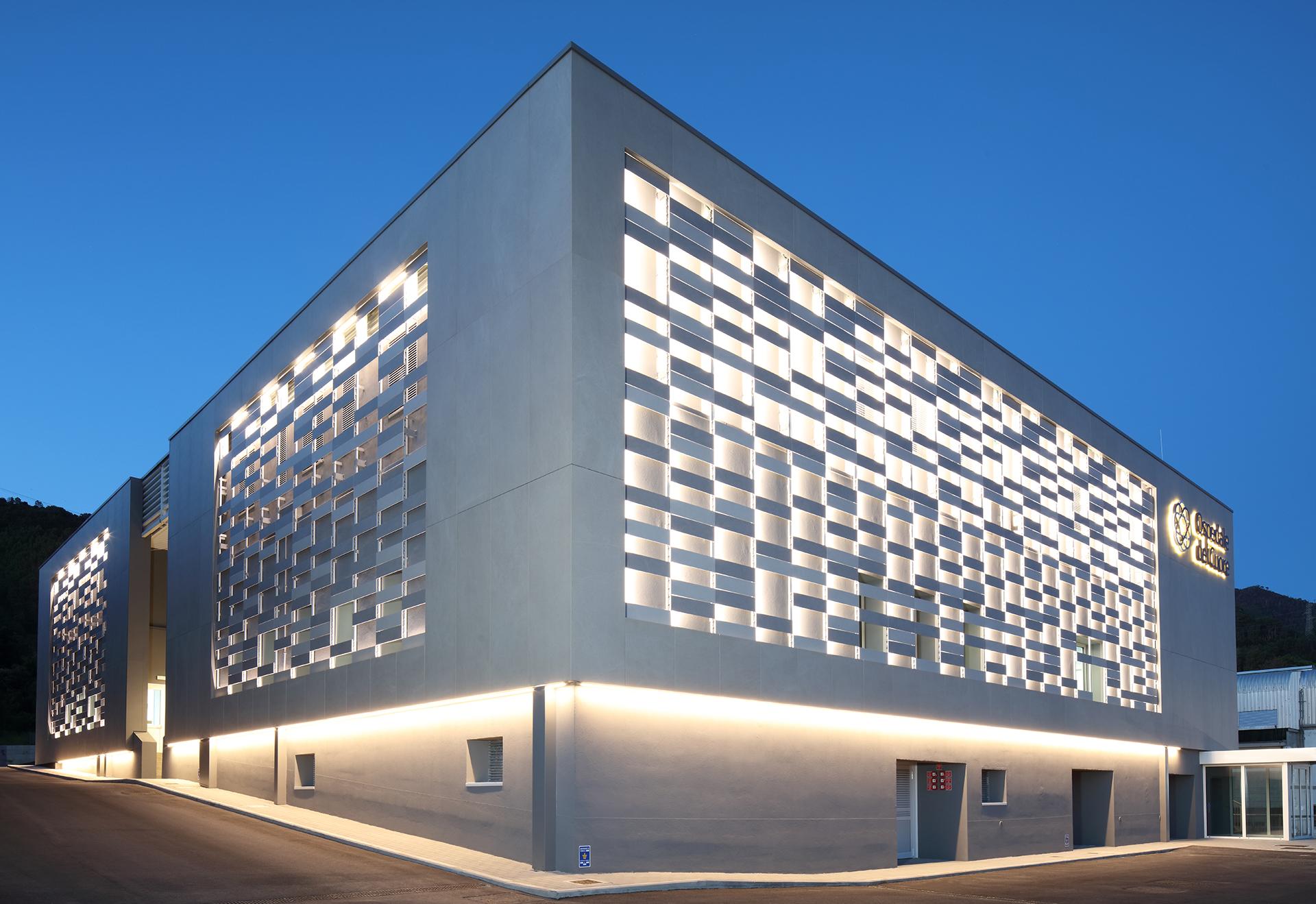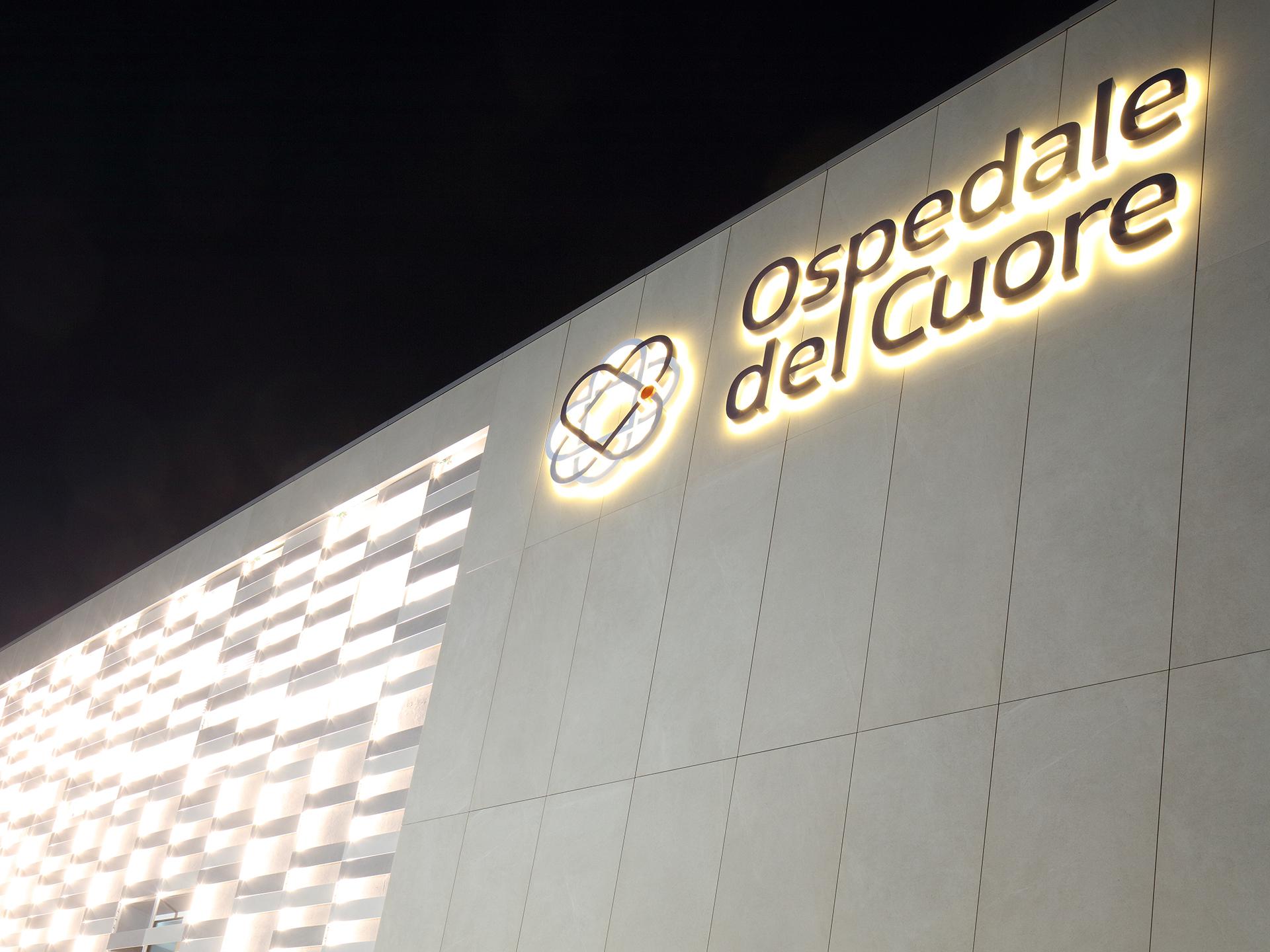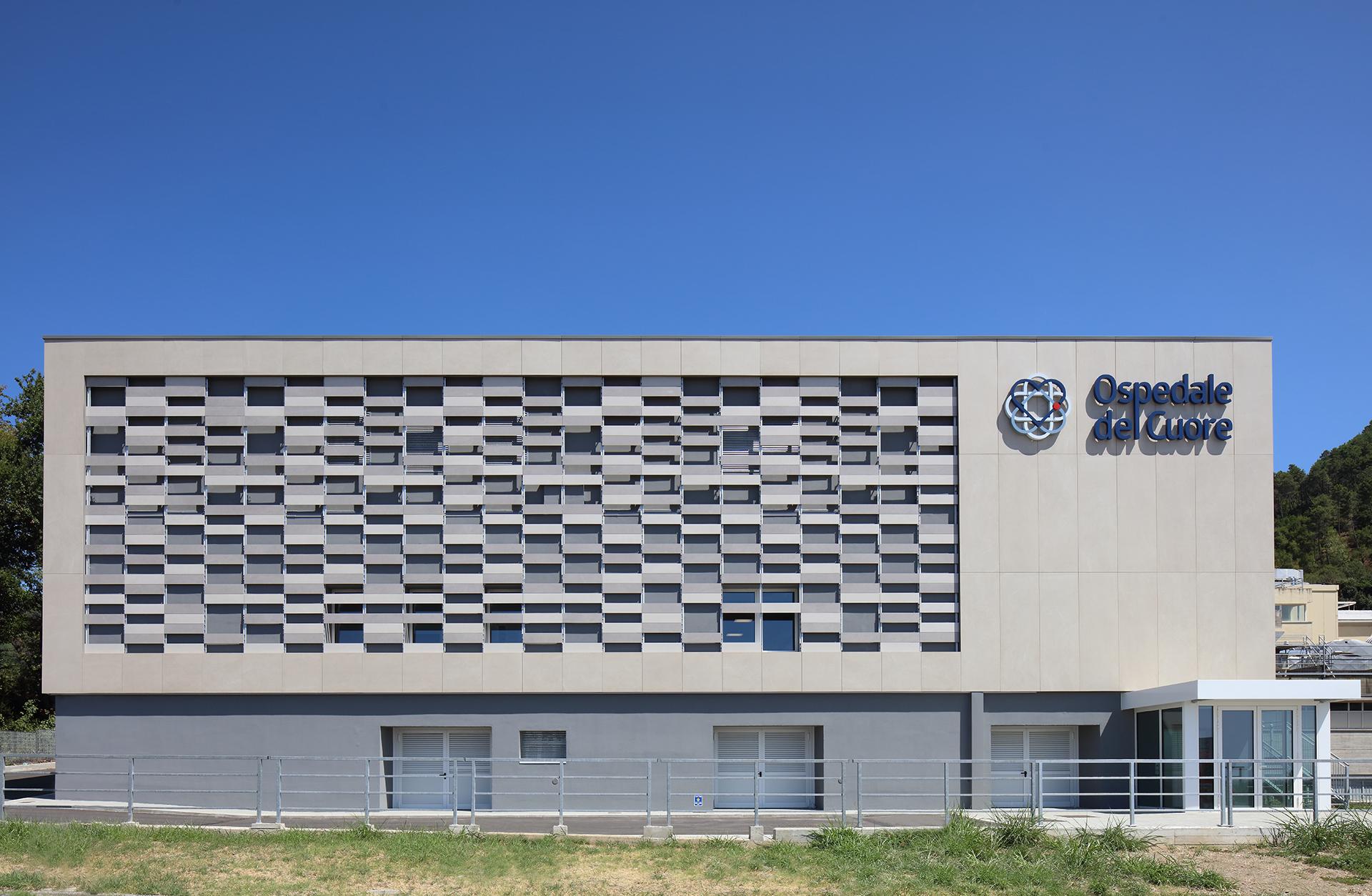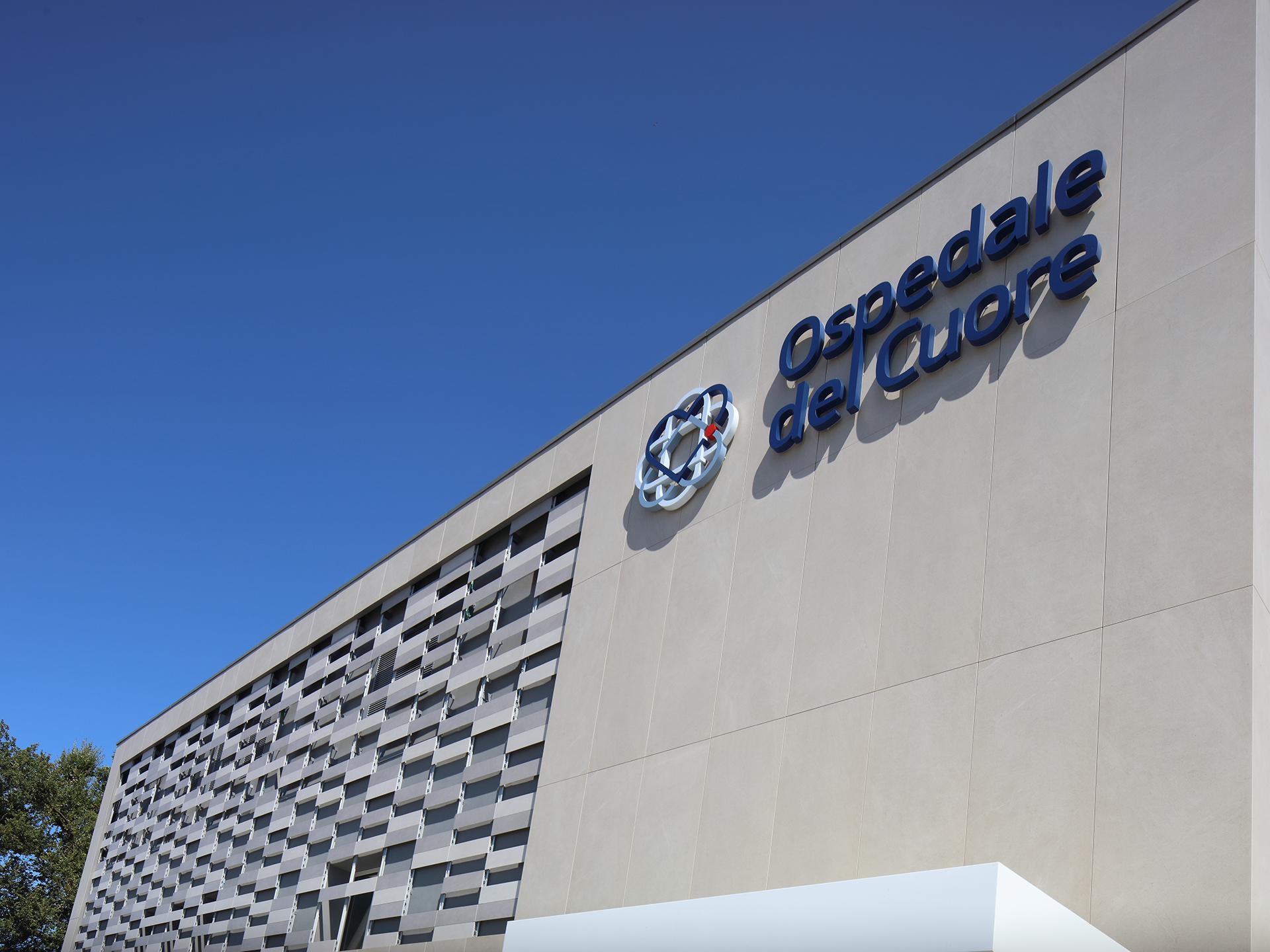






The G. Pasquinucci Heart Hospital in Massa Carrara was recently expanded and renovated to create a bold and recognisable new architectural identity. “The project arose from the need to add a modern cardiac surgery unit to the existing facility, centralising functions that were previously distributed across two separate areas,” says project lead and engineer Nicola Freddi. “The brief called for a landmark building that could revitalise the entire complex and reflect its status as a highly specialised centre.”
The new wing houses four large operating theatres, including a hybrid theatre equipped with a synchronous angiographic robot, and a haemodynamics unit with two cardiac catheterisation laboratories. “As one of the leading centres of excellence within the Italian healthcare system, the Heart Hospital specialises in complex cardiac surgery,” Freddi continues. “It adopts a multidisciplinary approach involving diverse teams, so a key requirement was for generously sized operating theatres and ancillary spaces.” The complex extends over more than 2,000 square metres, with operating theatres of approximately 350 square metres each. “The structure is organised into two adjacent and synergistic departments – the surgical block and the Heart Centre – and extends over three levels: technical services in the basement, the surgery department and Heart Centre on the ground floor, and HVAC and air filtration systems on the upper floor.”
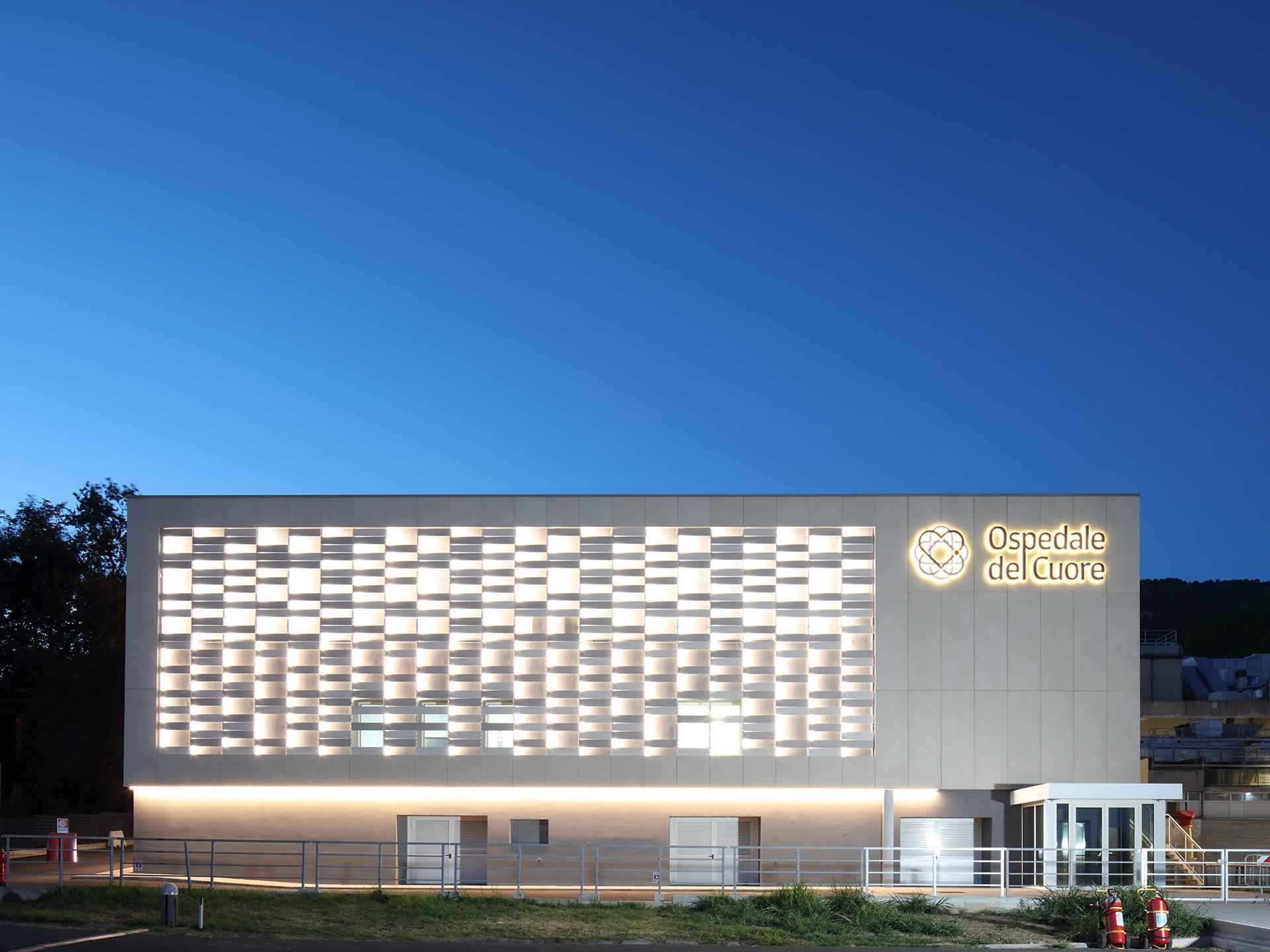
Particular attention was devoted to the building envelope, which was engineered for optimal performance and aesthetics. “We designed a high-thickness primary insulation layer and a kind of second skin consisting of carbon-neutral, ultra-thin, large-format Kerlite ceramic slabs that provide solar shading while elevating the building’s aesthetic,” explains Freddi. Conceived as a backlit architectural screen, the envelope creates a striking interplay of solids and voids, producing a dramatic visual impact by both day and night. “The ventilated façades play a central role in the design and vary according to their orientation,” the engineer adds. “The main volume features ventilated façades on the south-west and north-east elevations to ensure optimal airflow during the summer, while the seafront elevation – visible from the Via Aurelia and close to the helipad – uses a double-skin system to dampen helicopter-induced vibrations. Due to the proximity to the sea, we also had to take account of the aggressive saline environment and frequent storms. The Kerlite laminated porcelain cladding allowed us to manage these challenges effectively, ensuring waterproofing and long-term durability.”
The seabed-inspired Limestone collection from Cotto d’Este in the Kerlite 5plus version was selected for the cladding. “With views stretching from the Cinque Terre to the island of Gorgona, we were naturally drawn to a palette of sand and light blue,” Freddi explains. “In particular, we chose large fibreglass-reinforced ultra-thin Kerlite 5plus slabs for their mechanical strength and resistance to the elements and helipad stress. Their lightweight profile also allowed them to be installed rapidly using a low-impact metal substructure.”
Finally, the project meets strict environmental standards. “Surgical complexes are inherently energy-intensive due to the large volumes of air required to ensure sterile environments and the necessary microclimatic conditions,” Freddi concludes. “Laminated porcelain ventilated facades improved the building’s energy performance by shielding it from solar radiation and rainfall, thereby ensuring full compliance with Italy’s Minimum Environmental Criteria (CAM).”