Those were the years of Ettore Sottsass, Achille Castiglioni and Enzo Mari. They were the years when Italian industry was expanding and constantly bringing out new products for the home, distinguished by a beauty, formal rigour and functionality that helped define what we now call Made in Italy. They were the years when Italian industry called on architects and designers – the profession of designer itself emerged in those years – to engage directly with industrial production and develop objects that could be mass-produced without sacrificing the beauty and craftsmanship rooted in Italy’s centuries-old tradition of “fatto bene”, or making things well.
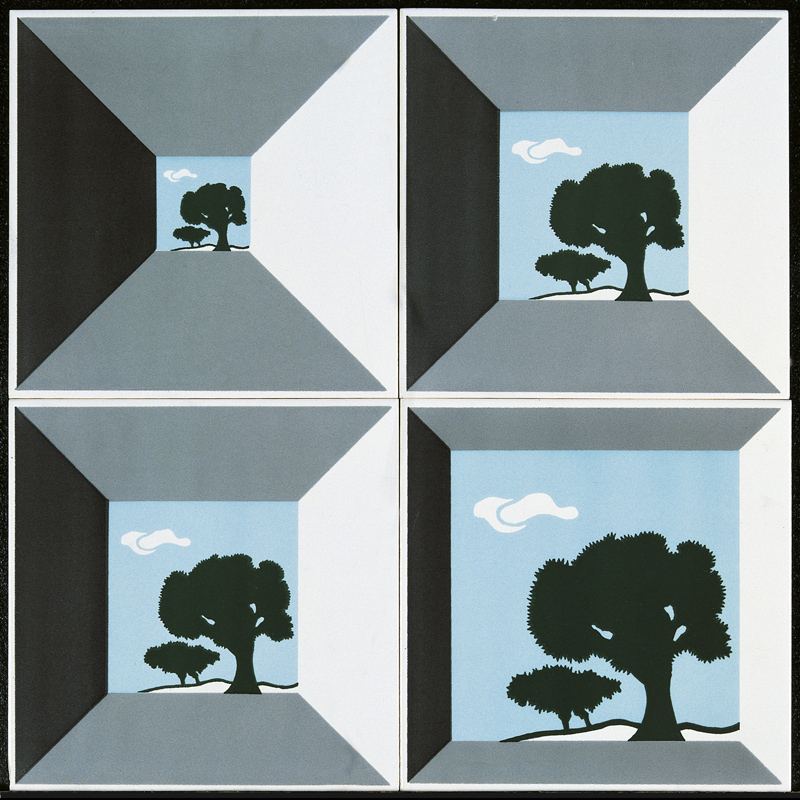
At the request of the book’s curators, Confindustria Ceramica contributed to the initiative by providing material on Sergio Asti held in its Documentation Centre. Over the course of his career, he worked in a remarkable variety of fields, from tableware and lighting to automotive design and household appliances, and from exhibition installations and buildings to furniture, sanitaryware and jewellery. He also designed ceramic wall tiles for Cedit, Gabbianelli and Ceramiche Ragno.
The relationship between the Italian ceramic industry and Sergio Asti, however, was not confined to the numerous tiles he designed, some of which are preserved at the Exhibit and Library of the Italian Ceramic Tile Industry. It also extended to his participation in a major conference held at Cersaie in 1984 entitled Il Decoro Ceramico: superfici e ambiente (“Ceramic Decoration: Surfaces and Environment”), where he appeared alongside other leading figures in Italian design, including Bruno Munari. On that occasion, Asti explained what he understood by decoration and, more specifically, ceramic decoration. In his words: “It has often been observed that ‘decoration’, despite having an identity of its own, was long regarded as a by-product of the figurative and plastic arts… More recently, however, … ‘decoration’ has come to be recognised as a field of research in its own right, with greater attention being paid to its origins and its independence from painting and sculpture…” He continued: “But let us return to the ceramic product, to decoration, to surfaces, to spaces. I would like to focus on this last aspect because I do not believe ceramic decoration can be seen as a purely graphic exercise to be translated into a product through the use of specific techniques and technologies. What matters is the product’s potential for use in three dimensions, in other words the possibility of inhabiting or enjoying a space.”
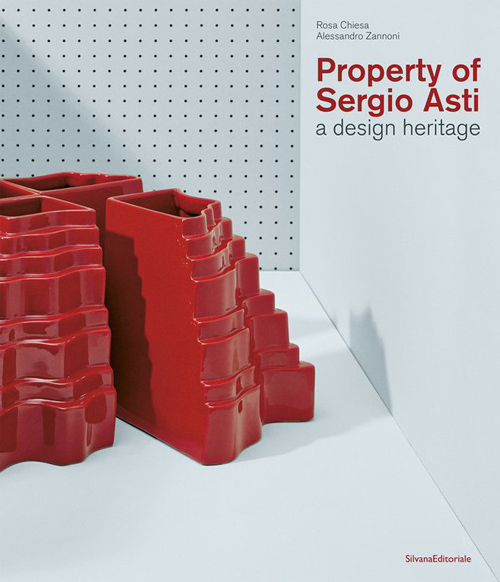
Edited by Rosa Chiesa and Alessandro Zannoni, the volume contains a rich selection of Sergio Asti’s projects. Even a quick browse through its pages and numerous images gives a clear sense of the contribution this prolific Milanese architect made to Italian industrial design. Over the course of his career, he received numerous awards and honours, including a Compasso d’Oro in 1962 for the Marco vase.
Born in 1926, Sergio Asti lived through Milan’s extraordinarily productive and creative post-war decades, meeting and associating with major figures in architecture and design, from Gio Ponti and Bruno Munari to Achille Castiglioni and Ettore Sottsass. He himself became part of the remarkable mosaic that represents the very best of twentieth-century Milanese and Italian design.
Si informa che questo sito utilizza cookie, anche di terze parti, al fine di analizzare il traffico sul sito e personalizzare i contenuti e gli annunci più adatti a te.
Cookie Policy